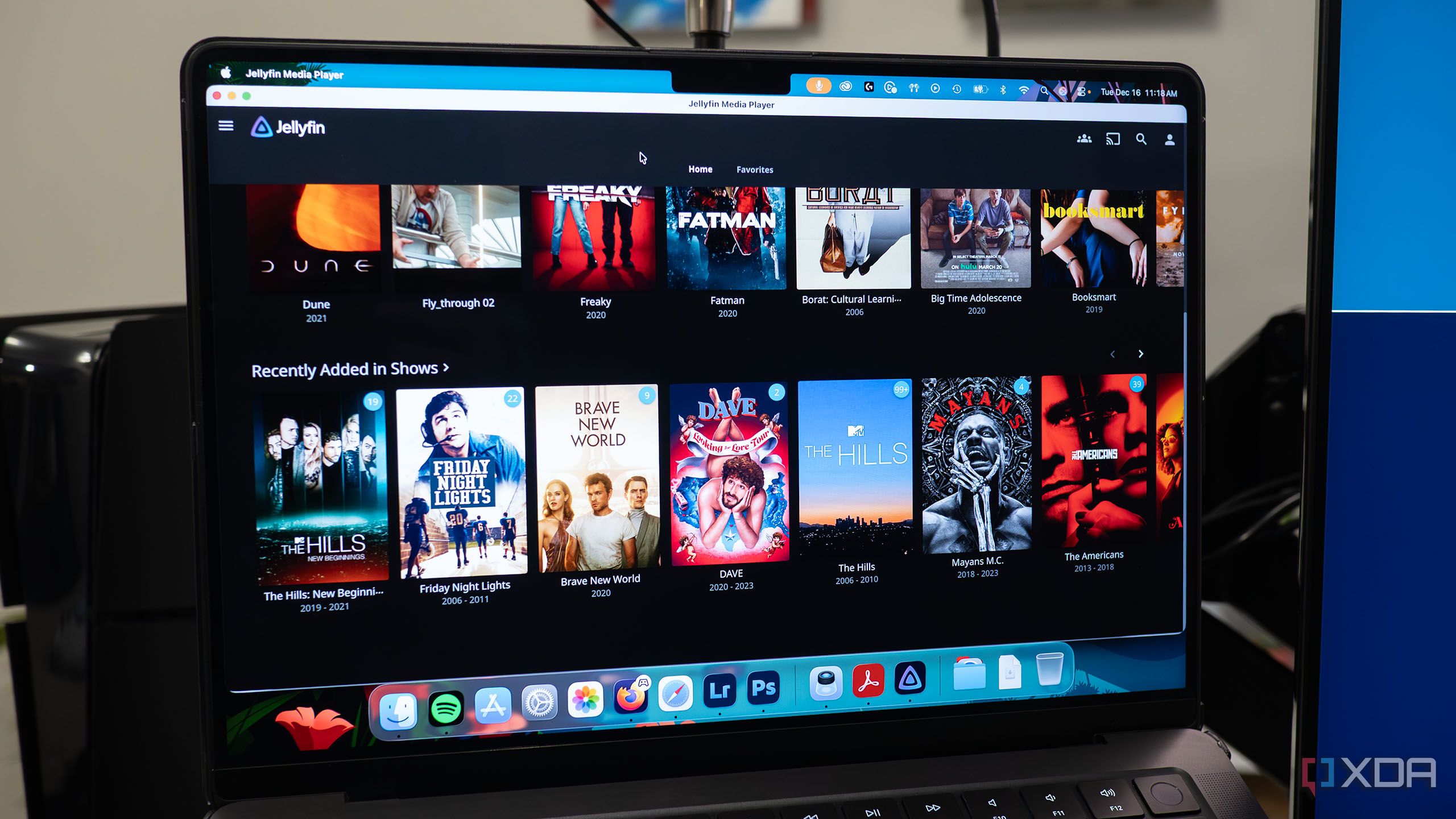
Convenience is one of the main reasons I run a media server. While I enjoyed editing metadata in my twenties, today I want all my movies, TV shows, and music to be available when I need them without relying on streaming services. And I want them in the simplest way possible. Basically, I want Netflix but self-hosted. And I’ve been using Plex for years. But recently I decided to give Jellyfin a proper chance. Was it finally good enough to replace Plex for me?
The free, open source The media server promises to do almost everything Plex offers without subscriptions or proprietary software. It seemed like the obvious choice for someone who already self-hosts most of their services. So I set up the app and used it on my TV, phone and tablet. And I even tried making it my default. But after a week I returned to Plex. It turns out that Jellyfin can get the basics right, but the experience isn’t as seamless as Plex.
Plex gets out of the way when I just want to watch something
A polished experience on all devices
Most nights I don’t try to experiment with my home server. I’m sitting on my couch trying to decide what to watch. Whether it’s the latest episode of my favorite TV show or switching to my tablet before bed to catch up on a documentary. My media server should just disappear into the background and just do its job. Plex does that constantly.
No matter what you think of the service, the app feels familiar on any device I use. Whether I open it on my TV, my Pixel smartphone, or in a browser, the interface behaves exactly the same. Navigation is responsive and metadata loads quickly. Also, most importantly, playback starts almost immediately. The entire experience has been designed to feel like a commercial streaming platform and you can feel the difference.
Jellyfish It’s certainly not difficult to use, but it lacks the same level of consistency and shine. While some clients are excellent, others have bugs or reliability issues or an interface that seems extremely complicated to use. As someone who is fairly technically inclined, I have no problem playing a file. But this is not the experience I would expect my parents or family members to be comfortable with. In fact, even I, after a long day at work, don’t want to troubleshoot my media player app.
Remote streaming is another example. I travel so frequently that I regularly access my media library outside of my home network. I set up Plex a year ago and haven’t had to think about it since. Everything just works. JellyFin, on the other hand, expects more participation from me. Whether it’s setting up remote access to a reverse proxy or something as basic as Queue scaleThese are not difficult tasks, but do I really want to deal with all this for a media streaming application? The answer, at least for me, is no.
Plex is designed for sharing, not just streaming
Easier to invite friends, better metadata and discovery to boot

The thing about ease of use is that Plex isn’t just a personal media streaming app for me. Friends and family use it regularly and that has changed what I expect from a media server. Plex makes onboarding almost easy. I can send an invite to a friend, ask them to install the app, log in, and they’re ready to start watching content. Their watch history remains completely separate from mine and they also get the benefit of personalized recommendations. Everyone gets an experience that makes them feel like they have their own streaming service. But getting users to start using the app is much more complicated. It’s okay if the other person likes self-hosting, but most people don’t. They just want something that works without too much work, if you know what I mean.
And then there is metadata management. I have a media library spanning a couple of terabytes. And Plex has never failed me with a near-perfect combination. It gives me beautiful banners and rich metadata, making it easy to know what I want to see next. Jellyfin has improved a lot, but it is not as smooth and precise as Plex. Especially if you like to watch a lot of independent or international cinema.
Finally, hate it or love it. Some of the features Plex has been adding to the experience actually aren’t that bad. I actually quite enjoyed getting recommendations based on my own streaming media library. I may not turn to Plex rentals or the free streaming service, but if I can get an idea of what to watch next, it’s not a bad place to be. In fact, that’s part of what sets Plex apart from Jellyfin. Jellyfin is all about giving you access to your media and just that. Plex wants you to spend more time with your media.
Jellyfin wins in openness, but Plex still offers a simpler user experience
I still think JellyFin is one of the best additions to the self-hosting space. It’s a great tool if you only want to view your content, especially if only one person sees it. But if you’re looking for a more commercial experience, it doesn’t quite get you there. At least not yet. Between the ease of library sharing, remote access, and cleaner metadata, Plex still feels much more polished. I hope the open source community catches up with Plex in the short term, especially given the company’s exorbitant subscription fee lately. But until then, I’ll stick with Plex.

- SW
-
Windows, macOS, Linux
- Individual prices
-
Free, $6.99/month, $250/lifetime
Plex is the leading home media server software to replace your streaming subscriptions.
little
Related
Jellyfin is 90% of Plex, and I don’t care about the missing 10%
Free and open source on greedy subscriptions