

TL;DR
ZTE showed off the NaviX Ultra at WAIC, calling it the first smartphone with artificial intelligence. He runs ByteDance’s Doubao agent. StepFun and Honor showed similar devices.
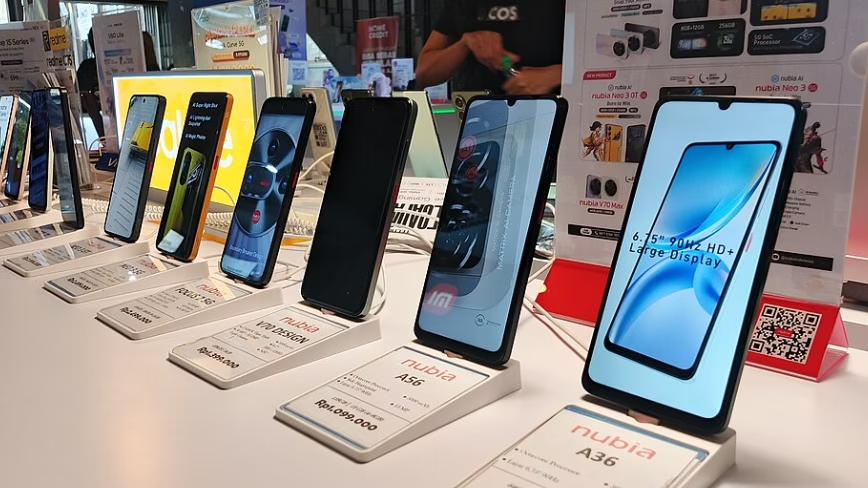
ZTE presented the NaviX Ultra at the World AI Conference in Shanghai this week, calling it the world’s first AI smartphone. The device, built under ZTE’s Nubia brand, runs ByteDance’s Doubao AI agent and can be activated by voice or a dedicated button. It comes in four colors and was prototyped in December for 3,499 yuan ($516). The initial 30,000 units were quickly sold out and doubled in price on the second-hand market.
ZTE was not alone. StepFun introduced a device that runs a proprietary operating system with a built-in agent called Amoo. Honor, the Huawei spin-off smartphone maker, is introducing an AI agent co-developed with Alibaba that will be included in new devices later this year. The idea is the same in all three: build an agent layer in the operating system that allows AI to execute tasks autonomously across applications, rather than incorporating isolated AI functions into an existing interface. “Many so-called AI phones on the market simply stack AI functions on top of an existing system,“said the chief of Nubia, Ni Fei.”That actually makes it more cumbersome for users.“
The moment is not coincidental. China’s smartphone shipments have fallen for five consecutive quarters as the memory crisis raised component costs and reduced consumer demand. IDC expects the global smartphone market to post its steepest annual decline on record in 2026. Chinese manufacturers, many of which sell inexpensive devices at low margins, are suffering the most pressure. AI phones are your escape. IDC’s Arthur Guo said more than half of China’s smartphone market could be dominated by AI devices this year.
The launches also deepen competition with Apple, which just received approval from Beijing to deploy Apple Intelligence in China through partnerships with Alibaba and Baidu. “In terms of smart devices with AI, we are ahead of Apple,”Ni said on Weibo in June. The AI boom that is putting an end to cheap smartphones It is simultaneously creating the argument for a new type of phone. Whether an agent booking flights and editing photos is enough to get people to replace a device they already own is the question the market will answer by the end of the year.



