

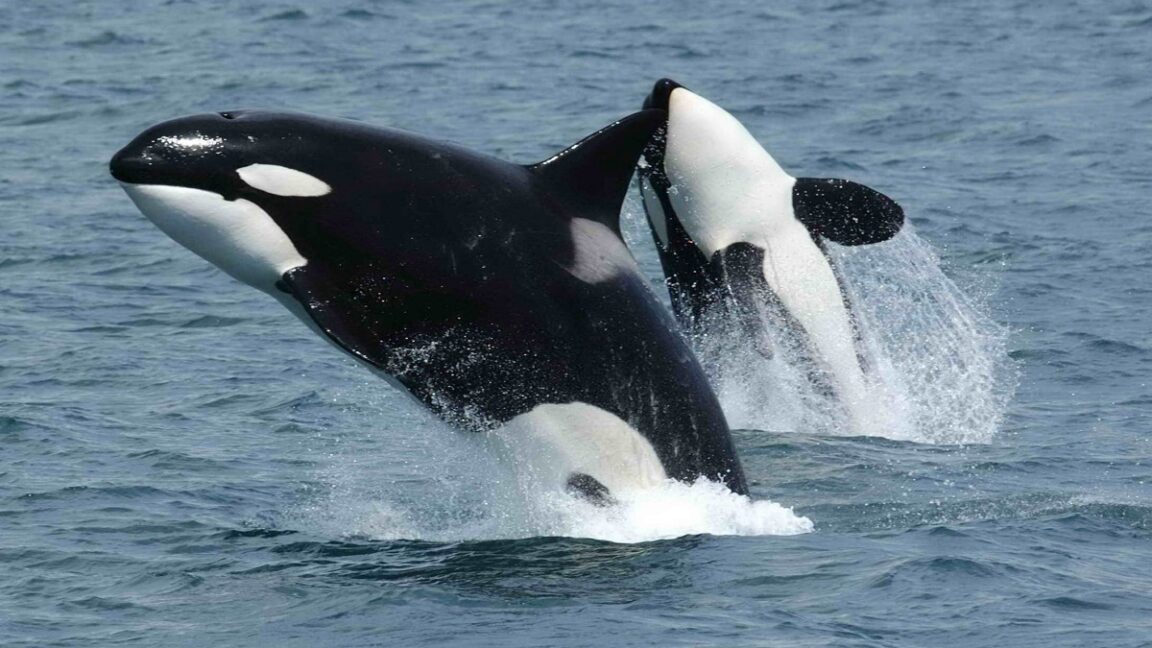
There have been numerous accounts in recent years of orcas. ramming ships—and sometimes sinking them. Scientists believe this may be a form of culturally learned behavior passed down from generation to generation. Now we have new examples: Orcas in the Gulf of California were filmed teaming up to charge sunfish with such force that the carcasses exploded into small fragments. While orcas are known to use force to remove meat from their prey, this is something different, according to a study. new paper published in the journal Frontiers in Ethology.
“We think this may help younger orcas feed more easily, or it could also just be for fun,” said co-author Kathryn Ayres from Beneath The Waves, a nonprofit organization that promotes ocean health. “Orcas are known for playing with their food.”
Orcas engage in cooperative hunting strategies that may involve hitting or killing animals (sometimes eating their prey, sometimes not), so the behavior could be described as social interaction, play, or practice as a mode of social learning. Orcas have been observed charging whale sharks while another orca held the prey steady. Other cooperative strategies include herding moving rays, blocking an escape route while hunting white sharks, and deliberately producing waves to push penguins off ice floes.
When hunting species like sunfish, orcas often resort to a three-pronged strategy. First, an orca will target the pectoral fins and then cut the sunfish along its body to remove the viscera. After that, the orca will use its beak to reach the remaining tissue. The recently observed “ram-to-fragment” behavior could represent a more sophisticated version of that basic strategy.
Play with your food
The first case occurred in July 2024 off the coast of San José del Cabo in Mexico. A tour operator filmed three adult female killer whales, one male and one juvenile capturing and eating a spiny-tailed devil ray. Shortly after, the same operator filmed one of the adult females holding the carcass of a sunfish in her mouth. The sunfish had a large side wound, so the viscera had probably already been removed. The male orca then charged at the carcass and the female released it just before impact. A sound was heard upon impact as the corpse fragmented and chunks of flesh scattered into the water. The juvenile orca proceeded to eat the smaller fragments while the adults fed on what was left of the opened body.



