
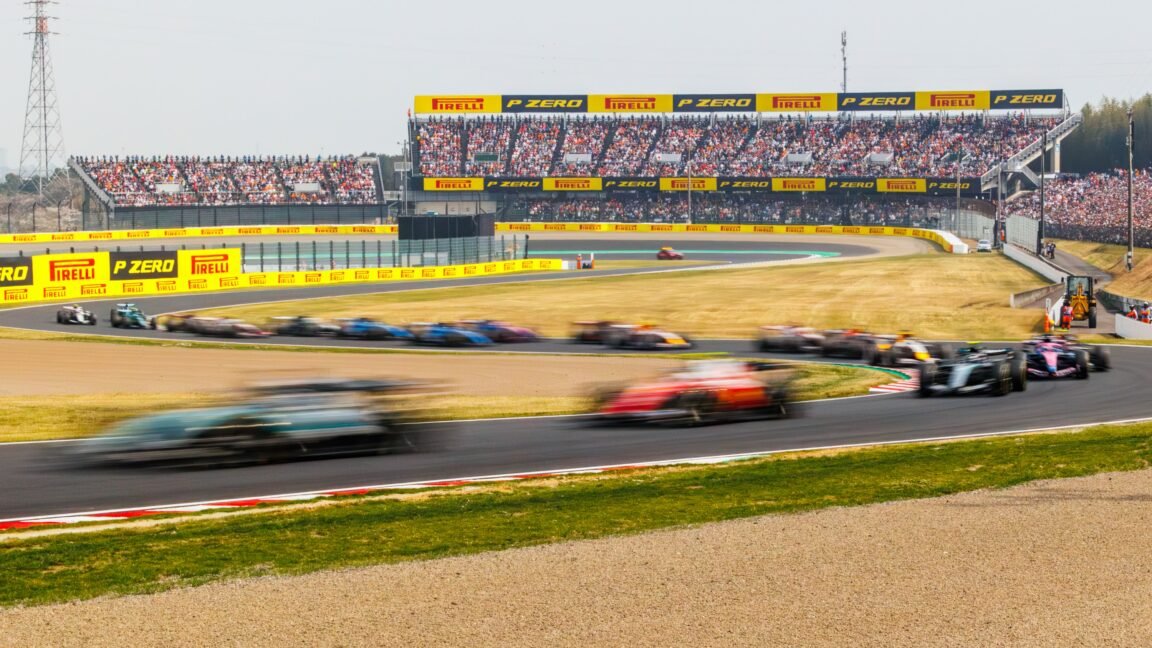
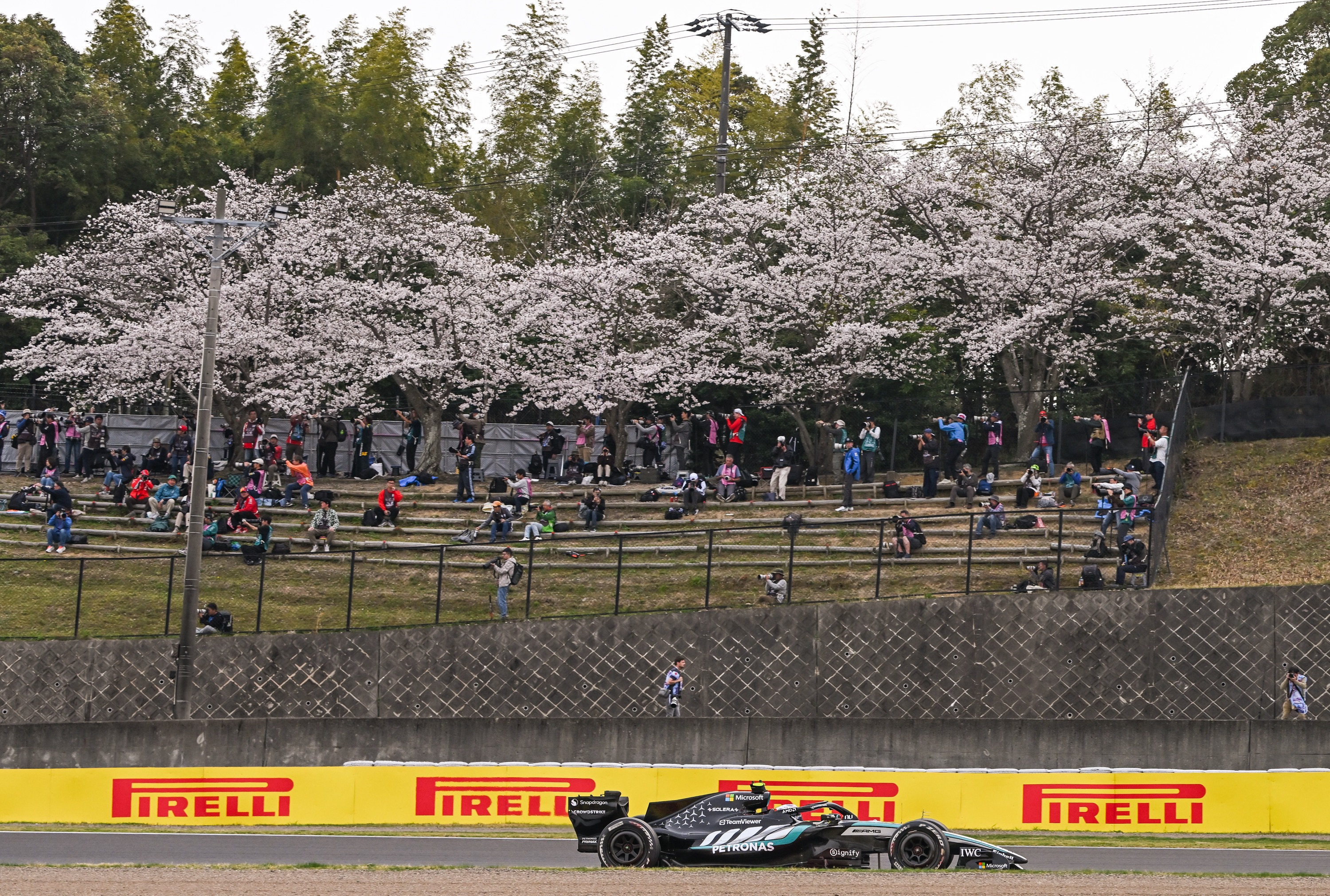
Moving the race from the end of the year to March means we will be able to see the cherry blossoms.
Credit: Artur Widak/NurPhoto/Getty Images
Moving the race from the end of the year to March means we will be able to see the cherry blossoms.
Credit: Artur Widak/NurPhoto/Getty Images
Depending on the state of the battery and where the car is on the track, it may have 750 kW (1,005 hp), it may have 400 kW, or it may only have 150 kW (201 hp) to the rear wheels. Every driver will use their energy differently and the complicated nature of hybrid systems, which are mostly automated, means they can behave erratically. If the wheels spin or oversteer too much, the algorithms that control power delivery will adjust on the next lap.
And that, in turn, means the cars act unpredictably, which we saw with dramatic consequences when Oliver Bearman’s Haas had to take action to avoid Franco Colapinto’s slow-moving Alpine as the drivers approached the entrance to Spoon Curve. Bearman dove left across the grass to avoid the Alpine and spun, hitting the wall with a 50 G impact.
Critics of the new technical rules had long predicted that dangerous speed differences of up to 70 km/h (43 mph) were possible, and it seems they were right. Hence the meeting on April 9 to discuss solutions. Although it probably won’t be easy. The simplest solution would be to allow a larger battery, but F1 cars are very compact, and this would require each team to undergo an expensive redesign, making the cars larger and heavier in the process.
Increasing the V6 engine’s fuel flow to generate more internal combustion horsepower would also help, but would also likely require a larger fuel tank, again resulting in a redesign and larger, heavier cars. Or the sport could limit the amount of power from the electric motor; With a limit of only 200 kW (268 hp), the battery could last about 20 seconds.
No more fast corners
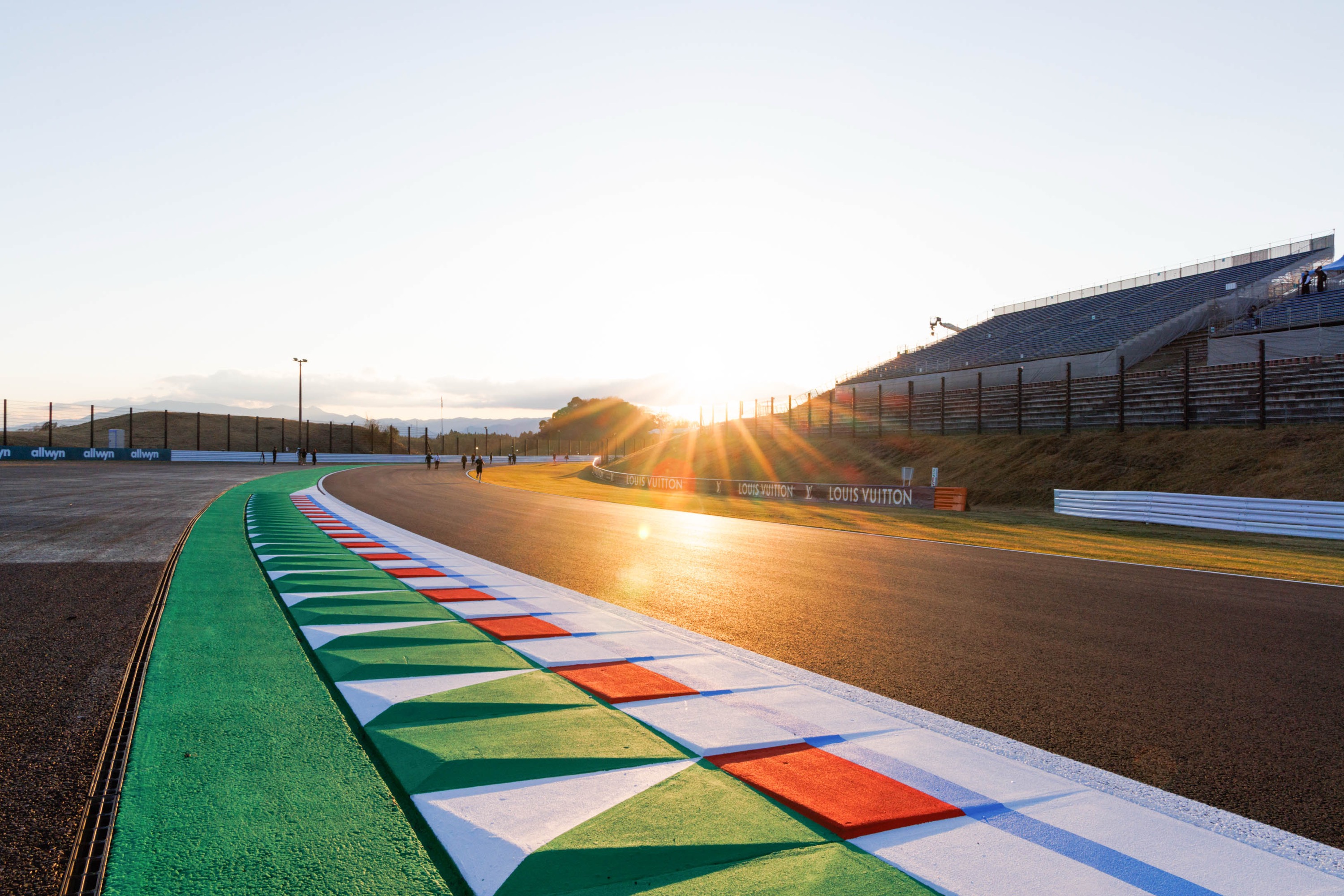
130R: Used to be a challenge, then it was easy and flat, now they slow down and coast to the end.
Credit: George Hitchens/SOPA Images/LightRocket via Getty Images
130R: Used to be a challenge, then it was easy and flat, now they slow down and coast to the end.
Credit: George Hitchens/SOPA Images/LightRocket via Getty Images
Unlike many F1 fans (and some of the drivers), I have tried very hard to be positive. about the 2026 technical regulations. That stance became very difficult to maintain after seeing the cars qualify. Suzuka’s most famous corner is called 130R, a fast left towards the end of the lap that comes after a long sprint from Spoon. It used to be a challenge, but last year, 130R was barely a corner; The cars had so much downforce that they ran through it on rails.



