
The era of agent AI is upon us, whether we like it or not. What started with an innocent Q&A joke with ChatGPT back in 2022 has turned into an existential debate about job security and the rise of the machines.
More recently, fears of achieving artificial general intelligence (AGI) have become more real with the arrival of powerful autonomous agents such as Claude Cowork and open claw. Having played with these tools for some time, here’s a comparison.
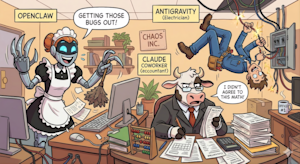
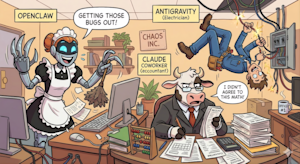
First, we have OpenClaw (previously known as Moltbot and Clawdbot). OpenClaw surpassed 150,000 GitHub stars in days and is already being deployed to local machines with deep system access. This is like a robot “maid” (Irona for rich richie fans, for example) that you give him the keys to your house. It is supposed to clean it and you give it the autonomy to take actions and manage your belongings (files and data) as it pleases. The goal is to accomplish the task at hand: inbox sorting, autoresponders, content curation, travel planning, and more.
Next we have the one from Google. Antigravityan coding agent with an IDE that accelerates the path from indicator to production. You can interactively create entire application projects and modify specific details using individual prompts. This is like having a junior developer who can not only code, but also build, test, integrate, and troubleshoot. In the real world, this is like hiring an electrician: they’re very good at a specific job and you only need to give them access to a specific item (your electrical junction box).
Finally, we have the mighty Claude. Anthropic’s launch of Cowork, which featured AI agents to automate legal tasks such as contract review and NDA classification, sparked a sharp selloff in legal technology and software-as-a-service (SaaS) stocks (known as SaaSpocalypse). Anyway, Claude has been the go-to chatbot; Now with Cowork, you have domain knowledge for specific industries like legal and finance. This is like hiring an accountant. They know the domain inside out and can complete taxes and manage invoices. Users provide specific access to highly sensitive financial details.
How to make these tools work for you
The key to making these tools have more impact is to give them more power, but that increases the risk of misuse. Users must trust providers such as Anthorpic and Google to ensure that agent prompts do not cause harm, leak data, or provide unfair (illegal) advantages to certain providers. OpenClaw is open source, which complicates things since there is no central governing authority.
While these technological advances are amazing and intended for the greater good, all it takes is one or two adverse events to cause panic. Imagine the agent electrician frying all the circuits in your house by connecting the wrong wire. In the case of an agent, this could consist of injecting bad code, breaking a larger system, or adding hidden flaws that may not be immediately apparent. Coworking could lose important savings opportunities when it comes to doing a user’s taxes; On the other hand, it could include illegal cancellations. Claude can cause unimaginable damage when he has more control and authority.
But in the midst of this chaos, there is an opportunity that we can really seize. With the right barriers, agents can focus on specific actions and avoid making random, unaccounted for decisions. The principles of responsible AI (accountability, transparency, reproducibility, security, privacy) are extremely important. The registration agent steps and human confirmation are absolutely critical.
Additionally, when agents deal with so many diverse systems, it is important that they speak the same language. The ontology becomes very important so that events can be tracked, monitored and accounted for. A domain-specific shared ontology can define a “code of conduct.”" This ethic can help control chaos. When we join a framework of shared trust and distributed identity, we can create systems that allow agents to do truly useful work.
When done right, an agent ecosystem can greatly offload human “cognitive load” and enable our workforce to perform high-value tasks. Humans will benefit when agents take care of the mundane.
Dattaraj Rao is an Innovation and R&D Architect at Persistent Systems.



