
Accumulating a lot of experience … Booster 1076 entered the SpaceX fleet in 2021 and has since launched missions including CRS-22, Crew-3, Turksat 5B, Crew-4, CRS-25, Eutelsat Hotbird 13G, SES O3B mPOWER-A, PSN Satria, Telkomsat Merah Putih 2, Galileo L13, Koreasat-6A Crew-6 and USSF-124, plus 22 batches of Starlink satellites. (brought to you by EllPeaTea)
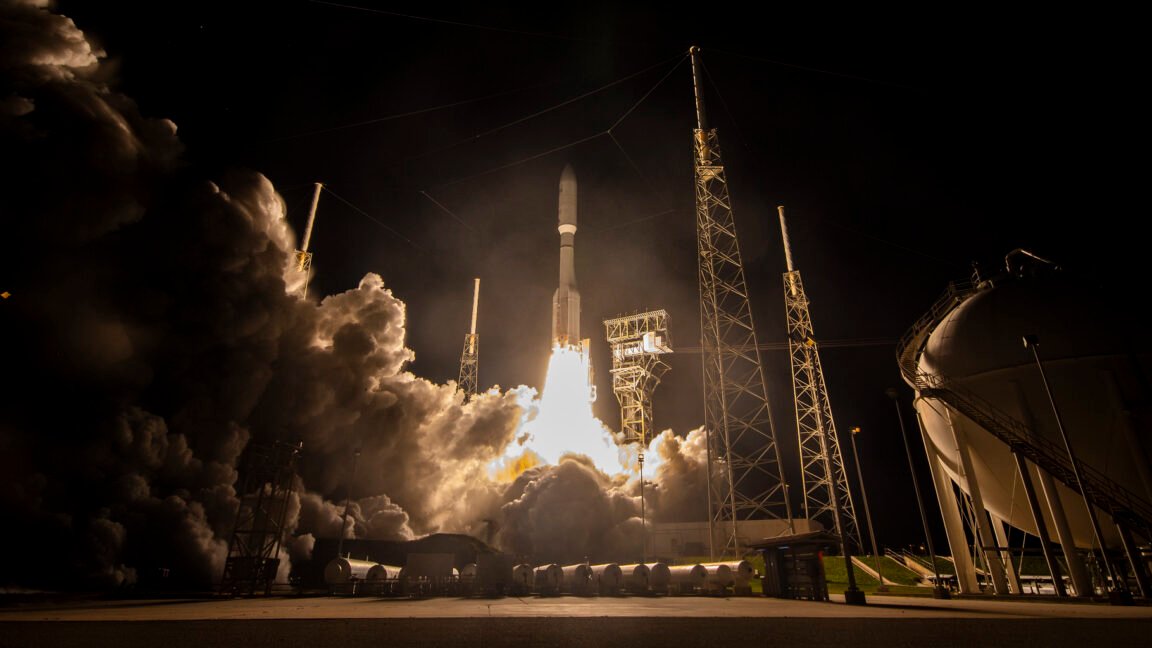
Atlas V launches heaviest payload. United Launch Alliance launched its latest Atlas 5 rocket, carrying a batch of 29 Amazon Leo satellites into low Earth orbit early on April 4. Spaceflight reports now. The mission was the largest and heaviest payload carried to orbit by an Atlas 5 rocket to date, according to ULA.
Performance on the top stage is key …The four previous Amazon Leo missions, which were launched on Atlas 5 rockets, carried 27 satellites each. ULA and Amazon Leo were able to increase the payload to 29 as a “result of detailed engineering work between ULA and Amazon,” according to ULA. Amazon pointed to ULA’s use of the RL10C-1-1 engine in the rocket’s upper stage as a key reason they were able to add two more satellites to the mission.

SLS rocket successfully carries Artemis II crew into orbit. On April 1, the Space Launch System rocket majestically lifted the Orion spacecraft into orbit from the Kennedy Space Center in Florida. ars reports. A few minutes after liftoff, as Artemis II headed east over the Atlantic Ocean, the astronauts first saw the full Moon through their front windows. “We have a beautiful moonrise,” reported Artemis II commander Reid Wiseman. “Let’s go straight for it.”
two by two …The SLS rocket has already been launched twice, both successfully. In the days that followed, NASA engineers said the rocket had inserted Orion into its proper orbit with greater than 99 percent accuracy, better than even the Artemis I mission in late 2022. The mobile launch tower was preparing to return to the Vehicle Assembly Building in Florida for minor repairs and to prepare for stacking of the SLS rocket for the Artemis III mission. The program is preparing to support a 2027 launch.



