
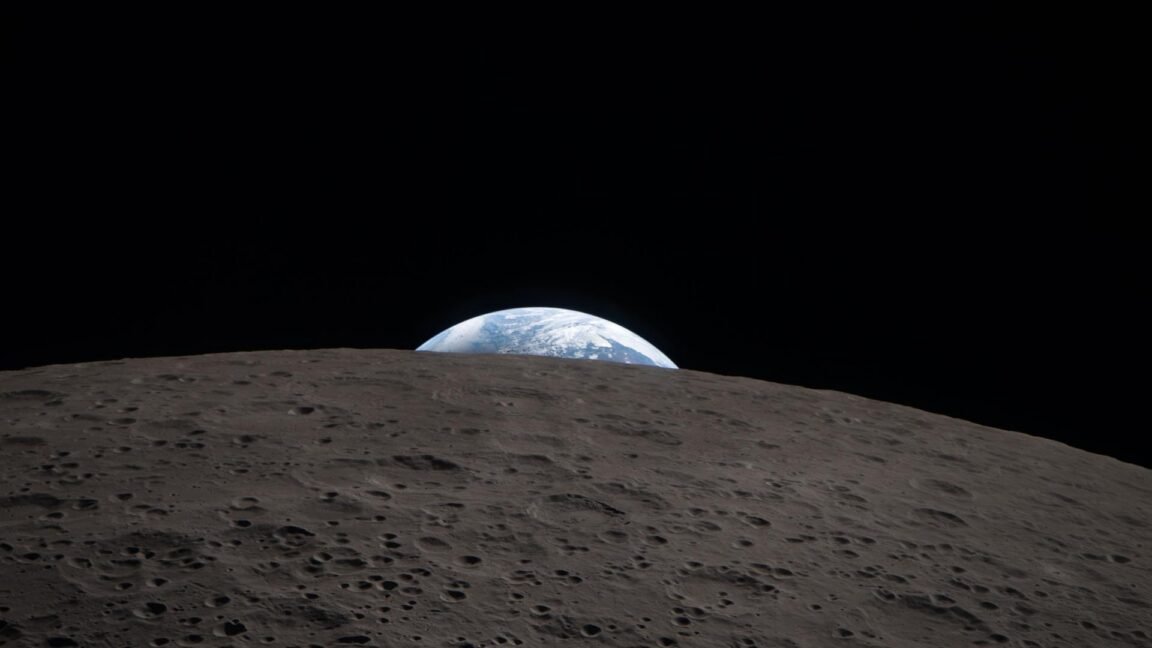
The Artemis era truly began Friday night when a brilliant spacecraft that had traveled 700,000 miles around the Moon, carrying four astronauts, splashed down in the Pacific Ocean off the coast of California.
For NASA, for its international partners and for all of humanity, the successful conclusion of the Artemis II mission marked the return of our species to deep space after more than half a century.
It was a spectacular achievement, and NASA deserves credit for making something that is very difficult look relatively easy. But it also raises an important question: what comes next?
NASA recently revised its mission plans for Artemis III and IV, to provide a stepping-stone mission before embarking on landing humans on the Moon. It is necessary to work hard, and more, to make these flights happen. And to be completely frank, the Artemis II mission that concluded on Friday was the lowest hanging fruit of the Artemis Program.
“The work ahead of us is greater than the work behind us,” Amit Kshatriya, NASA associate administrator, said after Friday night’s landing.
What comes next involves more complex operations, requiring multiple vehicles and ultimately descending to another planetary body. To achieve its goals, NASA will have to take off the training wheels. Here, then, is the state of the main elements that must come together to take humans to the Moon.
Space launch system
Several NASA officials have praised the performance of the Space Launch System rocket during the Artemis II launch on April 1, saying it reached the target orbit for the mission with greater than 99 percent accuracy.
The core stage of the Artemis III mission is expected to leave the factory in Michoud, Louisiana, later this month for delivery to the Kennedy Space Center, Florida. Other elements of the rocket have already arrived, or will arrive soon.
Meanwhile, the Mobile Launch Tower sustained moderate damage and will soon be returned to the Vehicle Assembly Building in Florida for refurbishment and then stacking operations for the next mission.



