
The Bremen startup’s platform deploys teams of AI agents that autonomously execute engineering tasks on more than 75 existing tools, without replacing any of them. Revaia led Serie B; Capgemini joined through its ISAI Cap Venture vehicle. All Series A investors returned.
SineraThe Bremen-based agent AI platform for industrial engineering has raised $40 million (approximately €35 million) in a Series B round led by Revaia, with the participation of Capgemini through ISAI Cap Venture.
All of the company’s existing Series A investors returned, including UVC Partners with a substantial commitment from its growth fund, BMW iVentures, Cherry Ventures, Venture Stars and Spark Capital.
The round aims to accelerate Synera’s expansion in the US and internationally, leveraging existing deployments at NASA, BMW, Airbus, Volvo Trucks and Hyundai.
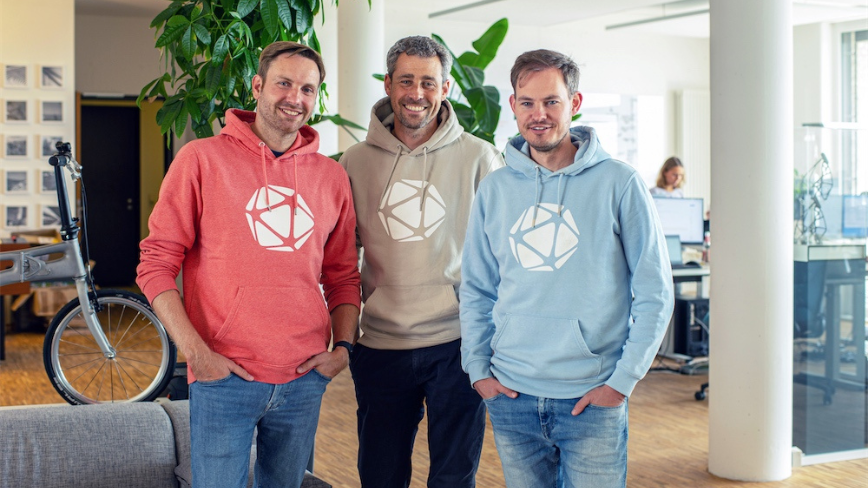
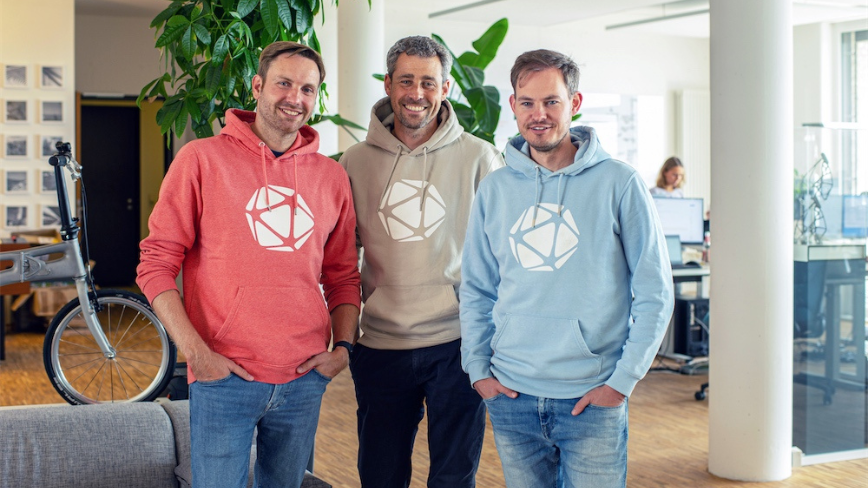
Synera was founded in 2018 in Bremen by Dr. Moritz Maier, Sebastian Möller-Lafore and Daniel Siegel, a team that had been working together since 2006, initially under the name ELISE (Evolutionary Lightweight Structure Engineering), before changing its name in 2022 to reflect the company’s expanded reach.
The platform connects more than 75 existing engineering tools, including software from Altair, Autodesk, Hexagon, PTC and Siemens, into a unified orchestration layer. Allow AI agents to execute complex engineering tasks. autonomously in design, simulation, optimization, costing and reporting without requiring companies to replace their existing infrastructure.
The platform is deployed locally, keeping engineering intellectual property and sensitive data within customers’ own environments. Synera has also established a US presence in Boston, Massachusetts.
The company describes its approach as deploying a virtual engineering team: agents that not only help but execute autonomouslyrunning iterative simulations, generating reports, responding to quote requests, and progressing through approval workflows without human intervention at every step.
The platform has been described internally as “JARVIS for engineers.” Quantified results cited by Synera and independently validated by Frost & Sullivan in a 2025 analysis include a 95% reduction in finite element simulation time at engineering consultancy EDAG, and a 30% weight reduction in 3D-printed robotic gripper designs at BMW’s Additive Manufacturing Campus.
NASA has deployed several Synera agents to transform requirements into validated part designs, completing hundreds of design iterations in an hour.
The investment context is a structural mismatch between AI investment and manufacturing deployment. Gartner’s 2025 CIO survey found that 86% of manufacturing respondents plan to increase investment in generative AI in 2026 and 97% expect to have implemented it by 2028, yet only 41% of AI and generative AI prototypes currently reach production, according to Gartner’s 2024 AI Mandates for the Enterprise survey.
Synera’s proposition is that the gap exists because most AI tools treat engineering as a chat interface problem rather than an infrastructure problem: agents need to connect to the actual tools where the work happens, not sit next to them.
The company has also been recognized by Frost & Sullivan with its 2025 Global AI Agents for Engineering Transformational Innovation Leadership award.
The Series A, raised in September 2022, was $14.8 million, led by Spark Capital with participation from BMW iVentures, Cherry Ventures, UVC Partners and Venture Stars. The Series B brings total funding to approximately $58 million.
Capgemini’s entry through ISAI Cap Venture is strategically notable: Capgemini is one of the world’s largest IT services firms and a major provider of engineering services to the automotive and aerospace sectors targeted by Synera, making it both a potential investor and channel partner.



