
OpenAI has released a major update for Codexintroducing features like background computing, an in-app browser, image generation, memory, expanded automations, and over 90 new plugins.
The update is currently rolling out to Codex Desktop App registered users ChatGPT on macOS. Computer usage for EU and UK users and customization options for Enterprise and Edu accounts are expected to be available soon.
Using Codex Computer on Mac and Integrated Browser
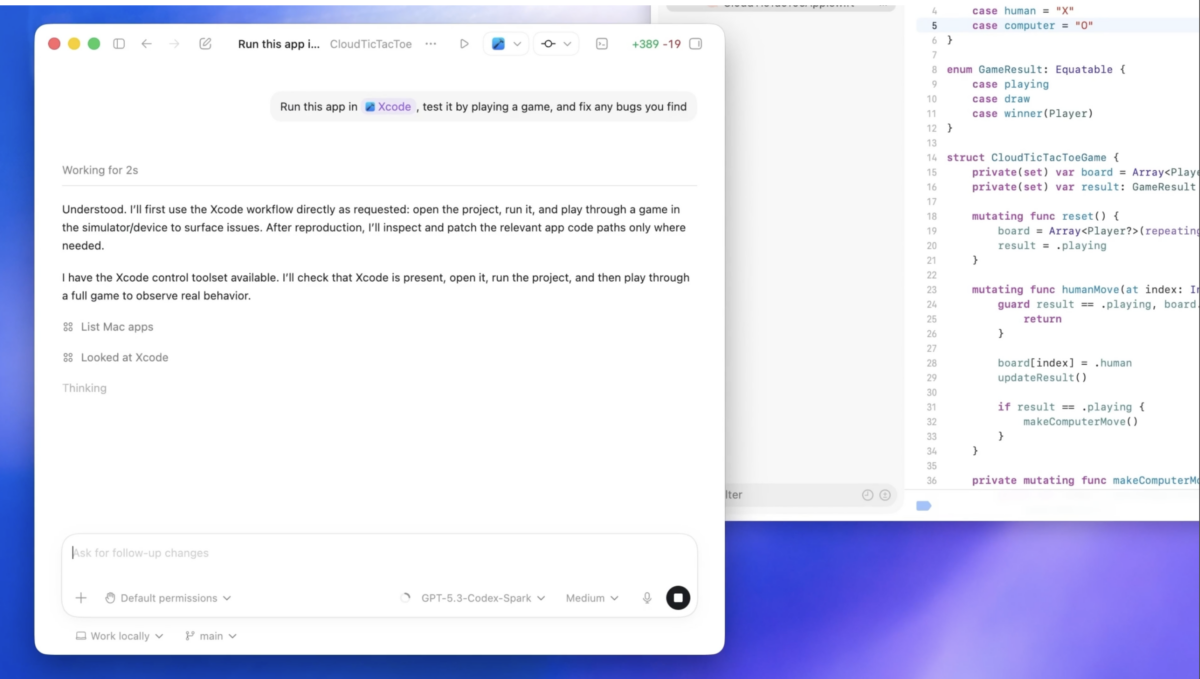
Codex now has the ability to operate applications on a Mac by viewing, clicking, and typing with your own cursor, all without requiring an API integration. Multiple agents can run simultaneously without interrupting the user’s work in progress. OpenAI says this feature is useful for testing and iterating interface changes, evaluating applications, and working with tools that don’t offer an API.
The Codex app now features a built-in browser that allows users to comment directly on web pages, providing precise instructions to the agent. Currently, this tool is aimed at frontend and game development on localhost. OpenAI has also announced plans to expand browser control to include more than just local web applications over time.
New imaging tools, memory and automation powers
Codex now has the ability to generate and refine images using gpt-image-1.5, integrating screenshots and code. This feature can be used to create product concept images, design interface mockups, and develop game assets within the same workflow.
A memory preview helps Codex remember the context of previous sessions, including personal preferences, corrections, and information that took a long time to collect. The goal of memory is to speed up the setup of repeated tasks and improve the quality of results without the need for detailed custom instructions.
Automations have also been expanded, allowing the reuse of existing conversation threads. Codex can now schedule future work on its own and automatically resume long-running tasks, even over several days or weeks.
According to OpenAI, teams are using automations to manage open pull requests, track tasks, and monitor activity in Slack, Gmail, and Notion. Additionally, Codex now proactively suggests work based on project context, connected plugins, and memory. This includes identifying open comments in Google Docs, extracting relevant information from connected tools, and providing a prioritized list of actions.
Developer workflow improvements and 90+ Codex plugins
The app now allows users to directly reply to GitHub review comments, run multiple terminal tabs at once, and connect to remote devboxes via SSH in the alpha version. Files can be opened directly from the sidebar with detailed previews of PDFs, spreadsheets, slides, and documents. A new summary panel provides an overview of agent plans, sources, and artifacts.
Over 90 additional plugins have been added, expanding support for skills, application integrations, and MCP servers. New plugins include Atlassian Rovo for Jira management, CircleCI, CodeRabbit, GitLab Issues, Microsoft Suite, Neon by Databricks, Remotion, Render, and Superpowers.




