
For years, Raspberry Pi held a place very specific place in my brain. It was the board I chose when I wanted a project to feel open, a little complicated, and still powerful enough to run an entire operating system. That bargain started to falter when the Raspberry Pi 5 hit $60 for 4GB and $80 for 8GB, which was already a notable change from the old story people told about the Pi as a cheap default computer. At the time of writing this article, the situation had gone from mildly annoying to impossible to ignore. Official price increases had raised the 16GB Raspberry Pi 5 to $305, while even the 4GB and 8GB models continue to rise.
A board that used to be considered the budget option now carries enough pricing burden to earn its place in the hot seat.
What finally changed my habits wasn’t a dramatic anti-Pi conversion. I still think the Raspberry Pi hardware is good, and in some cases very good. But the economics of tinkering look different now, especially after the RAM apocalypse reduced memory supplies and forced the Raspberry Pi into repeated price hikes tied to LPDDR4 costs and AI-era competition for fab capacity. Once I started comparing those boards to what I really needed for many weekend builds, Microcontrollers stopped seeming like a compromise and it became the smartest choice.

Most of my projects never needed Linux anyway.
A full single board computer became the wrong default
The first shift was realizing that many of my projects were embarrassingly simple. Sensor nodes, button panels, LED indicators, small automations, tiny controllers, and single-purpose devices don’t need desktop-like behavior. They need to boot up quickly, stay stable, consume power, and do a job every day without asking for updates. That’s exactly where microcontrollers shine, and it took rising Raspberry Pi prices to make me admit that I had been using a small Linux computer for work that a much cheaper board could handle just fine.
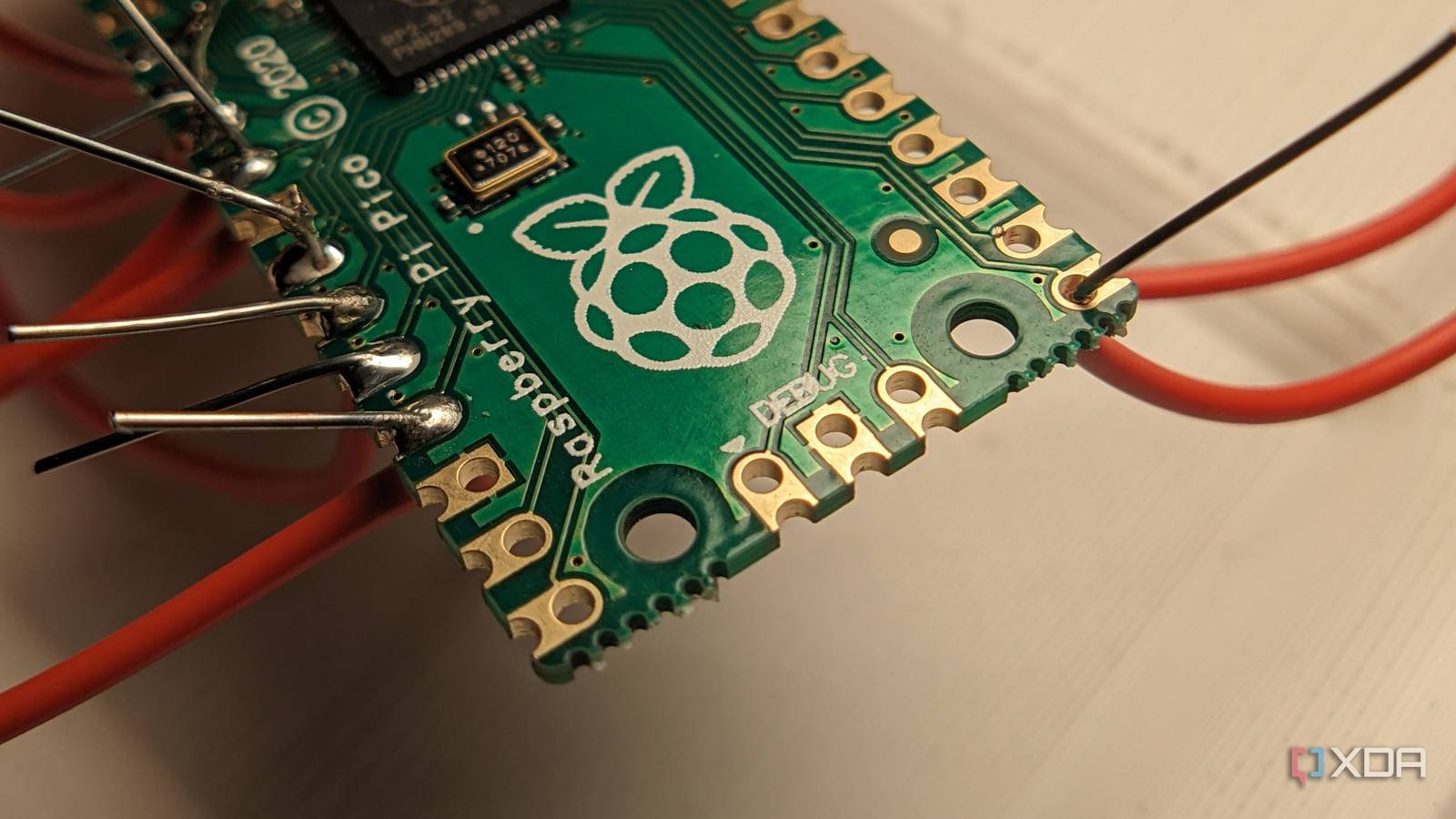
Once you think about it that way, it’s hard not to see the value gap. The Raspberry Pi Pico 2 starts at $5, and the RP2350 chip behind it was launched as a higher-performance successor to the RP2040, while keeping prices in the sub-$1 to low-single-digit dollar range, depending on package and volume. Raspberry Pi also said in July 2025 that it had sold more than half a million Pico 2 and Pico 2 W boards in less than a year, which tells me that it is no longer a niche side branch. It’s a serious platform with real momentum.
That changed the way I buy a project before I even start wiring. If the build doesn’t need a browser, package management, multitasking, or real Linux userspace, I no longer consider a Raspberry Pi to be the obvious answer. I treat it as the expensive answer. A board that used to be considered the budget option now carries enough pricing burden to earn its place in the hot seat.
The price difference became a project design rule
Cheap boards started making smarter project decisions naturally

The second turn was more practical than philosophical. When a 4GB Raspberry Pi 5 was released for $60, it could still be rationalized as a flexible core for all types of builds. But the official increase in December 2025 raised that model to $70; the February 2026 increase added another $15 to 4GB boards; and the April 2026 increase added other variants from $25 to 4GB. This is how a board that once felt like a casual purchase begins to drift into “think about it first” territory.
And that’s before the usual extras show up to join the party. A Pi build often needs a decent power supply, storage, cooling, maybe a case, and sometimes a HAT or adapter if the project needs something specific. The Raspberry Pi’s own product page recommends a quality 5V 5A USB-C power supply for the Pi 5 and notes that active cooling helps it perform at its best, which is perfectly reasonable. Still, it also means that the actual cost of the project moves away from the sticker price fairly quickly. The board is just the first domino.
Microcontrollers aren’t always dirt cheap once you add screens, sensors, and radios, but they usually allow me to spend money where it counts rather than paying a tax on the operating system. I can build a dedicated controller and keep the design focused because the hardware itself encourages restraint. That is useful. A lot my best projects It got better when I stopped building them as small general purpose computers and started building them as home appliances.
There are still good reasons to continue buying Raspberry Pi
Microcontrollers cannot cleanly replace all types of projects
To be fair, the Raspberry Pi didn’t become a bad platform just because the price went up. A Pi still gives you full Linux, proper networking, mature software stacks, USB flexibility, multimedia capability, and the convenience of solving problems with familiar desktop-style tools. If I want to run Home Assistant, host services, manage a camera workflow, or build something that relies on a real browser and conventional packages, I’m not going to go with a Pico. I’m looking for a single board computer and the Raspberry Pi still belongs in that conversation.
There is also the simple matter of convenience. Linux boards allow you to move quickly when the project is undefined or likely to grow strange little branches later. You can start with a vague idea, install some packages, open a terminal, and improvise until you come up with something useful. A microcontroller asks you to be more deliberate from the start, which is admirable, but not always fun when you’re still poking around the edges of an idea.
And Raspberry Pi hasn’t completely abandoned the low-end. The company introduced a 1GB Raspberry Pi 5 for $45 in December 2025, noting that 1GB products and older LPDDR2-based boards like the Zero and Pi 3 were insulated from some of the memory-driven increases. So the ground has not disappeared. The thing is that the models that many enthusiasts really want, especially the most capable ones, are the same models that were hit the hardest by lack of memory.
That still doesn’t make Pi my default again
Better hardware no longer means better value for tinkerers

That’s the gist of this for me. I’m not saying that a Raspberry Pi 5 is worse than a microcontroller. In terms of raw capacity, of course, it is not. I maintain that capacity only matters when the project can actually use it, and many hobby builds simply can’t. Paying for free space you’ll never touch is how a once affordable platform quietly turns into overkill.
The RAM apocalypse made it impossible to ignore that mismatch. Raspberry Pi itself linked the increases to a sharp rise in LPDDR4 costs and competition from AI infrastructure, and outside coverage repeatedly framed the outcome as the Pi being dragged into the same broader memory crisis affecting other parts of consumer hardware. That context is important because it suggests that the problem was real, not arbitrary, but it doesn’t make the purchasing decision easier for fans. If anything, it clarifies why I stopped defaulting to boards that rely on expensive memory in the first place.
Before purchasing a Raspberry Pi for a new project, stop and ask if you really need Linux, HDMI, or USB peripherals, and if you need to do more than one job at a time. If the answer to most of them is no, a microcontroller is probably the best option and almost certainly the cheapest. That quick check can save you from spending too much on a board that’s much more capable than your project really needs.
Microcontrollers feel more honest to the kind of things I really like to build. They start up fast, run efficiently, and foster a single-purpose mentality that accommodates sensors, switches, relays, displays, and automation widgets much better than a full SBC. Raspberry Pi’s own RP2350 ecosystem also seems more mature now than it did a couple of years ago, with the chip’s general availability, A4 silicon fixes, and the board’s continued push around the Pico 2 and Pico 2 W. So this isn’t me retreating to a lesser class of hardware. It’s me choosing the class that suits the job without dragging a price anchor behind it.
My workbench looks totally different now
I still like Raspberry Pi. I just don’t like how my response reflects to each new idea. Once prices started rising wave after wave, the old logic broke and the RAM apocalypse made that break impossible to ignore. For many of the projects I enjoy most, a microcontroller is not a cheaper substitute for a Pi. It is the cleanest option.
That’s why my default build path now starts smaller. I ask if the project needs Linux and surprisingly often the answer is no. When the answer is no, the economics, power profile, and simplicity of a microcontroller win without much debate. Raspberry Pi is still great when I really need a small computer, but these days I prefer to save the SBC for work that really deserves it.



