Tempted to switch to Linux but worried about leaving Windows behind? It may seem like you are starting from scratch, but that is not the case. Linux has a reassuring path that allows you to traverse without fully committing.
It is a common misconception that by switching to Linux you are stuck with an unknown system and must leave your Windows life behind. Today I will show you that that is not the case. You can try Linux in a virtual machine, install it alongside Windows, and take your time. I had a Windows installation for years after I made the switch. I removed it only when it was no longer worth the effort. So if you think the bar is too high, think again. I will lay out a smooth path for you that will keep your options open.
Choose a Linux distribution
You only have five crucial needs, so do it quickly

There are hundreds of distributions, but don’t think too much about which one to choose. All layouts are practically the same under the hood, and changing them is like renovating your house, not moving. With that in mind, focus on picking one up quickly and giving it a whirl. Your only requirements should be:
- similar to windows: Familiar look and feel.
- Run Windows applications: Some of the following distributions support this out of the box.
- Easy installation: A GUI that configures dual boot (multiple operating systems side by side).
- GPU support: If you have an Nvidia GPU, take some time to choose the right distribution to help you.
- Wi-Fi support: If you have a Broadcom, Realtek, or MediaTek Wi-Fi card, do a little more research on your specific model. Often you can simply change the card.
Any other concerns may arise later. Just give Linux a quick spin without the pressure.
I wrote an in-depth article covering why Zorin OS and Nobara Linux are my two options for beginners. The summary is:
- Zorin operating system: Looks like Windows and packages Came with its installer to run Windows applications.
- Nobara Linux: Similar to Windows, with a focus on multimedia.
- mint linux (also recommended) – A solid option, although it doesn’t come with Wine pre-installed (which can be a problem).
All three pretty much meet the above criteria (with a few caveats), so pick one.
Try Linux in a virtual machine
VirtualBox is easy to use and works well for exploring distributions

VirtualBox is a beginner-friendly virtual machine monitor (VMM), which is a fancy way of saying that it can run operating systems as if you were running an application. It comes with a handy GUI and is a great way to try out Linux for the first time. This way, you can get your feet wet, not compromise, and see if your Windows apps work (via Wine and bottles).
Go to VirtualBox installation page and follow the instructions. Download the ISO for the Linux distribution of your choice and mount it in VirtualBox. That will guide you through the installer. If you can’t complete the process without problems, maybe that distribution isn’t the right choice for you?
To get the full experience, be sure to install the VirtualBox guest additions on your Linux distribution.
Also, keep in mind that rendering graphics within virtual machines (VMs) is often slow without advanced settings. Don’t judge the Linux distribution too harshly here.
Native installation
Dual boot and you can always go back

You have now determined that installation is easy and that many of your Windows applications will work in Wine. For those who don’t, you have VirtualBox and WinBoat as alternatives.
At this point, you should flash a USB stick with the chosen Linux ISO. Check that your distribution supports dual boot installations and UEFI firmware (it almost certainly does), then boot from the device. It will guide you through the process using a wizard, including the dual boot portion, and safely resize your Windows partition as you go. After 10 to 15 minutes, you’ll be ready to go.
Always back up the data you care about before making risky changes.
If dual boot is not a good option for you, try an old laptop. Or, better yet, try a new laptop. Intel ThinkPads are famous for their Linux support. Not so much their AMD counterparts, however, which often ship with non-Intel Wi-Fi cards (such as MediaTek, sometimes soldered on) that have weaker Linux support.


8/10
- Brand
-
lenovo
- Operating system
-
Windows 11 Pro
- UPC
-
Intel Core Ultra 7 258V processor (8 cores, 8 threads, 12 MB cache)
- GPU
-
Intel Arc Xe2 GPU with >60 TOPS
I have another article that covers why I love ThinkPads. It also explains which models are best suited for you.
gradually change
Give yourself space to breathe
You probably won’t be in a rush to replace Windows completely and it will still be there to help you if needed. Take your time and assimilate the Linux culture. If you have an app that doesn’t work in Wine or in a virtual machine, you can simply reboot back into your old Windows environment.
As you immerse yourself in the world of Linux, consume open source content such as news and social media. This will introduce you to new ideas and answer questions, such as finding popular, free alternatives to your Windows apps.
Once you’ve used Linux for 6-12 months, I’d say you’ll be a complete convert. However, you can keep Windows for years without damage, and I suggest you do so.
holding on
At some point, you won’t even need Windows
After a while, the idea of installing and configuring Windows gets boring. If you haven’t used it in five years, why bother? At that point, you may want to keep a copy on a virtual machine.
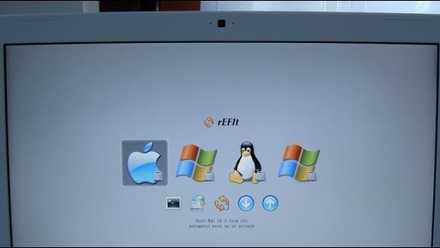
If you’ve been using Linux for a while and can install Windows in a virtual machine, there are ways to provide GPU acceleration. However, it is not for the inexperienced, but as a veteran Linux user, that is not a problem for you.
For a beginner, switching to Linux is not necessarily a difficult change. It’s like buying a vacation home and deciding what you like best and staying longer and longer. You don’t need to fully commit anything until you’re ready; you just need to take the first small step: choose a distribution.
In summary:
- Quickly choose a distribution: 1–2 hours
- try it: Use VirtualBox (2 to 3 hours)
- Native installation: Dual boot to keep Windows (1-2 hours)
- gradually change: Restart when uncomfortable (6 to 12 months)
- Flip windows: You don’t need it (1 to 5 years)
It may seem presumptuous to think he’ll stay, but if he does, that’s an honest timeline. Very few things keep you on Windows once you explore adjacent spaces for long enough. Maybe some proprietary software for work or play, but that door can stay open as long as you want.