

Laptops are becoming a little expensive these days. Sometimes it can also be a bit annoying to travel with them, depending on the situation.
Fortunately, I have a modified Fire tablet that, lately, has become something of a laptop replacement for those times when I need something smaller, more portable and with fewer cables to manage.
With that out of the way, these are the top apps I use to turn my modded Fire tablet into a personal laptop replacement.
Start with my basic setup
Here is the hardware and some writing apps that work for me.

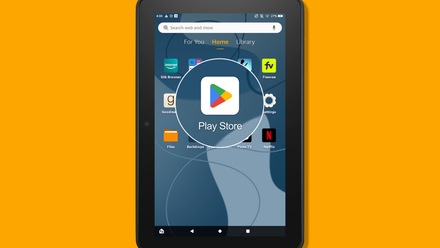
Needless to say, you’ll need a Bluetooth keyboard (I use a Made for Amazon Bluetooth Keyboard for Kindle Fire) and maybe a Bluetooth mouse if you’re using a Amazon Fire HD 10 Tablet (like me) as a replacement for a laptop. I don’t use a mouse because the touch screen on my tablet works well for me. However, I do have a 500GB microSD card available for storage. You’ll also want to make sure your tablet has the Google Play Store installed.
Most of the apps I mention here are available through the Google Play Store, but sometimes the store will say that the app is not compatible with your device. In my very recent experience, getting them from F-Droid can fix this problem for certain apps. Please note that F-Droid does not replace the Google Play Store; It is just an open source application repository.
Because writing is a big part of what I do on my Fire tablet (and basically every device I own), I use Google Docs, Google Sheets, and Obsidian. They are useful tools for outlining, drafting, and research. I don’t really count these as apps that will make your Fire tablet more like a laptop. But I truly believe they are essential for the basic setup.
I include these two apps as part of my basic setup because what productivity machine wouldn’t be at home without some sort of office suite? I use Docs to write my drafts and Spreadsheets to budget/track ideas/sources for the moment, while I actively look for alternatives.
However, in most of my writing I use Obsidian extensively. It’s often my notepad for jotting down quick thoughts. For larger research projects, I will use it as a project hub to get a full picture of my topic before writing a paper.
Nova Launcher
A new look and launcher for your Fire tablet
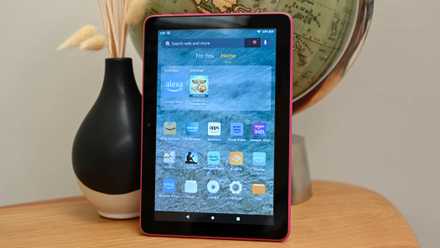
I have I have never been very satisfied with the Fire Launcher that is included with the tablet. On this Fire tablet, I replaced it with Nova Launcher with an app that works with another app called Automate (a special app specific to my setup) to redirect the home key and create a cleaner, less cluttered home screen.
Nova also allows icon customization (I turned my icons into squirrels), a dark theme, and fallback options. To me, it feels like an optimized desktop similar to how I have Linux Mint set up on my computer.
If you want a full laptop aesthetic, there’s an app called Computer Launcher, but I didn’t like it (and the ads were incredibly intrusive), so I’ll stick with Nova for my setup.
HTML Editor (from ALIF Technology)
To perform quick encryption from your tablet

I like making websites by hand. There’s nothing more satisfying than building your own CSS, screwing it up, and then tweaking it until you tear out the last of your hair, give up, and say, “Hey, that’s pretty good.”
I use the free version of an app simply called HTML Editor. It has a notepad to create your page and a tab where you can immediately see a test preview after saving the HTML file. It is quite useful for quick coding and does not require any browser.
Firefox for Android
For greater convenience and ad-free web browsing (with extensions)

There are many privacy-focused browsers. While I tend to use Vivaldi on my mobile devices, I prefer Firefox right now for using the internet on my tablet.
I use some specific plugins to improve my browsing experience, such as Ad Nauseum to block ads and Privacy Badger. I usually use it for research, but it’s also great for visiting sites like Metafilter, watching some videos (YouTube, Vimeo, etc.), and playing browser-based solitaire games.
I play (and write about) a lot of solitaire. Until now, Firefox mobile handles browsing very good, and I successfully tested Claude’s research from the browser, so it can handle that too.
High quality MP3 recorder
I use it for limited audio work on my Fire tablet

Did you know that Fire tablets have microphones? I never really thought about it much until I started tinkering and trying different experiments on mine. So naturally I thought it would be a good way to record practice sessions or guitar snippets.
I bought the Hi Q MP3 recorder several years ago, but it has worked well for me on several devices. You have several options to adjust bit rates, set timers, and put limits on recording duration. You can also link your Google Drive if you wish, for storage.
It works well for sketching out quick ideas or taking notes, but keep in mind that it has no editing capabilities; It’s just recording and playback. It also allows recording in WAV, Ogg Vorbisand some other audio formats. WHO I wouldn’t do it do you want that? There is a free version, but I use it so often that I purchased the Pro version.
As a writer, musician, and researcher, I love the convenience of a Fire tablet as a makeshift laptop.

A Fire tablet may not be ideal for audio or video editing, but it works well for my work and often serves as a sort of pseudo-laptop for those times when I just want to get some quick work done.
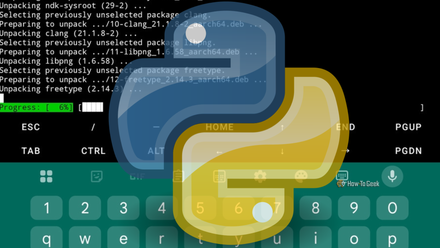
Honorable mentions to Symfonium for playing music while I work, NEStalgia NES for testing home NES games, Snapseed for occasional photo editing, and Termux for terminal-based experiments/home lab projects. I also use Proton VPN, but that’s a story for another time.
Now, to find another interesting project for my modified tablet…



