

Google packs every new Android update with a ton of useful features, many of which go unnoticed while the focus is on the important things. As we move into Android’s seventeenth major release cycle this year, it’s easier than ever to lose track of how much has been added over time.
Beyond the core features you probably already know about, there’s a long list of lesser-known features and tools in Android, along with even more improvements implemented by manufacturers. Many of them can really improve daily use, but most people don’t even know they exist. These are some of those obscure features that I use all the time and that you might want to start using too.
I will no longer worry about dismissing notifications by mistake thanks to notification history.
Android keeps a hidden log of notifications you’ve deleted
Let’s be honest, everyone deletes one or two notifications during the day without really thinking about it. Action has practically become second nature. You swipe down, clean up the mess, and move on, especially when you just woke up from a nap and haven’t even had a sip of coffee yet.
The problem is that a few minutes or hours later, you’re left trying to remember what you really discarded.
Sometimes it’s nothing. Other times it is not. A follow-up email from your boss arrives in your inbox the next day, asking why you missed the quarterly meeting. A friend is getting a little passive-aggressive because you never responded to his ask out. Or, if you’re really unlucky like me, you miss a dentist appointment and end up having to beg them to reschedule.
The good news is that Android has a notification history feature which allows you to check every notification you have deleted. The bad news is that you have to know it exists, because it is not available in the notification tone; instead, it’s hidden in your phone’s settings.
You can enable and access Notification History by going to Settings > Notifications and quick settings > More settings > Notification history. Alternatively, you can use the search bar and type “Notification history.” Once enabled, you will be able to see a log of recently deleted notifications.

When you want to see the notifications that you have dismissed, you can return to the same menu. If you have a Pixel phone, you can also tap the No notifications text when you lower the notification shade to open the notification history directly. Unfortunately, that shortcut doesn’t work on me OnePlus 15.
- SoC
-
Qualcomm Snapdragon 8 Elite Generation 5
- Show
-
6.78 inches 2772*1272 (FHD+)
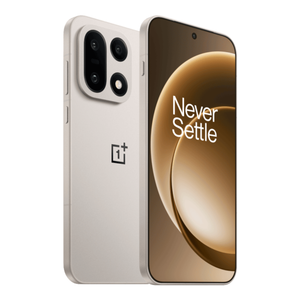
The OnePlus 15 features the latest Snapdragon 8 Elite Gen 5 SoC that enables gaming features never seen before on a smartphone. The 165Hz display is perfect for mobile gaming, and when not gaming it runs at 120Hz, making it ideal for everyday use. The triple camera array is quite good and the 7300 mAh battery lasts for several days on a single charge.
The hidden “Alt-Tab” gesture helps me multitask much faster
A quick swipe can take you to the recently used app
One of the most common actions that I do hundreds of times a day is opening and closing applications. I found that the quickest way to do this is not to open the recent apps screen, but to simply swipe along the bottom edge of the screen from left to right.
You can also do it in reverse, from right to left, to return to the app you last used, and there’s no limit to the number of swipes you can do. It’s pretty much the mobile equivalent of the Alt-Tab shortcut on Windows PCs.
You need to enable gesture navigation for this to work, but if you’re using 3 button navigation.Don’t worry, there is an alternative.
You can quickly switch between the two most recently opened apps by double-tapping the Recent Apps button at the bottom of the screen. If you tap it quickly, you can also scroll through recent apps, although it’s not entirely As intuitive as swiping with gesture navigation..
Of course, you’ll still need to open the app drawer for apps you don’t use frequently, but for anything you’ve opened recently, this shortcut is easily the quickest way to switch.
Drag and drop lets me move content between apps in seconds
Share text and images without using screenshots or copy and paste
One of the most common everyday actions I do on my phone is to take a screenshot or copy and paste text or an image from an app and then send it as a chat message to someone.
Android 14 introduced a feature that significantly improved this, but I rarely see people using it in the wild: you can drag and drop content between apps.
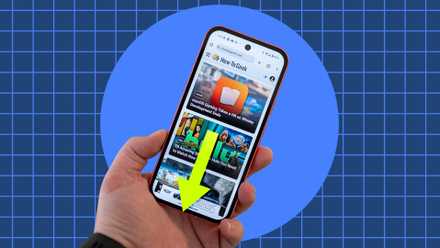
Simply select a piece of text, an image or a link, then tap and hold for a second and drag it to the bottom of the screen to share it in the app of your choice. Better yet, hold the item with one hand and use the other to swipe across the bottom of the screen (the feature I covered above) to switch to the app you want to place it in, and then release.
You can even drag and drop in multi-window mode. It’s incredibly intuitive once you realize that, just like a computer mouse, you can drag and drop almost anything anywhere.
Some apps even go a step further. For example, the gallery app on my OnePlus 15 automatically isolates the specific element of an image I have, allowing me to send cropped images in seconds. It’s like magic!
Please note that support varies greatly depending on the application. I haven’t been able to get this feature to work in some apps, such as Messenger, where tapping and holding text brings up the reactions menu.
App pinning prevents people from wandering around my phone
Lock your device to a single app before handing it over
App pinning allows you to lock your screen to a single app while locking access to the rest of the phone. This is perfect when you need to hand your phone to someone and you don’t want them to snoop around. If you give your phone to the kids so they can watch YouTube or play games, this is exactly the feature you never knew you needed.
Before you can use app pinning, you must enable it. Gonna Settings > Security and privacy > More security and privacy > App pinning.

The text on your device may vary slightly, so it is often easier to use the search bar. Additionally, some phones don’t let you use app pinning with gesture navigation, so you may have to switch to 3-button navigation before enabling it.
Once app pinning is enabled, open the app you want to pin, open the recent apps screen, tap the three dots icon next to the app, and tap Pin. To unpin the app, you will usually be asked to unlock your phone.

Pinned shortcuts take me exactly where I need to go without opening apps
Staying on the topic of pinning things, did you know that you can pin various actions to specific apps on your home screen? This is an incredibly convenient feature, especially if you always go to the same section of an app all the time. For example, you can pin shortcuts to your Amazon orders or cart instead of just the shortcut to the main Amazon app.
Set a shortcut It’s very simple. Simply tap and hold the app you want to create a shortcut for, and when the app’s shortcut menu appears, tap and hold and drag the specific shortcut to an empty spot on your home screen. That’s all.

The best part is that there is almost no limit to the types of actions and menus you can set. For example, I set up shortcuts to start a running activity on my fitness tracker, open chats with important contacts, start ChatGPT voice mode, create a new alarm in my alarm app, open the selfie camera, search Spotify, etc. The sky (or, more precisely, what the developer has enabled) is the limit!

Chances are good that your favorite Android feature is one you haven’t found yet.
I’ve only covered a small number of my favorite Android features here. I bet there was at least one you didn’t know existed and hopefully it’s something you’ll end up using every day now that you’ve found it. There are many other useful features on your Android phone waiting to be discovered. So start exploring!




