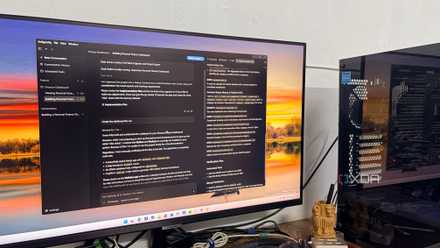
I’ve been experimenting extensively with Claude Code and Google Antigravity as part of my development workflow. I have used them to create an enterprise level tool. However, I wouldn’t give credit solely to the tools. There was a lot of human input involved throughout the entire process. Still, working with them made me realize how capable these tools have become.
This became even more evident recently when gave Claude Code and Google Antigravity a complete project. I wanted to create something useful, not just run another coding tools benchmark test. The project was a resume building microsite for a friend who was actively looking for a job. I already had a solid resume, but I needed a way to edit it properly and create versions tailored to different roles. A single resume rarely works for all applications because each job requires a slightly different emphasis.
I wanted the microsite to provide templates, editable sections, and role-specific versions without turning the process into a manual copy-and-paste exercise. I ran Claude Code within Google Antigravity through the terminal while also using Antigravity agents to plan and structure the project. That combination finished the build almost twice as fast as my usual VS Code workflow.
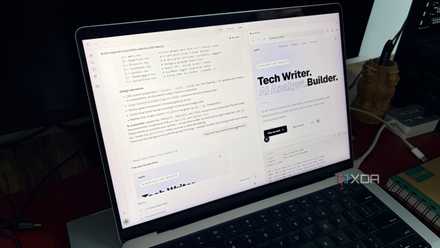
Using Antigravity to plan
And Claude Code for its execution.
My plan was to use Google Antigravity and Claude Code to my advantage. I started by giving Antigravity a message to start planning the project. The plan is for Antigravity to break the project into milestones, build the architecture, and define the database schema. While this particular project didn’t require APIs, if yours does, you can create API specifications and ask them to identify risks and edge cases. Finally, you can ask it to create deployment tasks.
This helped get everything up and running in minutes. I then asked Claude Code to begin executing the plan. The best way is to assign it executable tasks and milestones generated by Antigravity. For my resume builder, that meant tasks like building the template system, creating editable sections, and implementing PDF exports. You ask Claude to start working on the first milestone and complete the milestones generated by Antigravity. Claude Code works much better when working on a specific task rather than when a message like “build all” appears.
If you want real speed, let Claude Code operate on the repository. Claude Code can create files for you. You can edit existing files, run tests, fix lint errors, and search the entire repository. VS Code, on the other hand, asks you to jump between tabs manually. For example, while working on the resume builder, I could ask Claude Code to update each template to support a new field or modify the PDF export flow. You could work with dozens of files without opening them and get the task done.
Both tools have their own strengths.

Once you have a reasonable result from Claude Code, you can use Antigravity as a second opinion. You can ask Claude Code to do something, then ask Antigravity to review it, and then send the review back to Claude Code. Antigravity can identify edge cases, usability issues, or architectural issues. Once those issues are highlighted, you can ask Claude Code to implement the changes.
While my resume building project didn’t require both tools to work over time, if you’re working on something much larger, you can also split the work into parallel streams. Instead of giving Claude Code a message to build the backend, wait, then ask him to build the frontend, wait again, and ask him to write the documentation, you could run multiple sessions. In my case, session A could focus on creating authentication, while session B could focus on the template editor. At the same time, Session C could handle PDF generation or documentation. The idea is to use several agents at the same time so that different parts of the project can progress in parallel.
I’ve also found it helpful to split the implementation and reasoning between the two tools. I’ve found Antigravity to be better with architectural planning, design decisions, and overall work review. Claude Code is brilliant at writing code, refactoring code, running commands, and creating tests, so you could basically split these functions between the tools for a much better result.
VS Code feels behind in agent development
He is way behind at this point.

VS Code still has a huge ecosystemand I understand why developers use it. It gives you extensions, debugging, Git support, and almost all the workflows a developer expects. Microsoft also recently added AI features and Copilot-based agent workflows to VS Code.
But my problem with VS Code comes from how the workflow feels during an entire project. You can add extensions, open terminals, install Copilot, configure tools, and create a decent setup. That setup still depends on you combining the workflow.
VS Code also carries baggage because the official product differs from the Code OSS repository. Code OSS is developed by Microsoft under the MIT license, but Visual Studio Code is shipped as a Microsoft product with Microsoft-specific customizations under a traditional Microsoft product license. It also explains why tools like VSCodium exist for people who want cleaner open source binaries. Telemetry also adds to my frustration with VS Code.
Other tools are now feeling more aggressive about the future of coding. Cursor, Antigravity, Zed, Warp and similar tools focus more directly on agent workflows. VS Code still gives you the most features through extensions and integrations, but that doesn’t automatically make it the fastest workflow.
Using multiple agents is the way to go
We have reached a point where using a single agent for everything It’s probably not the best approach anymore. You can use multiple agents on the same project and get much more value from them. I also found that this is cheaper than running everything through a single agent. It allows you to use cheaper models for simpler tasks while saving the more capable models for the job that really needs them.