

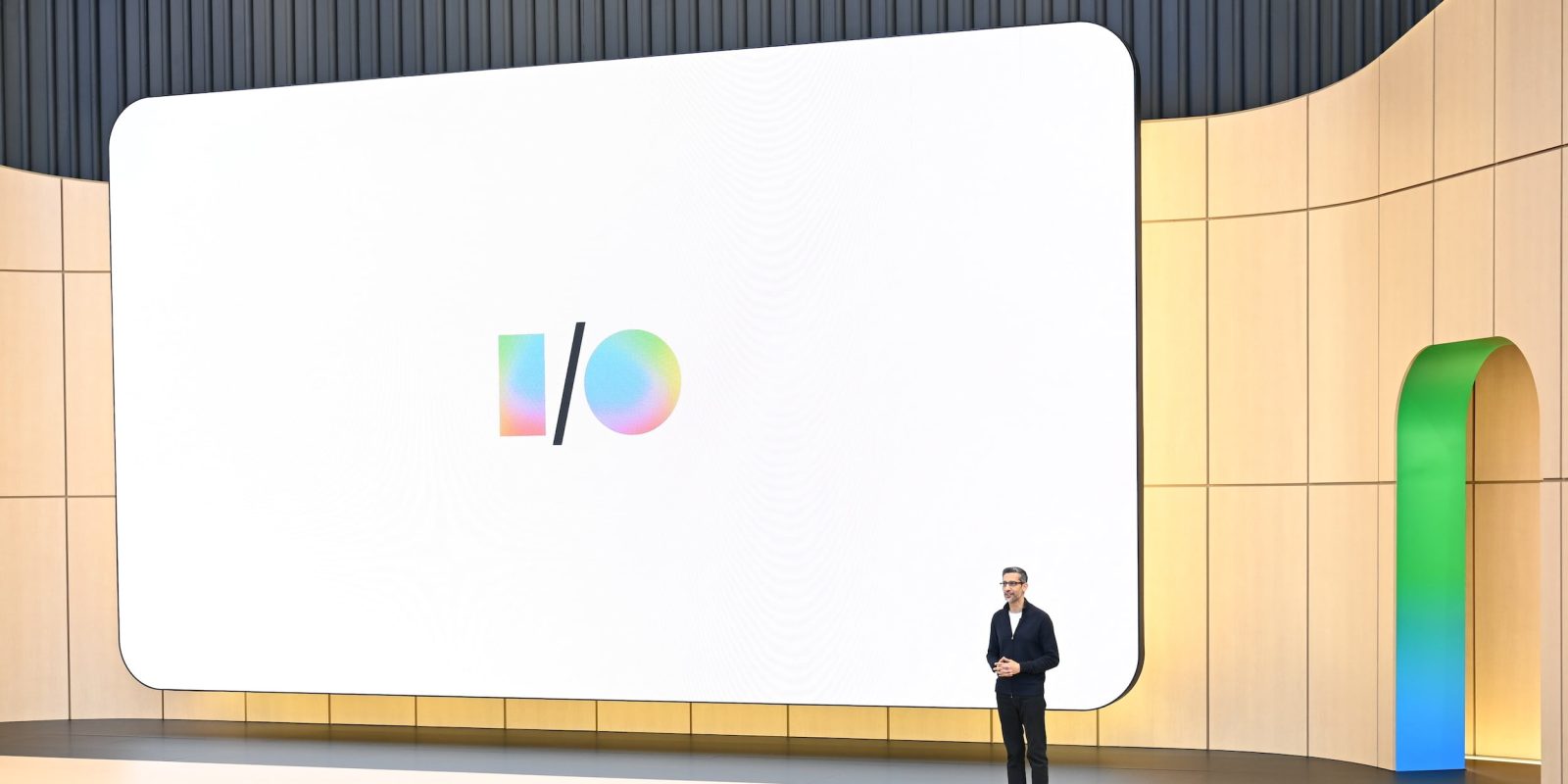
Sundar Pichai, CEO of Alphabet and Google today delivered the commencement address for Stanford University’s Class of 2026.
The Stanford alum begins by noting that this is only his second commencement speech, the first being a filmed address during COVID in 2020 as part of a virtual YouTube series.
Right off the bat, Pichai addresses how graduates in other speeches in recent weeks booed any mention of AI.
…people have also been giving me a lot of advice on what to say. It’s actually been the same advice and it’s about what not to say. People thought it would be very difficult for me; After all, they are the last two letters of my last name.
With some humor, he goes on to say that “the most timeless advice I’ve learned is independent of technology.”
The main premise of Pichai’s advice is that “very few moments in life are decisive.” Sundar shared a rather poetic story about “how he started learning this”:
On a Wednesday morning in January, my first winter quarter, we were on our way to class. (A classmate) said, “Would you rather go to Las Vegas?” I had never skipped a class. I had definitely never taken a road trip before. (In fact, this is the first time my parents found out.) And yet I said, “sure.” So we went back to our dorms, grabbed a few things and left.
You have to go through the mountains to get there. As we crossed them, it started to snow. I had never seen snow before. I reached out to grab it and couldn’t believe how soft the gusts were. Pat stopped the car so I could get out; It was truly beautiful, a moment I will never forget.
Nine hours after leaving, we arrived in Las Vegas with the lights of night on the horizon. I didn’t know what to think. Pat taught me how to play blackjack. I started with five dollars and managed to make about fifteen more, and I thought, “I’m out!” We didn’t have enough money to stay long, so the next day we headed back.
No one seemed to notice that we had skipped class. For the first time, I realized that the world wouldn’t end if I relaxed a little.
You are going to face many moments in your life. Only some of them are really important and need to be done well: choosing a partner, choosing whether to start a family, a more important career path. Those decisions take time and intention.
However, you will face many more moments in your life that just seem really big… Thousands of them, in fact. And very few of them are decisive: your first job after finishing university? The city you’re moving to next? Taking that road trip? While those moments add texture to your journey, they rarely determine the course of your life.
But if you’re able to filter the signal through the noise, you can push your life right now to have the impact you want.
Pichai proceeds to share “three simple filters” that “have helped him get more right than wrong and relieve some of the pressure” with examples from his life and career at Google.
“Choose optimism”
If you’re not from here, California is advertised as really lush and green. But when I looked out the window, it was more…brown. I guess I said this out loud, I’m not sure why. My hostess, Mrs. Jane Earl, kindly corrected me. “We prefer to call it gold,” he said.
And that’s exactly what I mean by choosing optimism. It’s about reframing the positive: where I saw brown, she saw gold. This slight change in perspective had a huge ripple effect on how I thought about the world around me…
Despite the brown hills and cold ocean, it seemed like almost everyone I encountered had a generally positive outlook on life. Maybe it’s because you can wear shorts all year round, I don’t know.
I found myself adopting this Californian optimism. And it helped me navigate one of my most important pivots during my time at Stanford: I came here with the full intention of earning my PhD and moving into academia. Life had other plans and I needed to get a job as soon as possible.
“Gravitate toward working on difficult things”
I’d love to tell you that I was an immediate success after leaving Stanford… I wasn’t. Even a decade later, I felt like I wasn’t on the right path and it took me a while to find my footing.
Until I submitted my application to Google.
The first “impossible problem” he worked on was the creation of Chrome.
And in 2008 we launched what we thought was a great browser. We had eight million users in the first twenty-four hours and the reviews were really positive. And then user growth stagnated.
After a year, we had about two percent participation. I remember Steve Ballmer, the CEO of Microsoft, mocking Chrome in an interview as a rounding error.
It could have been demoralizing. But with that Californian optimism, I told the team that the fact that he had gone out of his way to say goodbye meant we were doing something right.
We moved forward and set very aggressive stretch goals to keep the team pushing. We iterated on it quickly and shipped the browser every six weeks, while others shipped one maybe every six months or a year. Success began to arrive.
Working on difficult things has taught me a lot: it usually attracts other excellent, optimistic people. And even if you fail to achieve the lofty goals you set for yourself, you will still achieve something great.
So when you have the option to work on something difficult, say yes.
“When everything else is equal, do what excites you.”
I didn’t have much access to a computer until I got to Stanford. So you can imagine my surprise when I walked into Sweet Hall and saw rows and rows of computers that I could use whenever I wanted.
It was 1993 and the Internet was literally being built around me. I saw it as a fundamental facilitator of human progress. The idea of being able to be a part of bringing it to as many people as possible was exciting. That’s why I accepted Google’s offer. And why I jumped at the chance to work on projects like Chromebooks and Android later on.
The full transcript of the speech is available herewith video not yet available.


FTC: We use automatic affiliate links that generate income. Further.



