

Artificial intelligence is becoming an increasingly visible part of healthcare. From administrative workflows and clinical decision support to remote monitoring and wellness technologies, organizations are exploring how AI can help process information more efficiently and provide greater visibility into health-related data. However, as adoption accelerates, one challenge continues to influence whether these technologies gain significant acceptance.
Trust has become a central theme in the broader conversation about artificial intelligence. World Economic Forum Global Risks Report 2026 Rankings Misinformation and disinformation as the second most serious global risk in the short termwhile concerns about the adverse outcomes of AI technologies increased significantly in the report’s long-term outlook. As organizations introduce AI into increasingly sensitive areas, including healthcare, the findings underscore the importance of transparencygovernance and accountability to build public trust.
Doug Benoit, CEO of facialdxbelieves that confidence begins with clarity. FacialDx is an AI-powered wellness intelligence company that uses facial analysis technology to identify visual biomarkers associated with wellness indicators and provide structured observations intended to support awareness. Benoit explains that users increasingly want to understand how conclusions are reached rather than simply receiving results.
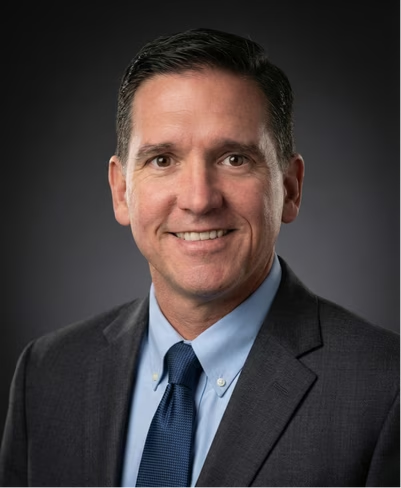
Doug Benoit, CEO of FacialDx
“People want to access the information behind the result,” says Benoit. “Trust grows when organizations are willing to show the methodology, data and reasoning behind what the technology presents.“
That expectation reflects a broader shift occurring in healthcare and technology. Organizations are facing increasing pressure from regulators, suppliers, employers and consumers to demonstrate how AI systems work, how data is managed and where human judgment is still involved. “Transparency is no longer considered an add-on feature,” notes Benoit. “For many stakeholders, it is becoming a prerequisite for adoption.“
Privacy represents an equally important consideration. Benoit explains that health information remains among the most sensitive categories of personal data, placing a significant responsibility on organizations developing AI-based solutions. Research shows that AI systems that handle sensitive health information They raise important concerns around privacy, data protection and the risk of data breaches, while highlighting the importance of ensuring that AI supports, rather than overrides, the judgment of healthcare professionals. Benoit believes those considerations reinforce the need for strong governance, security safeguards and clearly defined policies. human supervision as AI becomes more integrated into health-related environments.
Benoit notes that conversations around AI have evolved considerably over the past few years. According to him, many organizations have moved beyond asking whether AI should be used and are now focusing on understanding how it can be implemented responsibly within existing workflows.
“The concern we hear most often is not whether AI exists,“explains Benoit.”Organizations want to know how it integrates with what they already do, how information is protected, and whether the technology supports decision makers.“
Human supervision remains central to that debate. He explains that while AI can help identify patterns, organize information and improve efficiency, healthcare decisions often involve context, judgment and interpersonal considerations that extend beyond data analysis.
Benoit believes that AI should be seen as a supporting tool and not an autonomous authority. “Technology can help information emerge more quickly and consistently.” he says. “But people still need people. Human supervision provides accountability, interpretation, and the ability to apply professional judgment in ways that technology alone cannot.“
This distinction is increasingly important as organizations define governance frameworks around AI deployment. “Successful implementation often depends on clearly establishing what a system is designed to do, what it is not designed to do, and how results should be interpreted within existing professional processes.”says Benoit.
For facialdxThat philosophy shapes the company’s position within the healthcare ecosystem. Benoit emphasizes that the platform is intended to provide wellness intelligence and observational insights rather than diagnostic conclusions. According to him, maintaining clearly defined boundaries helps support responsible adoption while reinforcing the role of healthcare professionals in evaluating information and determining appropriate next steps.
It also points to governance and controlled access as important components of trust. “The goal is to make information accessible, understandable and secure,” says Benoit. “People need to know who can access their information, how it is handled, and what safeguards are in place around it.“
As AI continues to expand in healthcare, enterprise wellness, and telehealth settings, trust may ultimately become the factor that separates short-term experimentation from long-term adoption. Innovation remains important, but sustained success will likely depend on whether organizations can balance technological advancement with responsibilitytransparency, privacy protection and human supervision.
Benoit believes the future of AI healthcare intelligence will depend on that balance. “The organizations that will earn trust will be those that remain transparent, stay focused on their purpose, and use AI to support better decisions.“, says.”When innovation and responsibility advance together, people gain confidence in technology and how it is used.“



