
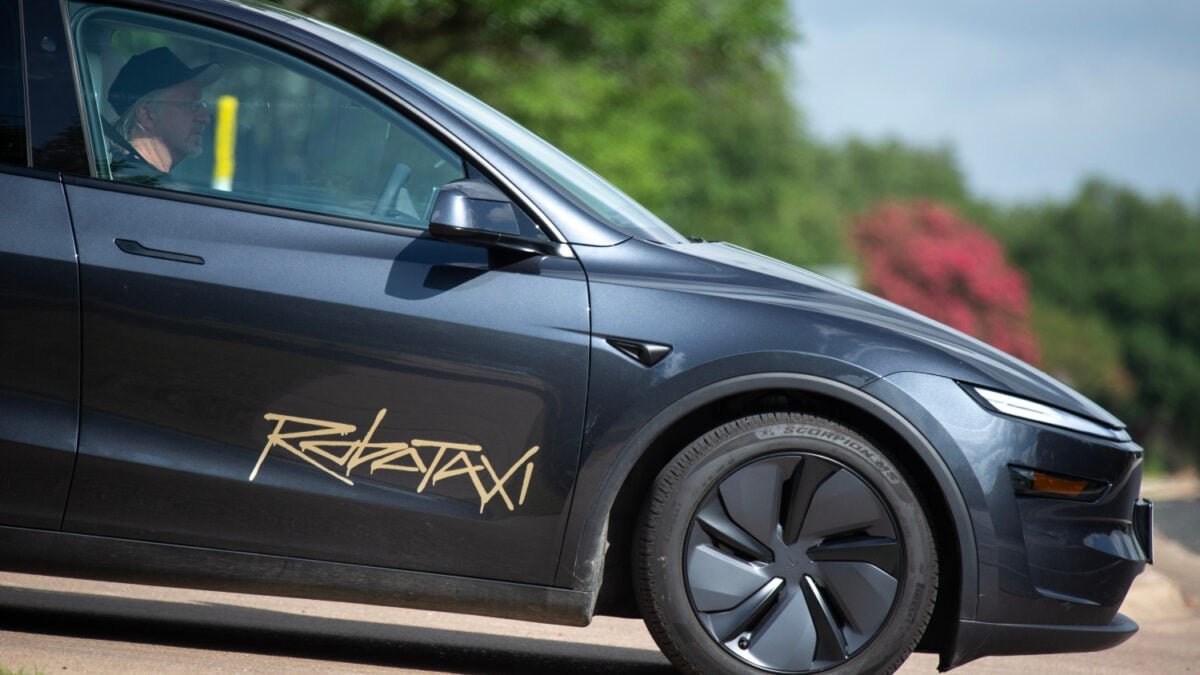

Regulators are treating Tesla’s so-called Robotaxi service in California more like a chauffeur-driven car service than a true self-driving taxi operation like its competitors Waymo and Zoox.
A top California regulator recently clarified that distinction, saying Tesla does not have the necessary permit to operate an actual robotaxi service in the state. As a result, the company is not required to submit the same safety and driving data to regulators as its rivals.
Pat Tsen, executive deputy director of consumer policy, transportation and compliance at the California Public Utilities Commission (CPUC), explained the situation during an interview on The Driverless Digest Podcast. He said Tesla’s ride-sharing service operates under a different type of permit, one typically used for traditional car services.
“What they have from us is essentially a charter permit. It’s the same type of permit that a limousine company would get from the CPUC to provide a limousine service. So in terms of our view of the person sitting in the driver’s seat, that is a driver who is not a safety driver,” Tsen said.
Tsen explained that the reason for this distinction is that Tesla’s AV technology is not yet advanced enough.
“So in California, we define autonomous vehicles as those that are SAE (formerly Society of Automotive Engineers) level three, meaning the onboard AI system is capable of navigating designated road conditions within an operational design domain on its own,” he said.
Tesla’s system is considered level two, meaning it still requires a human driver to take over at any time. Waymo and Zoox, by contrast, operate at level four, meaning their vehicles can drive themselves in specific, designated areas without human intervention.
This distinction effectively puts Tesla in a regulatory blind spot. Unlike its competitors, it does not have to report detailed operational data to the CPUC, such as location data, number of passengers, vehicle miles traveled, or stop events when a car is stuck for more than two minutes.
Electrek reported That in November, Tesla pushed to prevent tier two transportation services from having to report this type of data.
Still, that hasn’t stopped Tesla from branding and naming its service as “Robotaxi.”
Separately, another California agency has already taken issue with the way the company markets its self-driving technology in consumer vehicles.
After initially accepting a ruling by the California Department of Motor Vehicles that the automaker had engaged in misleading advertising, Tesla is now suing the DMV reverse that decision. The company insists that “Autopilot” and “Fully Autonomous Driving” are still appropriate labels for its technology.
Tesla did not immediately respond to a request for comment from Gizmodo.



