
Satélites en Llamas, founded in 2020 as a school project by three Argentine teenagers, closed a seed round led by Dalus Capital. Its software platform integrates satellite data from multiple agencies and detects fires faster than NASA’s FIRMS system by avoiding gaps between satellite passes.
Argentine climate technology startup Satellites on fire has closed a $2.7 million seed round led by Dalus Capital, with participation from Draper Associates, Draper Cygnus, VitaminC, Savia Ventures, Avesta Fund, Reciprocal, Zenani Capital, Innventure, Air Capital, Gain VC, Antom VC and Embarca Tech.
The company builds an AI-powered wildfire detection platform that integrates satellite imagery, tower cameras, fire spread modeling and real-time alerts, and says its system detects fires on average 35 minutes earlier than NASA’s FIRMS service.
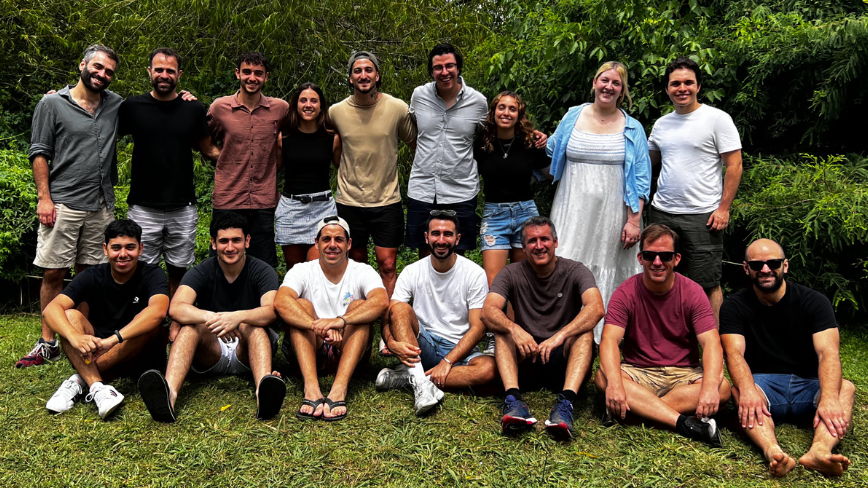
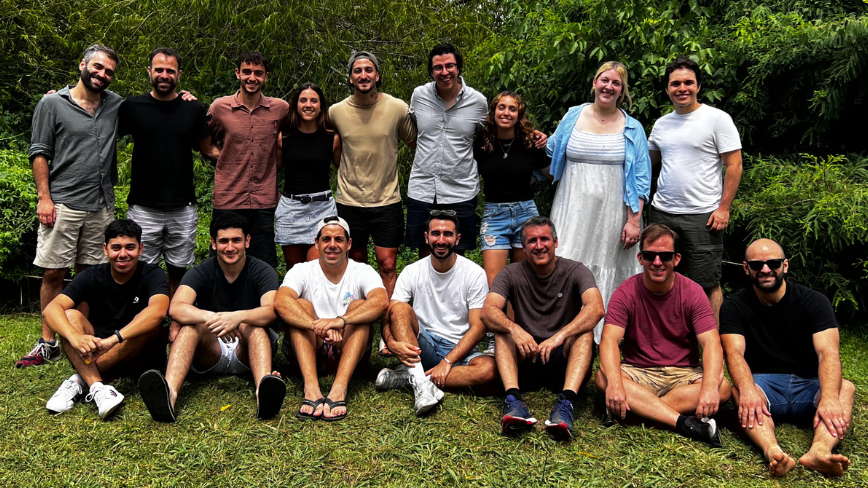
The company was founded in 2020 by Franco Rodríguez Viau, Ulises López Pacholczak and Joaquín Chamo, then high school students at ORT Buenos Aires, after friends of Rodríguez Viau’s family lost their homes to forest fires in Córdoba.
What began as a school project was rebuilt from the ground up after the founders interviewed more than 80 firefighters and first responders and concluded that their first version was not operationally useful. Rodríguez Viau is now 22 years old and serves as executive director.
The Spanish edition of MIT Technology Review named him among its 35 Innovators under 35 for Latin America in 2025.
The advantage of the platform over existing systems lies in the density of satellite coverage. NASA’s FIRMS service uses a smaller number of satellites with revisit intervals that can leave intervals of several hours over Latin American territories.
Satellites on Fire aggregates images from more than eight satellites from NASA, NOAA and the European Space Agency, updating every five minutes, and applies its own artificial intelligence models to detect heat signatures and generate dispersion simulations.
The result, according to the company, is detection that consistently precedes NASA alerts by about 35 minutes, which it describes as the critical window for effective early containment. Newsweek reported in November 2025 a documented case in Argentina where the system detected a fire at 1:40 am, seven hours before the NASA alert.
The business model is software as a service, with prices ranging from $0.02 to $10 per hectare per year, depending on the level of service. Currently, the platform monitors territory in 21 countries on four continents, with more than 55,000 users and a training data set created from more than 20,000 field-validated fire reports, which the company describes as the largest database of its kind in Latin America.
In 2025, the system was involved in responding to more than 600 wildfires, according to the company. Its clients include forestry companies, agricultural companies, energy companies, carbon credit projects, insurers and government agencies. Aon has integrated the platform into all of its forestry insurance policies in Latin America for risk calculation and premium pricing.
The new capital will fund expansion into the US market, where the company is already running pilots and has a partnership with Watch Duty, the nonprofit wildfire monitoring platform.
It will also be used to optimize AI models, launch a parametric wildfire insurance product in partnership with Aon and create an intelligence dashboard for customer protection planning.
Rodríguez Viau has previously said that the company intends to eventually move into suppression technology using drones. The United States is the new top target: Wildfires are estimated to cost the country hundreds of billions of dollars a year, and the Los Angeles fires of 2025 sharpened political and commercial attention on gaps in detection.
John Mills, CEO of Watch Duty and advisor to Satellites on Fire, said the platform’s results with existing satellite data had “really amazed” your team. Diego Serebrisky, co-founder and managing partner of lead investor Dalus Capital, framed the round as evidence that Latin American founders are producing globally competitive AI solutions in the climate.
The company previously received $250,000 from Tim Draper and Adam Draper after appearing on the ninth season of Meet the Drapers, and also received recognition from the UN and support from MIT and Cornell University in earlier stages.



