
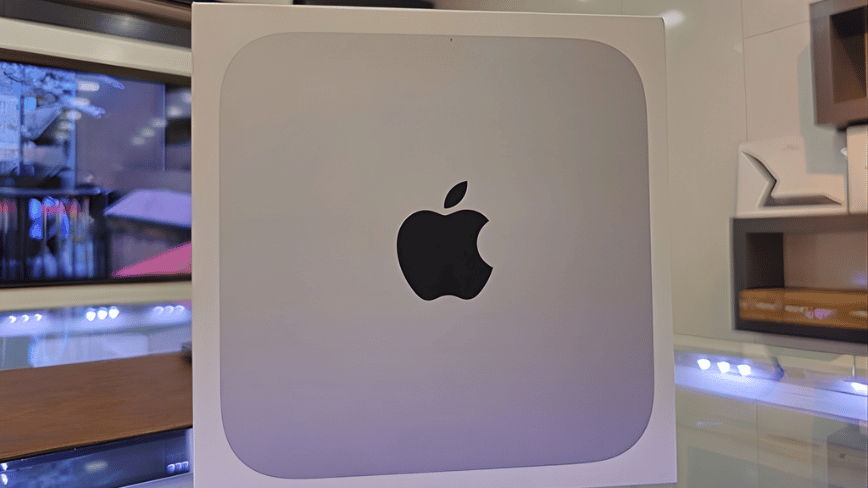
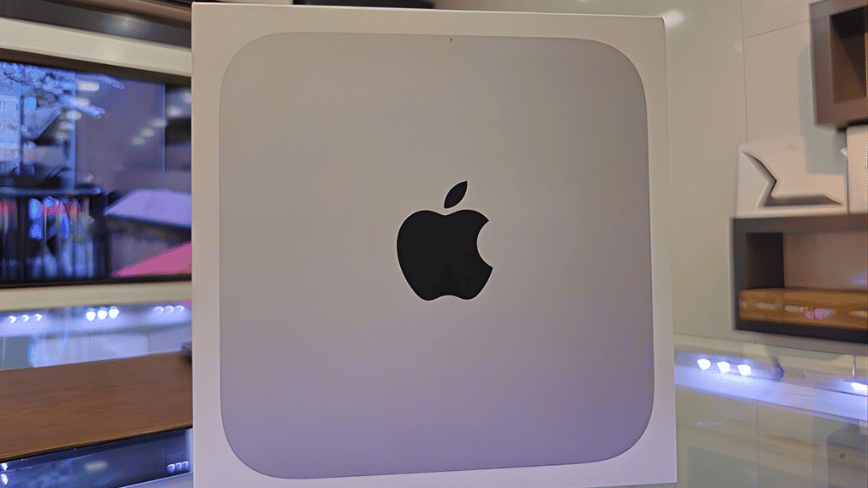
In brief: Several high-RAM Mac mini and Mac Studio configurations disappeared from Apple’s US online store on April 11, 2026, listed as “currently unavailable” with no delivery estimate and no option to order. The affected models are Mac mini configurations with 32 GB or 64 GB of RAM and Mac Studio configurations with 128 GB or 256 GB of RAM. Apple has not explained the stock market situation. Two causes are plausible: the global DRAM shortage that has been intensifying since early 2026 and already forced Apple to abandon the Mac Studio’s 512GB RAM upgrade in March, or the beginning of inventory liquidation ahead of a Mac mini M5 and Mac Studio upgrade that Mark Gurman placed in mid-2026.
What is out of stock and how much
Starting April 11, 2026, Mac mini configurations with 32 GB and 64 GB RAM and Mac Studio configurations with 128 GB and 256 GB RAM appear as “currently not available” in Apple’s US online store, with no estimated delivery date or path to order. The lower RAM configurations that remain available have substantial delays: a Mac mini with an M4 Pro chip and 64 GB of RAM, where it was available before the removal, was estimated to ship in 16 to 18 weeks; a Mac Studio with the M3 Ultra chip and 256 GB of RAM had been trading for four to five months before it was sold out completely out of stock. Apple has not made any public statement about the cause.
The disappearance follows a quieter move in March: Apple removed the 512GB RAM upgrade option from the Mac Studio entirely, and the machine is now capped at 256GB of unified memory. That option, which was exclusive to the M3 Ultra chip, was previously priced at $4,000. When it was removed, Apple simultaneously increased the price of the upgrade from 96GB to 256GB from $1,600 to $2,000, a 25% increase, reflecting broader pressure on DRAM component costs.
The DRAM crisis and who is driving it
The global memory market has been under severe pressure since early 2026, with the immediate cause being spending on AI infrastructure at a scale that is outstripping the industry’s ability to produce standard DRAM. TrendForce, the market research firm that tracks memory prices, revised its DRAM contract price forecast for the first quarter of 2026 in February to a 90 to 95% quarter-over-quarter increase for server DRAM, the largest quarterly increase on record, and projected that PC DRAM would increase by more than 100% quarter-over-quarter in the same period. AI training and inference workloads consume high-bandwidth memory at rates that are structurally incompatible with DRAM wafer capacity that grows 10-15% per year.
TrendForce estimates that AI applications will consume nearly 20% of global DRAM wafer capacity in 2026, and HBM now absorbs 23% of total DRAM wafer production and requires four times the manufacturing capacity of a standard DRAM module of equivalent size.
The scale of AI computing demand that is squeezing Apple’s supply chain is visible in individual infrastructure announcements. Anthropic’s Claude Revenue Surpasses $30 Billion Run Rate in early April 2026, up from $9 billion by the end of 2025, and the company is now exploring the possibility of building its own AI chips to reduce dependence on external supply. CoreWeave Signed Multi-Year Agreement to Run Claude Workloads at Production Scale on April 10, 2026, the same day as the Anthropic chip was unveiled and one day before Mac mini and Mac Studio configurations were sold out. These are not isolated data points; They are representative of a structural reallocation of memory supply from consumer hardware toward AI infrastructure that is expected to continue well into 2027.
The OpenClaw effect: why demand for Mac mini is unusually strong
DRAM shortages would be the obvious explanation for the stock situation if demand for Mac mini and Mac Studio were normal. It is not. OpenClaw was released on January 25, 2026 and went viral within days, establishing Apple’s high-memory desktop machines as the informal gold standard hardware for running local large language models on consumer computers. The draw is Apple Silicon’s unified memory architecture: Because the CPU, GPU, and Neural Engine share a memory pool with no PCIe bottleneck, a Mac mini with 64GB of unified memory can run a 70 billion-parameter model in a way that a conventional PC with discrete GPU and system RAM can’t match at a comparable price. The Mac mini M4 Pro with 64GB of RAM, priced around $2,000, became one of the most recommended configurations for local inference workloads in Q1 2026.
In March 2026, Nvidia launched NemoClaw, an enterprise security layer for OpenClaw, at GTC 2026installing open Nemotron models locally on dedicated hardware and adding privacy barriers for enterprise deployments. The release of NemoClaw confirmed that OpenClaw had moved beyond hobbyist use to enterprise IT procurement decisions. The following month, April 4, 2026, Anthropic banned OpenClaw and other third-party frameworks on Claude Pro and Max subscriptionsrequiring users who wanted to continue running OpenClaw agents through their Claude subscription to pay under a new per-session usage system.
The ban created a direct incentive to move to local inference on hardware that avoids per-session fees entirely, and the Mac mini and Mac Studio, with their unified memory advantage, are the natural beneficiaries. It is impossible to quantify whether the resulting increase in demand has materially contributed to the destocking, but the timing is consistent.
The M5 question: upgrade or reduce RAM?
The stock situation has an alternative reading: Apple is liquidating existing M4 inventory ahead of an M5 refresh. Apple updated MacBook Air with M5 in March 2026along with the new M5 Pro and M5 Max MacBook Pro models, completing the launch of the M5 across the entire portable Mac lineup. Mac mini and Mac Studio, which currently run on M4 and M4 Pro or M4 Max and M3 Ultra chips respectively, are the last major desktop Mac products without an M5 upgrade. Mark Gurman has reported that Apple’s Mac 2026 plan includes the M5 and M5 Pro Mac mini models and the M5 Max and M5 Ultra Mac Studio models, with the Mac Studio refresh expected closer to mid-year. Apple has confirmed that WWDC 2026 will take place the week of June 8.
The out-of-stock status for specific configurations before a product update is a pattern Apple has shown before; It is also consistent and difficult to distinguish from a supplier that does not deliver the components. Both explanations are credible and not mutually exclusive. Apple could be managing the end of the M4 Mac mini and Mac Studio product cycle while limiting DRAM supply for the higher RAM configurations that remain in highest demand.
The removal of 512 GB in March, the gradual extension of delivery times through February and March, the price increase of the 256 GB upgrade, and the April 11 stock removal together form a progression that is consistent with a supply constraint that has been worsening for several months. Whether an M5 announcement resolves the availability issue or whether shortages persist into the next generation will be visible at WWDC, if not before.



