In brief: Nesto Software GmbH, a Karlsruhe-based workforce management platform for restaurant groups, has raised €11 million in growth capital from Expedition Growth Capital, a London- and Boston-based fund that targets European software companies with more than €5 million in annual recurring revenue. The company, founded by engineers from the Karlsruhe Institute of Technology, manages scheduling, demand forecasting, HR workflows and payroll preparation for more than 3,000 restaurants and more than 100,000 daily employee shifts across Europe. Nesto had never accepted institutional funding before this round. The investment will be used to accelerate product development, expand sales and marketing, and extend NORA, Nesto’s AI assistant, to a broader agent framework for restaurants’ back-office workflows.
Built without institutional capital
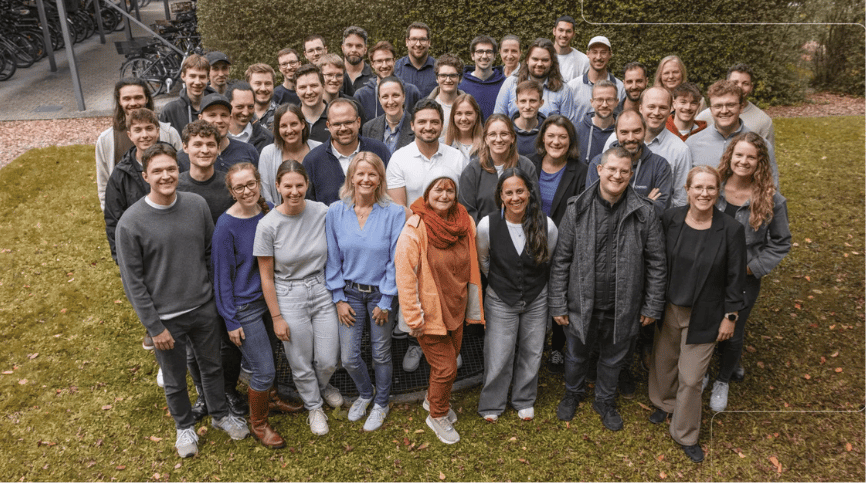
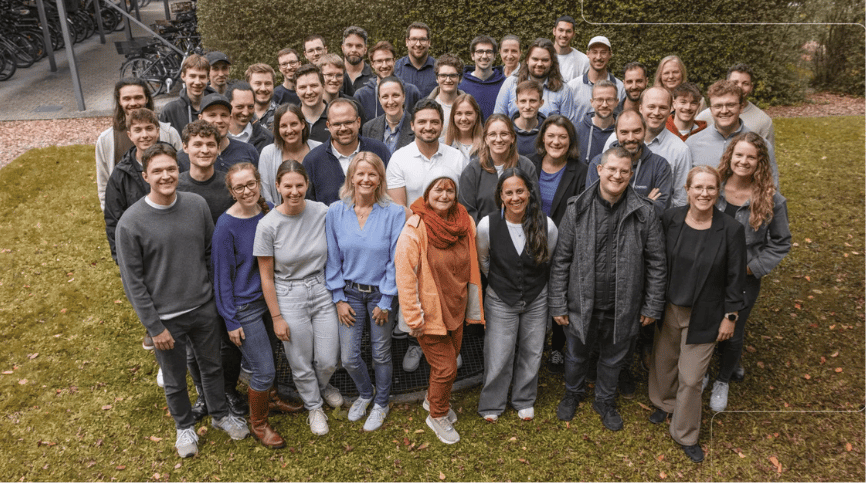
Nesto was founded in Karlsruhe by Felix Kaiser, co-founder and CEO, and Dr. Theodor Ackbarow, co-founder and CEO, who trained as engineers at the Karlsruhe Institute of Technology. The company built its platform and grew its customer base to more than 3,000 restaurants without turning to outside financing, reaching the scale that Expedition Growth Capital is specifically targeting before approaching institutional investors. Expedition’s investment thesis focuses on European software companies that have reached €5 million or more in annual recurring revenue, on the basis that companies built without external capital tend to have closer customer relationships and more disciplined unit economics than those that have scaled in dilutive early rounds.
Expedition Growth Capital closed its third fund on $375 million in December 2025 and invests between $10 million and $25 million in each portfolio company. The Nesto round falls at the lower end of that range. Will Sheldon, the Expedition partner leading the investment, described Nesto as “an exceptional example of a European software company defining a category“That had been it”quietly transforming restaurant operations across Europe.Expedition, which has offices in London and Boston, focuses on profitable or near-profitable software companies that are ready to invest in sales and marketing capacity after testing the product against real customers at scale.
Work as a specific problem
The hospitality industry has a version of the workforce management problem that is more complex and more costly than most industries face. A restaurant group operating dozens or hundreds of locations must produce schedules that match variable demand, which often changes based on weather, local events, and day-of-week patterns in ways that fixed weekly rotations cannot capture. Overstaffing directly erodes margin; Lack of staff affects the quality of service and, in turn, customer retention. The administrative burden of producing legally compliant schedules, tracking attendance, and preparing payroll across a large distributed workforce consumes management time that would otherwise be spent delivering services.
Labor costs across the EU hospitality sector increased by 11.2% year-on-year in the period leading up to Nesto’s fundraising, while EU hotel companies adopted AI tools at a rate of around 6% from 2023, according to Eurostat data. The gap between cost pressure and adoption rate is the business opportunity Nesto addresses. TNW examined How AI is transforming hotel operations while preserving the human experience in April 2026, a tension that Nesto’s positioning directly addresses: The company’s argument is that automating scheduling and administration frees up managers to focus on service quality rather than spreadsheets.
Nesto’s platform integrates with point-of-sale systems, supplier platforms and payroll providers to produce demand forecasts that the company claims are 92% accurate, based on historical sales data, local event calendars and weather information. Those forecasts drive automated scheduling, which feeds HR workflows and payroll preparation. The company cites a 10% improvement in labor productivity as a top result across its entire customer base, and points to McDonald’s as its most publicly documented implementation: The fast-food company’s European franchise operators recorded a 9% reduction in staff costs and a 22% productivity improvement after implementing the platform. L’Osteria and Lagardère are among other business clients mentioned.
NORA and the agent layer
Nesto’s latest product development direction is NORA, an AI assistant and agent framework that expands the platform’s reach from scheduling to a broader range of operational and administrative tasks that restaurant managers handle daily. NORA is designed to handle inquiries about personnel rules, compliance requirements, and operational metrics, and to execute tasks such as absence management, shift swap approvals, and payroll exception handling without the need for manual navigation across multiple systems.
The direction reflects a broader move in enterprise software toward AI agents that operate on behalf of users rather than simply displaying information. Nvidia brought enterprise security to AI agent deployments with its NemoClaw platform at GTC 2026 in March, establishing formal standards for deploying AI agents in regulated and operationally sensitive environments. Nesto’s NORA architecture targets the same conceptual space, applied to restaurant operations: an agent who can be assigned a task and trusted to complete it within defined operational and compliance parameters, without the need for a manager to oversee every step.
The funding will be used in part to develop NORA from a wizard that answers operational questions to an agent framework that executes multi-step workflows autonomously. For a restaurant group that manages hundreds of sites, the primary value of that change is to reduce management overhead that currently increases with the number of locations: Each new site adds scheduling, fulfillment, and payroll administration complexity without adding the management capacity to absorb it.
Three rounds of financing, three layers of the restaurant
Nesto is one of several European hotel technology companies to raise institutional capital in early 2026, a concentration that reflects the gap in the sector’s AI adoption as much as investor appetite for the category. At the end of March 2026, SOUS raised €4 million to build an AI growth platform for restaurantsaimed at the demand generation layer: how restaurant groups attract customers, drive repeat visits and increase revenue per cover. In mid-March 2026, Choice raised $7.1 million to help restaurants create direct ordering channelsaddressing the distribution layer: how operators reduce dependence on third-party delivery platforms and capture more of the customer relationship directly.
Nesto addresses the operations and labor layer: not how customers arrive or what they order, but whether the staff to serve them is scheduled, calculated and managed efficiently. The three rounds together indicate how restaurant technology is being rebuilt from multiple directions simultaneously, with growth capital entering the sector at a level that was not visible two years earlier. The broader European software environment that produced the conditions for all three rounds was characterized by continued institutional interest in the first quarter of 2026: five European startups joined the unicorn club in the first weeks of 2026a sign that the European tech ecosystem maintained enough momentum to produce highly valued results even as the macroeconomic environment remained uncertain.