The Iran war is not suddenly making cloud more expensive. It is exposing how the cloud economy has always been behind energy markets, and Europe is structurally exposed.
The current conflict in the Middle East is no longer limited to the region. Its effects are beginning to affect economies still recovering from the 2022 energy crisis, raising concerns across industries whose growth depends on macroeconomic stability, including technology.
The Iran war is not suddenly making the cloud more expensive, but it is exposing how the cloud economy depends on energy stability, geopolitical predictability, and the continuity of global infrastructure. Cloud prices lag energy markets, and Europe is structurally exposed due to its dependence on imported energy.
The near-total closure of the Strait of Hormuz, a key artery for about a fifth of global oil and liquefied gas traffic, threatens supply chains at a fundamental level. The consequences are upward pressure on fuel and energy prices, with cascading effects including inflation, rising production costs and, in prolonged scenarios, risks of recession.
Energy instability as a hidden cost factor for the cloud
Europe is already showing signs of strain. The annual inflation rate rose to 2.5% in March, according to preliminary figures from Eurostatdriven by a 4.9% increase in energy prices. Governments are turning to 2022 playbook measures: caps on gas prices, windfall taxes on energy companies and fuel tax cuts. With gas prices in Europe rising sharply, approximately 70% since the start of the conflict according to EU energy commissionerThe region’s dependence on imported energy is directly translating into economic vulnerability.
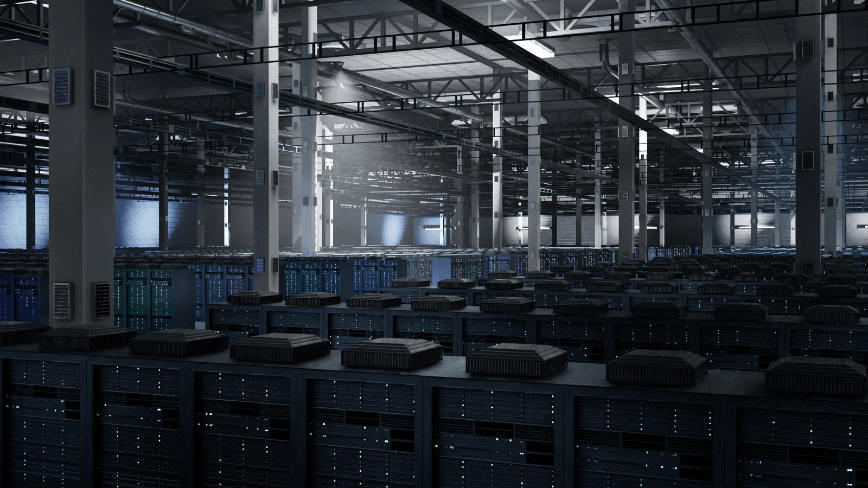
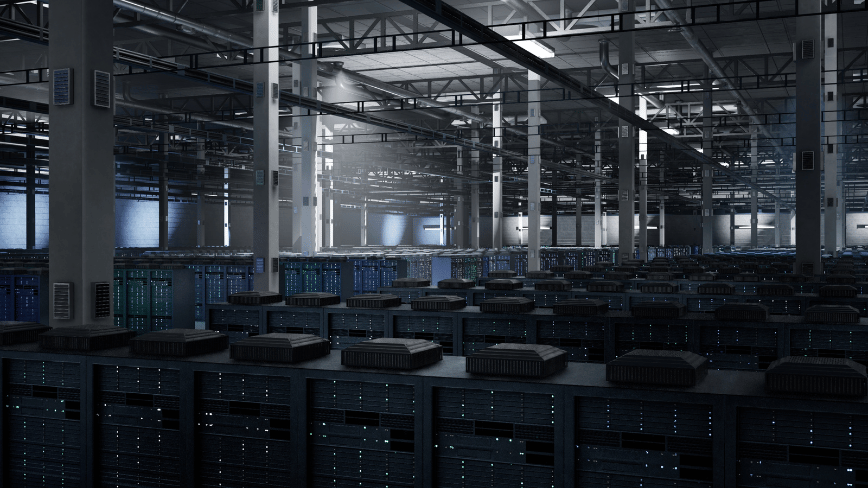
This pressure is directly reflected in the cloud infrastructure. Data centers, responsible for around 70 terawatt-hours (TWh) of electricity demand in the EU by 2024 According to IEA estimates, they are fundamentally energy systems. They are responsible not only for data processing and deployment, but also for training and running AI models, cooling and maintaining physical infrastructure. Like the IEA reported in April 2025Global data center energy use is projected to double by 2030, with AI as the main driver.
As demand for AI accelerates, so does its energy consumption. Between rising energy prices and rising cloud operating costs, the assumption of a cheap cloud is starting to erode.
Europe’s structural digital dependence
Europe’s push towards digital sovereignty has advanced through regulations and investments in AI and R&D infrastructure, but remains structurally incomplete. The region continues to rely heavily on third-party providers for its data and cloud infrastructure.
European companies control around 15% of the local market, according to the Synergy research groupa proportion that has remained practically stable since 2022. The American hyperscalers, Amazon Web Services (AWS), Microsoft Azure and Google Cloud, represent approximately 70% of the European cloud market. As TNW previously reported, European cloud servers offer alternativesbut none come close to challenging the scale of the big three.
The imbalance positions Europe primarily as a consumer, exposing a vulnerability: by importing cloud services, Europe is also importing the geopolitical risk inherent in the systems on which it depends.
The war in Iran did not create this exhibition, but it has highlighted it. Trump’s tariffs had already Rekindled momentum for European sovereign cloud; The current conflict heightens the urgency.
Europe now faces pressure on both sides of its digital economy: higher operating expenses driven by volatile energy markets, while remaining primarily reliant on cloud infrastructure controlled from abroad.
Infrastructure location is now a risk variable
Cloud infrastructure is no longer just a technical decision. It’s getting geopolitical. Recent events have made this change unmistakable.
In early March, three AWS data centers in the Gulf were attacked by Iranian drones. The first known military attacks against a hyperscale cloud provider.. Meanwhile, Iranian state media has explicitly identified companies such as Nvidia, Apple, Microsoft and Google as potential targets in the conflict.
Data centers and cloud platforms are no longer neutral infrastructures. They are increasingly treated as strategic assets embedded in conflicts. Its importance extends beyond storage and computing power, to the functioning of entire digital ecosystems, where disruptions can impact the connectivity, latency, and availability of cloud services across industries.
The implications are both economic and technical. The Gulf region has been critical to the future of cloud and AI expansion, attracting tens of billions of dollars in data center investments, driven by access to capital, energy and infrastructure.
Instability in this region introduces a new layer of risk to cloud architecture, where potential consequences range from operational disruption to broader macroeconomic pressure. As a result, decisions about cloud architecture and deployment must be reevaluated in light of geopolitical risk management.
Spending is being remodeled, not reduced
The impact of the Iran war on technology highlights how companies and countries are reshaping capital allocation within the industry. While several large technology companies had planned to continue investing and expanding within the Gulf, their execution is now being questioned for reasons of geopolitical stability, national security and economic continuity.
IDC has described scenarios in which a conflict lasting up to three months could reduce global IT spending growth by about one percentage point, from around 10% to 9% in 2026. A conflict of longer duration would produce a more pronounced impact.
The research firm notes that cybersecurity and artificial intelligence budgets are likely constrained, even as discretionary and device spending faces downward pressure.
National sovereign wealth fund investments can be redirected towards local security needs. The allocation of capital towards cybersecurity appears to become non-negotiable, as geopolitical tensions increase the likelihood of large-scale cyberattacks and digital supply chain disruptions.
At the same time, AI remains a strategic investment priority, linked to competitive advantage and increased productivity. The war is acting as a capital allocator in the technology industry, focusing the pressing issues that require investment and limiting the less vital ones.
AI resilience instead of sovereignty
AI sovereignty is the ability of countries and companies to control their AI stack: infrastructure, data, models and operations. A recent BCG Henderson Institute Studywhich examines AI policy in more than 30 countries, argues that for most nations, full AI sovereignty is an illusion.
The most practical path, BCG suggests, is AI resilience: using, adapting and governing AI on a national scale, while minimizing strategic dependencies. The question of what that sovereignty actually looks like in practice is one of the Europe has been fighting for years.
This implies that countries and companies must approach AI strategy as a balance between internal capabilities and external strategic interdependencies. However, resilience assumes that countries acting as external providers will remain stable, and the current geopolitical environment suggests that the underlying infrastructure is becoming less predictable.
In Europe, the tension is particularly visible. While efforts toward strategic autonomy, aimed at reducing dependence on American and Chinese technology, had already begun, the Iran war has highlighted how the continent’s AI strategy still lags behind global competitors.
As TNW has reported, the race towards resolve concerns about AI sovereignty in Europe has been underway for some time, but building on foundations that remain structurally exposed introduces a new risk: resources may be allocated to short-term crisis management, delaying the development and deployment of a resilient European AI ecosystem.
The end of the supposed stability
The war in Iran is exposing the vulnerabilities of the current global system at micro and macro levels. For Europe, it highlights external dependence in crucial markets, such as energy and data infrastructure, which could become a strategic constraint over time: by slowing its AI development and its competitive positioning among global powers, it also represents a threat to its growth and productivity.
As AI strategies move from sovereignty to resilience, a new challenge emerges. Resilience depends on the stability of the systems on which it is built, and that stability can no longer be taken for granted. Achieving managed interdependence requires diversification: broader and multiple alliances to reduce geopolitical exposure, along with targeted investments to expand national capabilities, mainly in strategically sensitive areas.
Ultimately, the Iran war did not create these vulnerabilities, but it acts as a stress test for a system that was optimized for a stable, predictable world that no longer exists. If the previous era was defined by the efficiency of borderless expansion, this new era of resilience marks the end of the cheap cloud, as the costs of security and energy independence are finally built into the price of the digital stack.