
me regularly build ESP32 projects for my smart home. However, most take a while to work due to hardware wiring and firmware configuration. Also, fixing code and troubleshooting build issues takes a while. No matter how carefully I write the YAML configuration, something rarely works right the first time. It’s the true nature of this hobby and I find the process satisfying.
That’s why he bluetooth proxy that I built last year still surprises me. Not because it is something too complex or extraordinary. It was one of those first projects that I started and it just worked. It required no cloud, no apps or tricks to work.

I waited for something to go wrong
but nothing broke
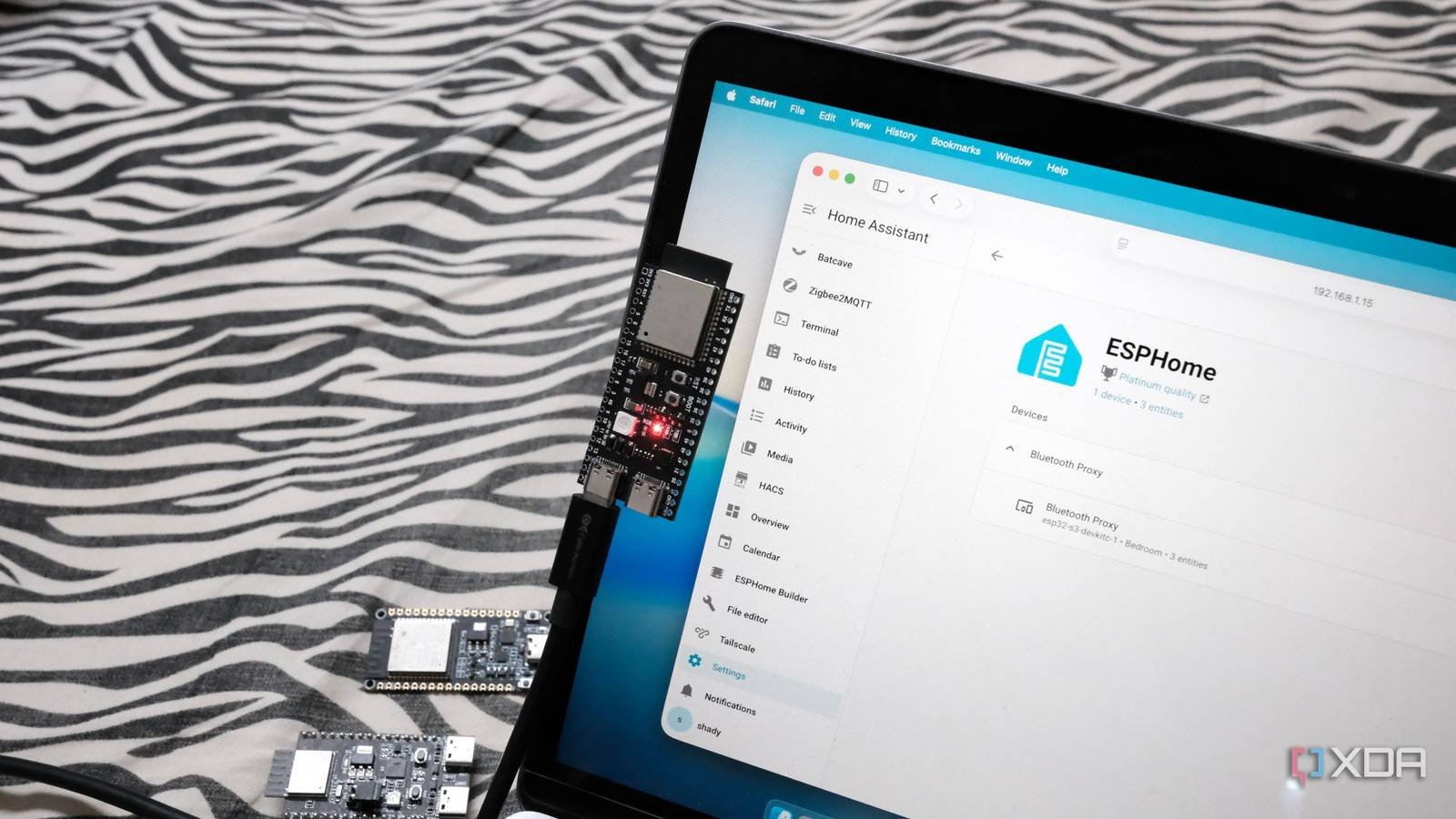
A Bluetooth proxy can be built with just an ESP32 board. No sensor, display, resistor, diode or even cable. I was skeptical about how minimal the construction really was. But building one doesn’t require much. All I did was visit ESPHome ready-to-use project web installer in a browser, choose the Bluetooth proxy option and connect my ESP32 board to the computer. Of course, I installed the CP2102 drivers so that the browser-based installer can detect the ESP32 board.
After updating the firmware, configuring Wi-Fi settings and Home Assistant found the newly created Bluetooth proxy almost immediately. The overall project took me ten minutes: from installing the firmware to setting it up in Home Assistant.
This setup time and minimal effort surprised me as I had spent several days reading about Bluetooth proxies. I worried about the right ESP32 board and mentally prepared myself to spend hours troubleshooting if something went wrong. None of that was necessary and that realization amazed me. It’s strange that I kept waiting for something to go wrong, but it never did.
One board brought an entire category of devices online
Work in silence

My Bluetooth proxy sits quietly in a corner, acting as a relay for the Bluetooth devices scattered around the house. I don’t interact with him physically; I just check its LED indicator to confirm that it is alive. This Bluetooth proxy project helped connect various devices, like my smartwatch, headphones, and a bunch of sensors, to the Home Assistant. Before that, I thought Home Assistant couldn’t access all those Bluetooth devices.
That’s when I realized that a single board didn’t simply connect a specific device to Home Assistant. Instead, it put online an entire category of devices it deemed incompatible. The best part is that there is no complicated integration required or one customized from HACS It was necessary. All Bluetooth devices quickly appeared in Home Assistant.
What I really appreciate is that I can display the same project already prepared on any spare ESP32 board and place it anywhere in my house.
The simplest project that is not flashy but offers more
Reliable on impressive construction
I have created projects that are more technically complex and require hours of troubleshooting. I’m an enthusiast, not a developer or engineer. I built a reliable room level presence detection sensorto private assistant working with a local LLMto multisensor node with several components connected together and a YAML file to store the respective configurations.
Each build took several hours before something clicked and made them work, leaving me with the familiar satisfaction of shaping a complex build.
However, building the Bluetooth proxy offered a different kind of satisfaction, with immediate rewards and reliable results. As it disappears into the background, the building does not blink for attention, but rather does exactly what it is supposed to do. That’s the wonderful part of a hobby where simpler construction yields better results.
I don’t remember showing my Bluetooth proxy over the other sensor nodes I built. None of my friends asked how to manage Bluetooth devices in Home Assistant. However, it brought several Bluetooth accessories online, making them an important part of my smart home automation.
Looking back, I built a Bluetooth proxy because I wanted Home Assistant to reach more devices in my house. Discovering the crucial role of those devices in detecting presence was a surprising addition.

Stop researching too much and start building
The Bluetooth proxy was the right project to build from the beginning because it was simple. It does not require GPIO pins or sensors, nor does it require wiring. All I used was a board and some ready-to-use firmware to get a node up and running in ten minutes.
The most important lesson was that of simplicity. A minimal build was worth more than I expected. It gave me the confidence to tackle complex projects. Cables, sensors, and YAML configuration files are no longer intimidating.
If you have a spare ESP32 and want to get your Bluetooth devices to Home Assistant, this is where you should start. The best builds don’t need to be technically complex.
- Brand
-
AITRIP
- Connectivity features
-
USB
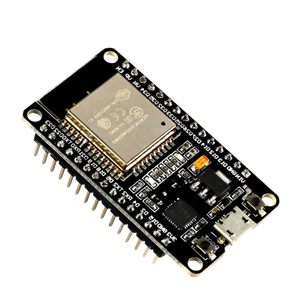
The ESP32 is a fantastic development board that combines solid specifications with an affordable price. Despite being cheaper than Arduino and Raspberry Pi Pico, it outperforms most of its rivals. Additionally, the ESP32 even has Wi-Fi and Bluetooth capabilities built into each board, making it ideal for projects where you can’t physically keep the microcontroller connected to your PC at all times.



