
AI has completely changed the gateway to employment and education. This is not a future trend; It is the current reality. Up to 87% of companies They now use some form of AI in their hiring process, and a significant percentage of applications are filtered by AI before a human sees them.
But here’s the problem: the easy part is filtering out keywords on a resume. The difficult part, the architectural challenge, is measuring subjective, soft human matter: cultural fit either institutional mission alignment.
a simple Large language model (LLM) can ask behavioral questions, but how does a machine know if you really care about a specific university’s commitment to community health in a rural area, or if you’re just using buzzwords?
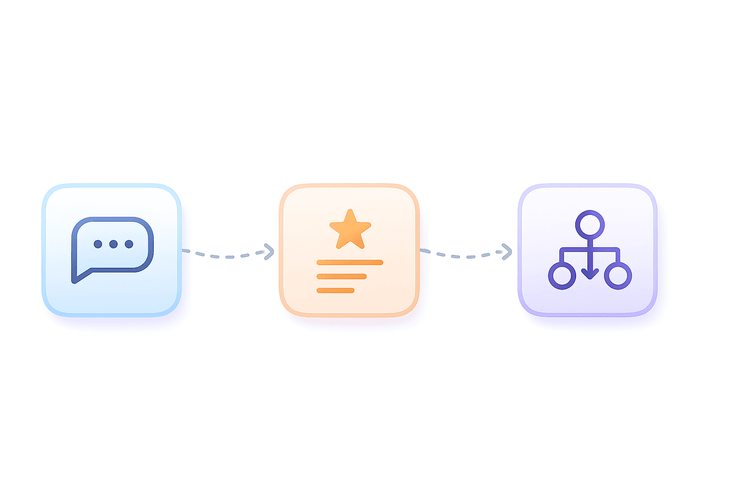
To solve this problem, developers are leaving behind simple scripts and creating specialized programs, layered AI systems. Let’s break down the three main architectural models that AI interview platforms use to move from generic questions and answers to sophisticated assessment.
1. The Simple Robot: Stick to the Script
Think of this as the basic starter kit AI interviewer. It’s the easiest way to get up and running, but it has some important limitations.
How it works
This system is about Protocol Matching. You have a fixed list of questions (say, five behavioral and three situational) and has to ask them in order.
The large language model (LLM) there isn’t much deep thinking going on here; It mainly acts as a high-tech recorder and keyword counter. Did you mention “teamwork”? Check. Do you sound generally positive? Check.

Why we need more
This architecture is cheap and easy implement, but it’s terrible at measuring true fit.
Imagine that the question is: “Tell me about a time when you demonstrated leadership.” You give a totally generic textbook answer. The simple robot says: “Great, thanks” and move on. You can’t deflect, you can’t challenge it, and you can’t distinguish between a canned response and a genuine experience. you lose the hue entirely.
2. The smart filter: baking in culture
This is where things get clever. Developers realize that the generic LLM is too broad, so they create a custom filter layer right above it. This is like turning a general-purpose screwdriver into a specialized tool for a specific brand of screw.
How it works: probability modeling
Instead of simply asking generic questions, this architecture uses a organization-specific values database.
Suppose the target is a specific institution (such as an engineering company or a graduate school). In that case, the database includes keywords and mission points related to your core identity, such as commitment to sustainability, specialized research areas, or regional community focus.
When the AI generates a question or evaluates an answer, it passes it through this custom filter. The filter acts as a weighting system:
- Question generation: “Ask a question about generic career goals” achieve reduced weight. “Ask how your work will directly address our company’s core values” obtains a high weight.\\\
- Score: if you mention “innovative materials science” and “local educational extension”, the system gives that phrase a much higher score that if you only talk about “general science.”

Case Study: Building a Fit Detector
We see systems like sugared almonds using this model. They are not only inciting the LLM with “Be an interviewer.” They are designing a structure that appears to read specific rubrics from the admissions committee. They will probably swap out the main “evaluator person” depending on the destination school.
For example, when preparing candidates for the specific school interview, the system should weigh the responses with a rubric that highly prioritizes core institutional values and regional contextlike the current problems with implications for the local community for the mission of the organization.
From an engineering perspective, this means managing massive data sets of institutional securities, not just coding.
The capture
This system is as good as data behind this. If the school’s mission changes or data maintenance fails, the AI starts asking outdated or irrelevant questions. It’s a constant data synchronization challenge.
3. The adversary tester: the ultimate stress test
Do you want to know if someone is faking it? have another expert look them and immediate challenge their weak points. That’s the idea behind the most advanced AI architecture: Dynamic People Modeling.
How it works: two LLMs, one goal
This is not an AI; normally it is two LLM agents working together:
| | | |\\\ | ——————————— | ——– | —————————————————————— |\\\ | Agent | Role | Focus |\\\ | LLM Agent 1 (The interviewer) | Talkative | Keeps the conversation flowing, generates follow-up questions. |\\\ | LLM Agent 2 (The Evaluator) | Critical | He has the secret rulebook and qualifies every word to fit the true mission. |
The dynamic feedback loop
Here’s the interesting part: when you give an answer, Agent 2 immediately write down to give it consistency and depth.
- Example: you say, “I care deeply about social justice.”\\\
- Agent 2 (The Critic) thinks: “That’s a good keyword, but was the answer deep enough to prove it?”\\\
- Action: If Agent 2 decides that your answer was too vague, he sends a signal to Agent 1 (The Interviewer) to turn the conversation instantly. Then Agent 1 could ask: “Can you name three specific local programs that address that issue and how you personally would contribute?”
This aggressive real-time polling makes it nearly impossible to trust predetermined responses. Mimics the behavior of a highly intelligent, skeptical human interviewer who knows exactly where to press.
Is this too much?
This architecture is computationally expensive and complex to build. The engineering challenge is to manage the interaction between the two agents to avoid repetitive questions or “interview drifts,” ensuring that the conversational path remains relevant to the core evaluation criteria of the target institution.
The conclusion: it’s all a matter of intention
So the next time you face an AI interviewer, remember that developers are actively figuring out how to keep you from gaming the system.
The central trend is clear: AI systems are focusing less and less on general conversation and more on conversation. deep, domain-specific intelligence. The future of interviews is not just about the questions an AI asks, but what architectural models engineers decided to build into the machine to truly measure. you.



