
Smart home automation is usually framed as something that starts with a shopping list. A hub, a smart speaker, some light bulbs, a sensor or twomaybe a subscription somewhere in the stack, and at that point, it transforms from a simple update to a full one home improvement project.
One of the most useful automations I set up was in the opposite direction. It didn’t need a hub, it didn’t need a monthly fee, and it didn’t even need its own power source. The NFC tags cost me less than a dollar each and ended up being more convenient in everyday use than many of the more expensive smart home kits I’ve tested.

Absurdly cheap for how useful they can be
NFC tags can cost less than a dollar each

Price is the main thing that makes NFC tags such an easy recommendation. Most smart home devices are judged on whether they do enough to justify their price. With NFC tags, that calculation barely exists because the cost of entry is so low. They come in large packs, so it’s as easy as buying a bunch of them, sticking them where they make sense, and setting up several different actions for the price of what a smart accessory usually costs.
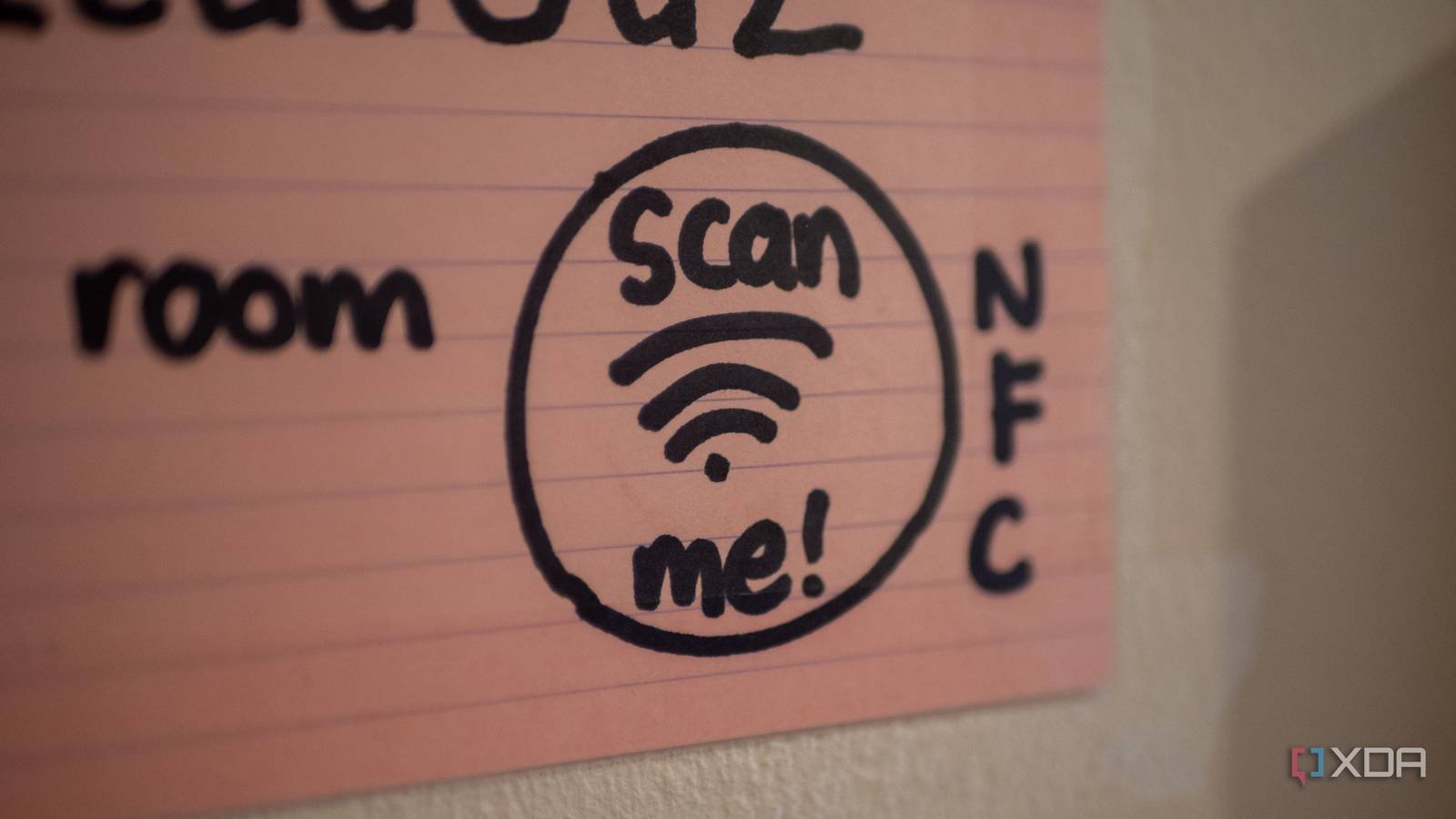
An NFC tag is usually a small plastic sticker, card or token with a small chip and a small antenna coil inside. When your phone’s NFC reader comes within a few centimeters of the tag, it creates a small electromagnetic field. The antenna inside the tag captures enough energy to briefly power the chip, allowing data transmission of various types. It could be a web link, plain text, contact information, Wi-Fi credentials, and much more.

They feel great when implemented reasonably
For things within your wheelhouse, they are perfect.

NFC tags are great when you’re trying to convert a few repeatable actions into a single physical touch. An NFC tag next to the bed is a good example and is something I have integrated for my fiancée. One touch can turn off the lights, enable Do Not Disturb, set an alarm, and start a sleep playlist or white noise app. None of those actions are difficult on their own, but doing them one by one every night adds enough friction to be annoying. One label reduces that routine to something you can do without much thought, a quick tap and your bedtime routine is basically done. I did something similar by the front door: I set up a tag to run a leaving home routine that turns off the lights and adjusts the thermostat, but you could easily add a garage door open signal or something if your house supports it.

They are not really automatic and that is the obvious drawback.
They are not independent

The biggest weakness of NFC tag automations is that they are not automatic. You still have to physically touch your phone to activate the action, which means they’re closer to smart shortcuts than the kind of systems people usually imagine when they hear the words smart home. If your idea of automation is for lights to react to occupancy, blinds to open on a schedule, or devices to passively respond to your presence, NFC tags aren’t a replacement for any of that. They are not sensors and do not make independent decisions in the background. Its usefulness also depends on how much your phone supports and how willing you are to create routines around it.

It’s one of the reasons they can be so good.

The reason I like NFC tags so much is that they avoid many of the complications that come with more ambitious automation. Obviously, you can do a lot with more complex things, but sometimes it’s complex for the sake of it. That’s where NFC tags hit a sweet spot, because they’re deliberate enough to avoid false activations, simple enough to be reliable, and cheap enough that experimenting with them never feels like a risky financial decision. They are literally about a dime a dozen.

NFC tags replaced some of my most expensive home automation equipment
What NFC tags changed for me was not my view of smart homes as a set of products, but rather it raised the question of what useful automation it seemed at first. Complex automations based on sensors and several different devices can be fun and really effective, but some of the best smart home automation They are the ones that save you just a little bit of friction. One tap to perform a bunch of smaller actions is enough in many situations.



