
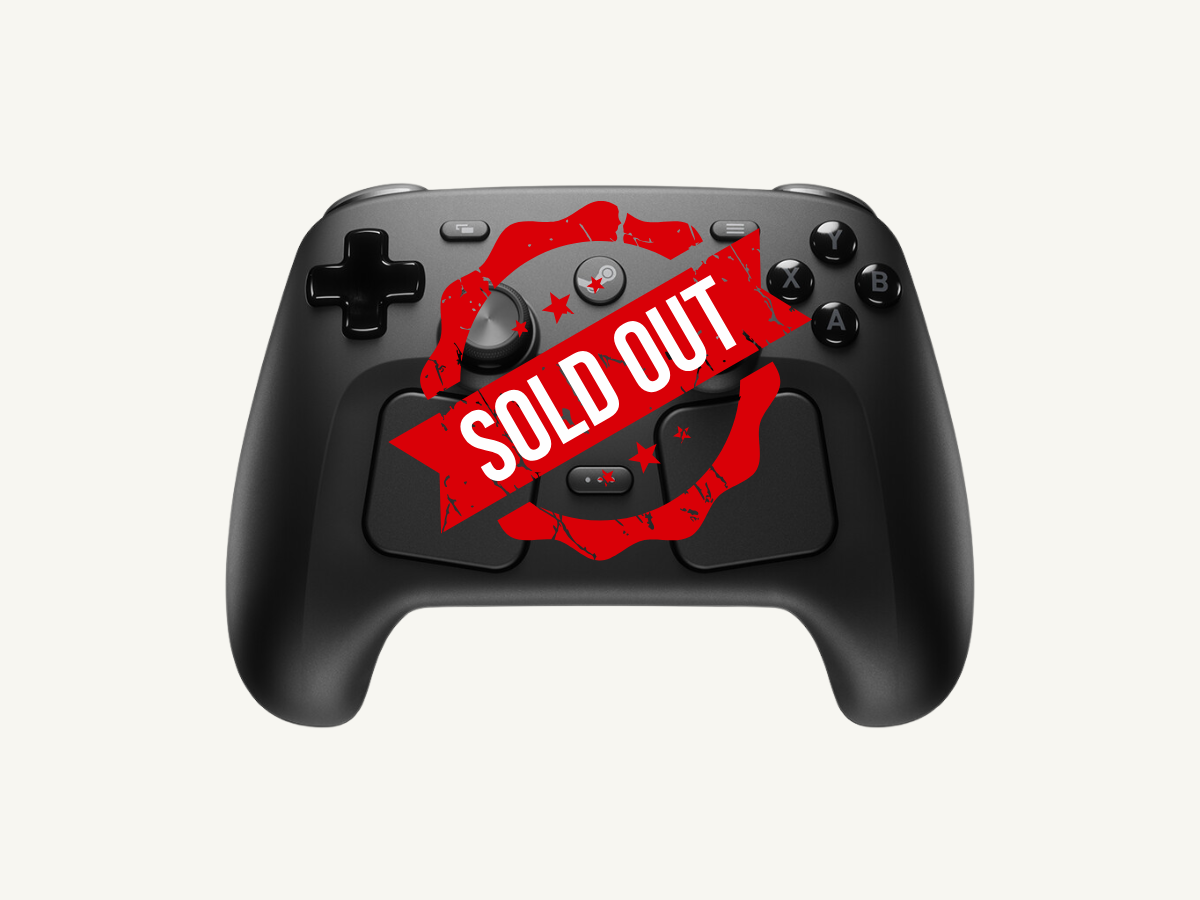
The steam controller sold out in approx. 30 minutes after going on sale on May 4 at the price of $99. The Steam store page initially showed a delivery period of three to five business days, which was later extended to six to ten days before the product was marked as out of stock. Valve has not provided an update on when new units will be available, although some users reported brief reappearances of the controller before it went out of stock again.
Resellers acted quickly, with eBay listings ranging from $200 to $280 for most units. The highest trading price is currently at $556which represents a 461% profit margin over Valve’s retail price.
Some sellers are also including older original Steam controllers along with Steam Link bundles, likely to take advantage of the search traffic generated by the release.
Early receipt and rationale of valve design
Reviews posted during launch have been largely positive, praising the controller’s comfort, dual trackpads, gyroscopic controls, TMR magnetic joysticks, four rear grip buttons, and the Grip Sense feature, which detects where the player’s hands touch the controller.
The $99 price tag and reliance on the Steam ecosystem are the main criticisms. Valve programmer Pierre-Loup Griffais and mechanical engineer Steve Cardinali told Tom’s Hardware that the controller was developed based on how Steam Deck users used the device docked to a television, often losing access to the built-in inputs. The Steam Controller aims to replicate that design in a standalone design.
Platform support and driver limitations
On Windows and macOS, the controller primarily acts as a keyboard and mouse input device, unless Steam is running. Valve decided not to develop a kernel-level driver for these systems, citing concerns about system stability. Linux, on the other hand, has native kernel support for gamepads. As a result, the Steam Controller is less versatile as a universal gamepad outside of Steam compared to Xbox or PlayStation controllers.
The included Puck accessory functions as a wireless receiver and charging base. Valve claims that the custom wireless protocol can support up to four controllers at the same time without the latency issues sometimes associated with multiple Bluetooth connections.




