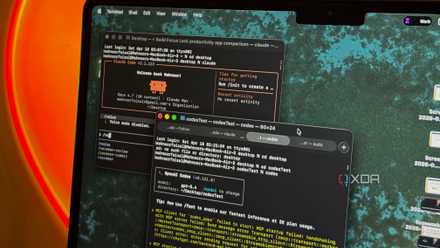
I like Claude Code, but I don’t like his limitations. You are largely restricted to Anthropic models like Claude Sonnet and Opus. They are excellent models, but they can quickly become expensive, even for relatively simple tasks. Claude Code is also closed source. If you are a company concerned about data governance or an individual who prefers transparent tools, that can be a drawback.
I’ve been trying to find a alternative to the Claude Code and I recently started using Aider which solves both of the above problems. It is an open source tool that takes a Git-centric approach and works with a wide range of AI models. You are not limited to a single provider or ecosystem. I sometimes get better results with the latest Gemini models than with Claude, depending on the task. GPT-5.5 is also quite capable for much of the work I do. Aider allows me to choose the model that fits the job instead of forcing each task through the same AI.
For routine coding tasks, I can use a cheaper model like DeepSeek and keep costs down. When I need more reasoning power, I can switch to a more capable model like the Claude Opus, Gemini, or GPT. That ability to mix and match models based on cost, performance, and use case is a huge advantage, and is the main reason I prefer Aider, and I think this is what Claude Code should have intended to be from day one.
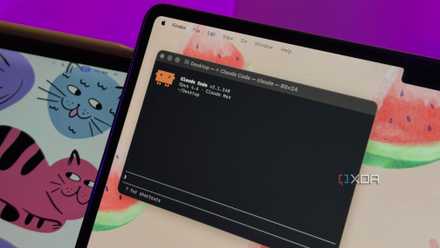
Aider understands the fundamentals well
You can choose the AI model you want
Aider is an open source tool that runs in your terminal. You point it to the files and tell it what to change. It then generates edits, shows differences, and can automatically push changes to Git. It is compatible with OpenAI, Anthropic, DeepSeek, local models through Ollamaand many others.
Aider also understands that code ultimately resides in Git, not in an AI chat. Every change you make is visible, reviewable, and easy to make. It encourages a workflow where AI helps you rather than replaces your judgment. That sounds less impressive than an autonomous agent that can walk through your codebase and make radical changes, but it aligns much better with the way professional software development works.
Another thing Aider is right about is that it is fundamentally prepared for the future. The AI industry changes every few months. The best model today may not be the best in six months. Aider’s architecture recognizes this reality. Claude Code effectively assumes that Anthropic models will remain the best option forever, or at least good enough that users won’t care about the alternatives. But even now, with recent version updates from Google and OpenAI, I can see that Claude is not the only model worth using.
The open source aspect matters too. Even if most people never read a line of Aider’s source code, the fact that they can is important. Bugs can be investigated, integrations created, and companies can evaluate exactly what the tool is doing. Claude Code requires a level of trust that many organizations are uncomfortable with, especially when it comes to source code. Aider takes the position that developers should own their tools rather than rent access to a black box.
It’s also pretty easy to use.
Same as Code Claude

Using Aider is not complicated and that is part of the appeal. You open it in your terminal, point to the files you want it to work on, and start describing the change in plain language. It can read the relevant files, make edits, and show you exactly what changed before committing anything. That’s the same basic promise that makes Claude Code useful. You are still driving the process. The tool is there to handle repetitive coding work, not to take over the entire project.
Aider gives you the core features you expect from a modern encryption agent. It can work on multiple files, follow the context of your repository, propose changes, and keep everything linked to Git so you always have a clean record of what happened. You need this because the real value of these tools is not just that they write code, but that they make it easier to go from idea to implementation without losing track of changes along the way. With Aider, you can review differences, accept or reject edits, and keep the outcome under control. It feels like a coding assistant that respects your workflow instead of trying to replace it.
You also don’t need to learn a new way of thinking about code. You are not creating a project within a separate AI interface. You’re still working in your own terminal, in your own files, in your own repository. That makes Aider easy to adopt even if you’re not very technical.
Claude Code does many things well
Especially if your workflow revolves around Claude

While Aider can replace Claude Code for many people, Claude Code continues to lead in terms of autonomy. Aider tends to be more precise and expects you to stay involved in the process. Claude Code is much more willing to set a goal, figure out which files matter, make changes, run commands, and keep iterating without much intervention. That’s not necessarily better or worse. It depends on how much control you want.
I also think people exaggerate the difference between the two tools. Much of what you’re seeing is actually the difference between the models and not the software surrounding them. Claude Code combined with Claude Sonnet or Opus will work extremely well because they are excellent coding models. Put the same models behind Aider and the gap will narrow considerably.
At the end of the day, both tools are primarily conduits between your endpoint and an AI model. The workflow is different, but neither tool is responsible for most of the intelligence. The model, the context you provide, and the prompts you write have a much greater impact on the outcome.