

Addressing allegations of labor abuse, the Chinese embassy maintained that Beijing “attaches great importance to protecting the legitimate rights and interests of workers and always asks Chinese companies to respect laws and regulations.”
Martínez said he wanted the general public to better understand these prehistoric animals. “Sharks belong to the class of fish and, therefore, they communicate their experience to us differently than marine mammals.” The human eyes and behavior of dolphins and sea lions make it easier for people to project onto them, but it’s harder for people to naturally relate to sharks, Martinez said.
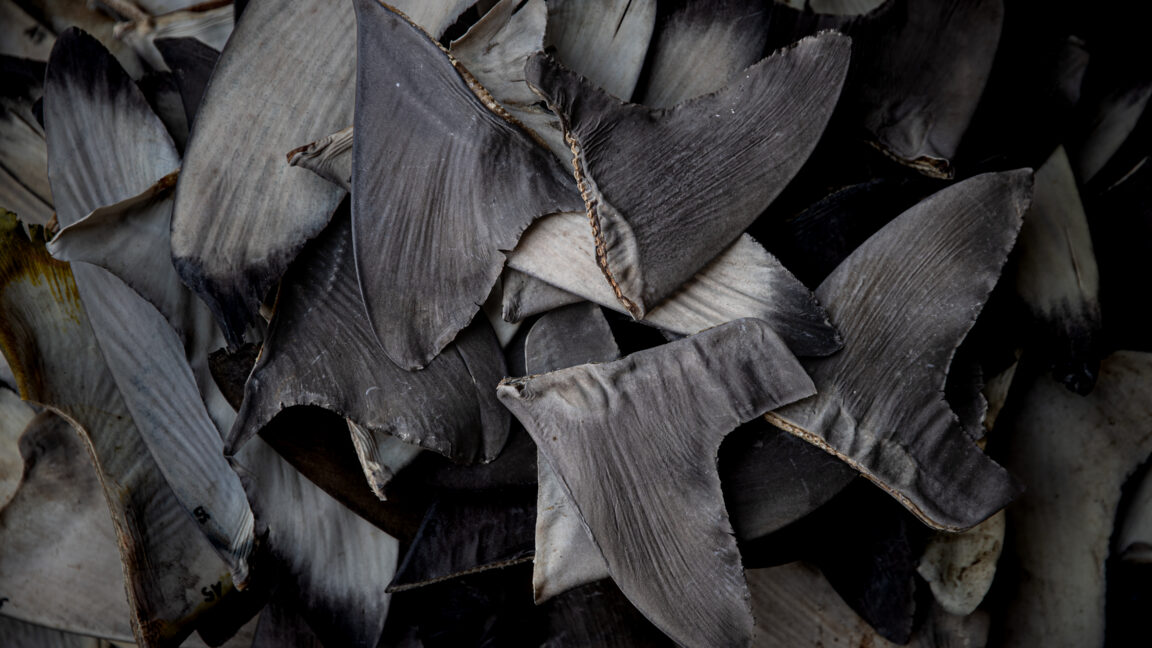
The harvested fins are frequently shipped to Hong Kong, a special administrative region of China that serves as the world’s largest trading hub for shark fins. DNA analysis of fins imported into Hong Kong between 2014 and 2021 found the presence of at least four species on the Convention on International Trade in Endangered Species list: scalloped hammerhead shark, smooth hammerhead shark, great hammerhead shark and oceanic whitetip shark.
China’s lack of a ban on the possession, transport and sale of shark fin products is a further violation of the US Moratorium Protection Act, according to the Center for Biological Diversity. Although there are restrictions on serving shark fin dishes at official Chinese government events, this does not constitute a nationwide ban, the report concluded.
“If China refuses to adopt comparable protections, then the United States should use the tools that Congress provided, including import restrictions,” Olivera said, noting that the ideal outcome is for China to adopt shark conservation measures comparable to US laws. “The goal of the petition is to make shark conservation standards real, not optional.”
“The level of demand we place on the ocean simply cannot continue,” said Martínez, whose first live video find I was with a great white shark in South Africa. “Shark finning is part of a larger story, a reflection of how deeply we have exploited our oceans.”
This article originally appeared on Insider climate newsa nonpartisan, nonprofit news organization covering climate, energy and the environment. Subscribe to their newsletter here.



