

Ask for a Linux gaming recommendation in 2026 and you’ll hear the same word almost every time: Bazzite. And for good reason. It boots up ready to play, ships Steam Gaming Mode out of the box, and is really hard to break into for the first time. linux newbiebut at some point, it became the only recommendation he heard. The truth is, you don’t need Bazzite to play on Linux, and for many people, a traditional distribution is the best option. It all comes down to one thing: image-based immutable model versus a mutable one. I run CachyOS as my daily driver and Bazzite on the couch PC below, so this is a comparison from within both camps.
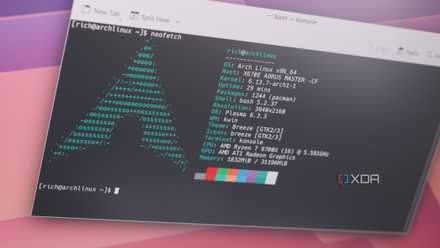
Bazzite isn’t doing anything special when it comes to gaming specifically.
Other distributions are just as capable

Gaming on Linux has exploded in recent years and Bazzite has been part of that rise. Bazzite includes game-specific packages and out-of-the-box presets that make plug-and-play gaming easy, but these packages and settings apply just as easily to other distributions.
As far as compatibility goes, what actually gets Windows games running isn’t Bazzite at all: it’s Proton, Valve’s compatibility layer, downloaded through Steam, so it’s identical whether Steam is on Bazzite, CachyOS, or anything else, and popular community forks like Proton-GE install just as easily on either. CachyOS also includes the rest of the stack, included in the “cachyos-gaming-meta” packages that the Hello app offers on first boot: Proton, Gamescope, MangoHud, a patched Wine build, and the 32-bit Vulkan and Mesa libraries that the games depend on. Other distributions have similar packages, but even if they don’t, you don’t really need much to get a modern version up and running.

Immutability means working around a system.
You don’t have full control

Bazzite is based on Fedora Atomic, which means the root filesystem is a read-only image rather than a bunch of individually editable packages. This is the source of not only its solid stability, but also some of the friction that comes with daily use. When you want to install something at the system level, you don’t just install it, you overlay it with rpm-ostree, which orchestrates a new deployment and applies it only after a reboot. Bazzite steers you away from that path on purpose, first recommending Flatpak, Homebrew, or even a Distrobox container, because layered packages can slow down your updates and occasionally block them entirely until you remove the offending package.
As will be the topic of this article, none of this is a problem if you don’t intend to take advantage of it, but the instinct that drives many people to Linux (to have complete control) is in direct opposition to an immutable distribution. On CachyOS or any mutable distribution, install a package or edit a configuration in /etc and it takes effect nownot after reboot.

Most Linux troubleshooting assumes a mutable distribution
The documentation is solid for “normal” distributions.

The second cost is a bit tricky, because it doesn’t arise until something actually breaks. The vast majority of Linux documentation that comes from forum answers, Arch Wiki, random fixes from 2019 blogs that still work, and LLMs that have tracked it all down, assumes a writable root and a conventional package manager. When you run into a problem and look for help, “just install this package” or “edit this file” often doesn’t relate clearly to the atomic world, although sometimes it does. If you’re a newbie, you won’t know which is which. It will search for a specific problem and you may find 3 different solutions that have nothing to do with your operating system.

Playing is how you learn
If that’s the goal, of course.

This point is almost completely moot if you’re looking for a plug and play experience and aren’t interested in learning about the inner workings of the Linux ecosystem. If part of the reason you came to Linux is to understand how the operating system fits together, the immutable model hides precisely the mechanics that teach you that. Handling your own package management, untangling a dependency, and occasionally breaking something and putting it back is the curriculum, and abstracting it does the same for the lesson. Part of the reason I know how to fix the problems I encounter is because I’ve run a mutable distribution before, and if you haven’t, you’re often at the mercy of the maintainers of both the immutable operating system and the packages it contains.
I use Bazzite myself
Just not as a daily driver
Gaming is great, but some machines you trust just work.
Atomic updates with rollback make Bazzite really hard to break: you always keep your previous implementation, so a bad update means rebooting with the last good image and continuing with your day. The same philosophy applies to setup: you plug in the unit, install it, and you’re done. You log into Steam and play within 20 minutes, and this has been my experience almost every time I’ve used it.
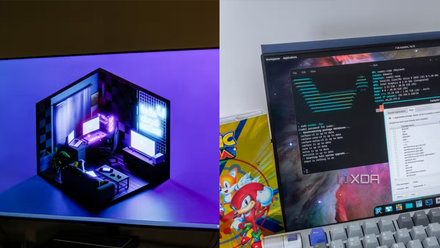
It’s also exactly why I chose Bazzite for my HTPC below, and why I would never put CachyOS on there. That machine is an appliance. It’s operated from the couch with a Steam Controller, you boot straight into Steam Gaming mode, and the expectation is that you’ll just play. The last thing I want from a living room TV is to access a terminal and debug a failed update in the middle of the night. I actually put away the HTPC keyboard and mouse, not just because the Steam Controller is great, but because I know I’ll rarely have to pick them up again since I upgraded from Windows 11.

Bazzite is not the only way to play on Linux
Bazzite is best when you need it to stay out of your way and they make no claims to the contrary. It’s a great option for those looking to dive into Linux gaming, but it’s not the only one. He immutability that has earned him that status is precisely what makes a mutable distribution the best tool for people who really want to access your system. The correct answer depends entirely on which of those two machines you are building.



