
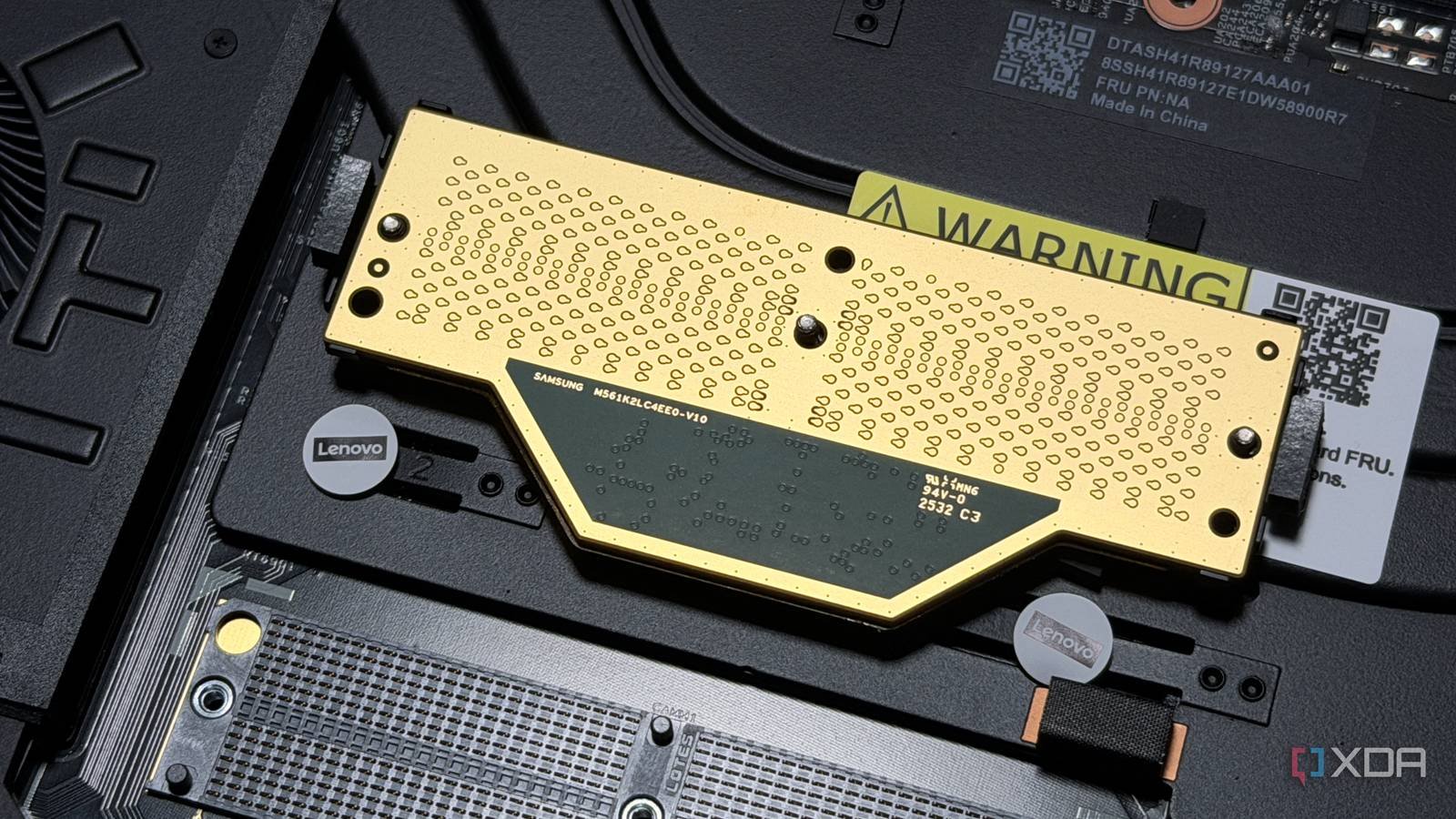
Since the 1990s, RAM has existed in the form of dual in-line memory modules, or DIMMs, in both desktop and laptop computers. These “RAMs” have seen the evolution of PC memory from SDR to DDR to DDR5 (eventually), but after three decades, we’re about to see the last of them. Next generation DDR6 RAM It was confirmed to adopt a new form factor, namely Compression Attached Memory Module, i.e. CAMM2, back in 2024. This new form factor is necessary to overcome the frequency limitations of the DIMM slot, which means your DDR5 PC could be the last one with conventional RAM. However, before we even get there, laptop manufacturers have already adopted the CAMM2 standard for good old DDR5 RAM. Unless your current laptop needs an urgent upgrade this year, chances are your next one will have CAMM2 DDR5 memory. The eventual transition from DIMM modules to CAMM2 modules will take 3-4 years, but laptops have already moved ahead.

Next-gen RAM is ditching the DIMMs and SODIMMs we’ve used for decades
The dawn of a new era
Desktop and laptop computers have used DIMM and SODIMM memory, respectively, for almost three decades. The form factor has supported the evolution of PC memory from the first SDRAM of the 90s to the high-speed DDR5 RAM we see today. While DDR5 has surpassed 8200 MT/s, with CUDIMMs raising that figure to 9200 MT/s, manufacturers have begun to hit the frequency and signaling limits of DIMMs. Next-gen DDR6 RAM will debut at speeds of 8,800 MT/s to the minimumand later versions raised it to 17,600 MT/s. DDR6 is configured to switch to 4×24-bit subchannels from the 2×32-bit subchannels seen in DDR5. Four narrower lanes instead of two will allow for even faster speeds without the associated interference and signal degradation. to overcome the challenges of these extreme frequenciesthe current RAM slots need to be replaced with something new.
The CAMM2 standard has been formally confirmed by JEDEC and is being designed specifically to bring DDR6 memory to market. The low-profile, bolt-on design is necessary to handle the increased pin count and tracking complexity of DDR6 RAM. It enables a shorter signaling path between RAM and CPU, significantly reducing impedance issues that arise when driving extreme data throughput. The physical demands of DDR6 RAM have forced a shift from DIMMs and SODIMMs to CAMM2 and LPCAMM2 form factors. The interesting thing here is that while desktop computers will see the new CAMM2 standard only with the arrival of DDR6 RAM, laptops will already see it in 2024.

Even your next DDR5-based laptop could have LPCAMM2 memory
CAMM2 is here on LPDDR5x laptops
You might be surprised to know that the first laptop with CAMM2 RAM already came out in April 2024. Lenovo ThinkPad P1 Generation 7 was the commercially available laptop that used LPDDR5x in the form of CAMM2 memory. Dell was the one who pioneered CAMM2’s predecessor, i.e. CAMM, in 2022, in its Precision 7000 workstation laptops, and then worked with JEDEC to finalize the CAMM2 design. In fact, we have quite a few models with LPCAMM2 RAM on the market, such as the Dell Pro Max 16 Plus and the new Lenovo ThinkPad P1 Gen 8. CAMM2 is required for DDR6, but it is not tied to a single memory standard. Laptop manufacturers have already started to take advantage of the compact, efficient and high-speed form factor.
As more OEMs launch laptops with CAMM2 memory and offer even faster memory speeds in a compact, upgradeable form factor, prices will gradually fall, spurring adoption. If your current laptop is only a year or two years old, the next one you buy will probably have LPCAMM2 RAM. Prices for these models will most likely be higher than consumers expect, thanks to newer technology combined with already sky-high RAM prices due to demand for AI.


8.5/10
- Operating system
-
windows 11
- UPC
-
Up to Intel Core Ultra 9 285H with vPro
- GPU
-
Intel Arc, Nvidia RTX Pro 1000 8GB, Nvidia RTX PRO 2000 8GB
- RAM
-
Up to 64GB LPDDR5X, CAMM2

DDR5 DIMMs will remain the standard in desktop computers for the foreseeable future
Forget about DDR6 for the next three years
As for desktops, the road to CAMM2 RAM is still quite long. Many consumers haven’t even made the jump to DDR5 memory, so expecting DDR6 CAMM2 to gain widespread adoption as soon as it becomes available in 2027 is very optimistic. Additionally, it is unknown if the 2027 timeline will hold in light of the unpredictable PC hardware market we live in right now. There have been some hopeful signs in the form of Slightly lower RAM prices last month, but demand for AI is largely set to increase in the near future. This will directly translate into manufacturers delaying the adoption of newer technologies, especially DDR6, as anything new will be released with inflated prices. While companies like Gigabyte, MSI, Asus, and ASRock have shown off prototypes and commercial motherboards with DDR5 CAMM2 support, these boards are reserved for enthusiasts at the moment.
In fact, estimates suggest that a 32GB DDR6 module could launch for around $500, which is a huge jump from DDR5 prices (before the current crisis, of course). In light of near-zero consumer demand for super-expensive memory, production and distribution of DDR6 RAM will likely be delayed until 2028 (or longer). This could mean that CAMM2 memory in desktop computers probably won’t become popular until 2030. Skyrocketing prices for DDR5 have already caused DDR4 the smartest choice for countless PC makers in 2026. Delayed update cycles will continue to make their presence felt in the next 2-3 years.

CAMM2 RAM is already with us, but desktop adoption is still in the future
The next-generation memory form factor, i.e. CAMM2, has arrived in laptops in 2024 and we have seen more models adopt the standard for LPDDR5x RAM. The benefits of CAMM2 in the laptop space will encourage adoption by more manufacturers, but desktop people will have to wait until DDR6 RAM becomes mainstream. DDR4 memory is still far from obsolete, so it is highly unlikely that widespread adoption of DDR6 will be expected before 2030.



