

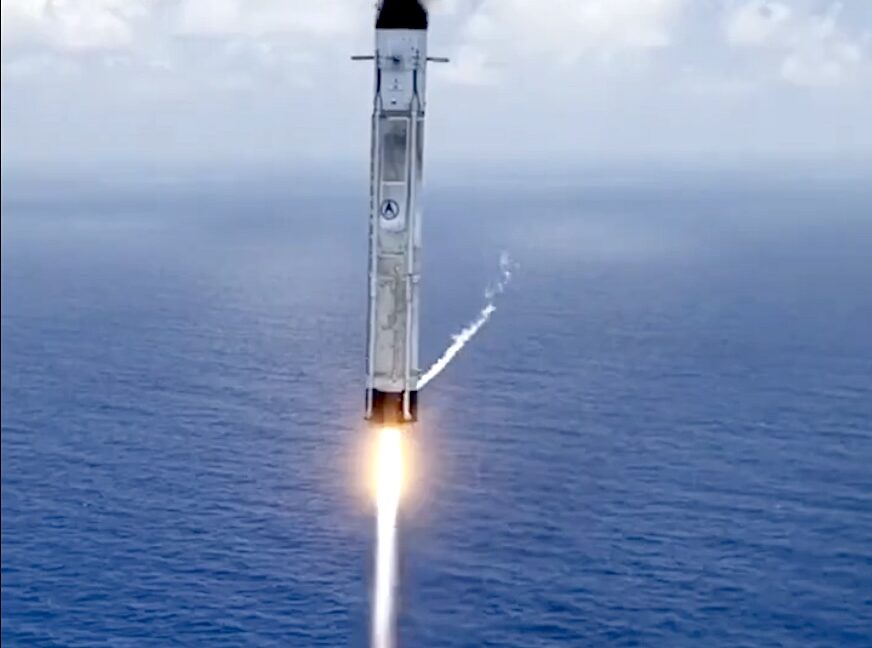
The next flight of the Zhuque-3 rocket could take place later this month or in August, and LandSpace is expected to again attempt to land the booster lower. Other Chinese rockets that could soon achieve reusability include Space Pioneer’s Tianlong-3, China Commercial Rocket Co.’s Long March 12B, CAS Space’s Kinetica-2, i-Space’s Hyperbola-3 and Galactic Energy’s Pallas-1. In the future, China intends to debut a huge new reusable rocket on the scale of Starship. called the Great March 9.
In the United States, there are the Falcon 9, the Falcon Heavy and the SpaceX Starship, as well as Blue Origin’s New Glenn rocket. Rocket Lab aims to launch its first medium-lift Neutron rocket with a reusable booster by the end of the year. Relativity Space is developing a partially reusable heavy vehicle called Terran R, and Firefly Aerospace is partnering with Northrop Grumman on the Eclipse rocket, which officials say will eventually have a recoverable and reusable first stage. Stoke Space has the boldest ambition of a fully reusable rocket called Nova.
Several European companies also plan to test reusable rocket technology, but their vehicles are not as mature as many of the American and Chinese rockets. Rocket makers in India, Japan and Russia have reusability on their roadmaps, with varying degrees of realism.
The proliferation of Chinese rocket companies, spread across four land-based spaceports and multiple ocean launch pads, should prepare China to rapidly accelerate its launch cadence.
“It probably won’t be more than a few years before they can reach a much higher launch rate,” Galbreath said. “They also have more launch sites than the United States currently, so if you combine their number of sites with reusability, they could surpass us in terms of launch rate, which in itself is more a matter of pride. But it is the capacity that is being launched as a result of that that could actually have a significant impact on our competition and, if it comes down to it, conflict.
“There’s nothing wrong with competition as long as it’s peaceful,” Galbreath said. “That may drive innovation, but I am concerned that the historical example of Chinese behavior has not always been peaceful. So we have to watch everything they do carefully. On the one hand, they are competing with SpaceX, but we know that because of the way China has organized its military, its space capabilities, all under military control, its military will receive significant utility from this race.”



