
I love Linux. I know many of our readers do too, and there are good reasons for that. Between a generally snappier experience, fewer intrusive “features,” easy setup, and extensive customization options, there’s a much to love about Linux that makes it difficult to go back to Windows.
But every once in a while, when I have to try something Linux-related and reinstall it, I remember one of its biggest problems: hardware support, specifically for the latest platforms. If you have a relatively new computer, switching to Linux can be especially annoying because some core things may not work or the operating system simply may not work at all. It’s like the opposite problem of Windows, where old hardware has been abandoned prematurely; With Linux, being ahead of the curve is often the problem.
When things don’t work
Hours of troubleshooting for no reason

In my previous experiments with Linux, I’ve had more than my share of hardware problems. It all started with one of my first experiences installing Linux Mint. when i Mint installed for the first timeI was using a Dynabook laptop with a 12th Gen Intel Core processor. Of course, this was in 2025 and these processors were already several years old.
Despite that, Linux Mint shipped a fairly old version of the Linux kernel, and that didn’t include support for the Wi-Fi driver required for many of these laptop processors. I needed to connect the laptop via Ethernet and then install an optional kernel update to get everything working again.
I also remember having problems with the lack of audio output, although it’s been a while and I don’t remember all the details. But I do know it happened with more than one computer and distribution, and it was very frustrating. Fortunately, I haven’t had these kinds of problems in a while.

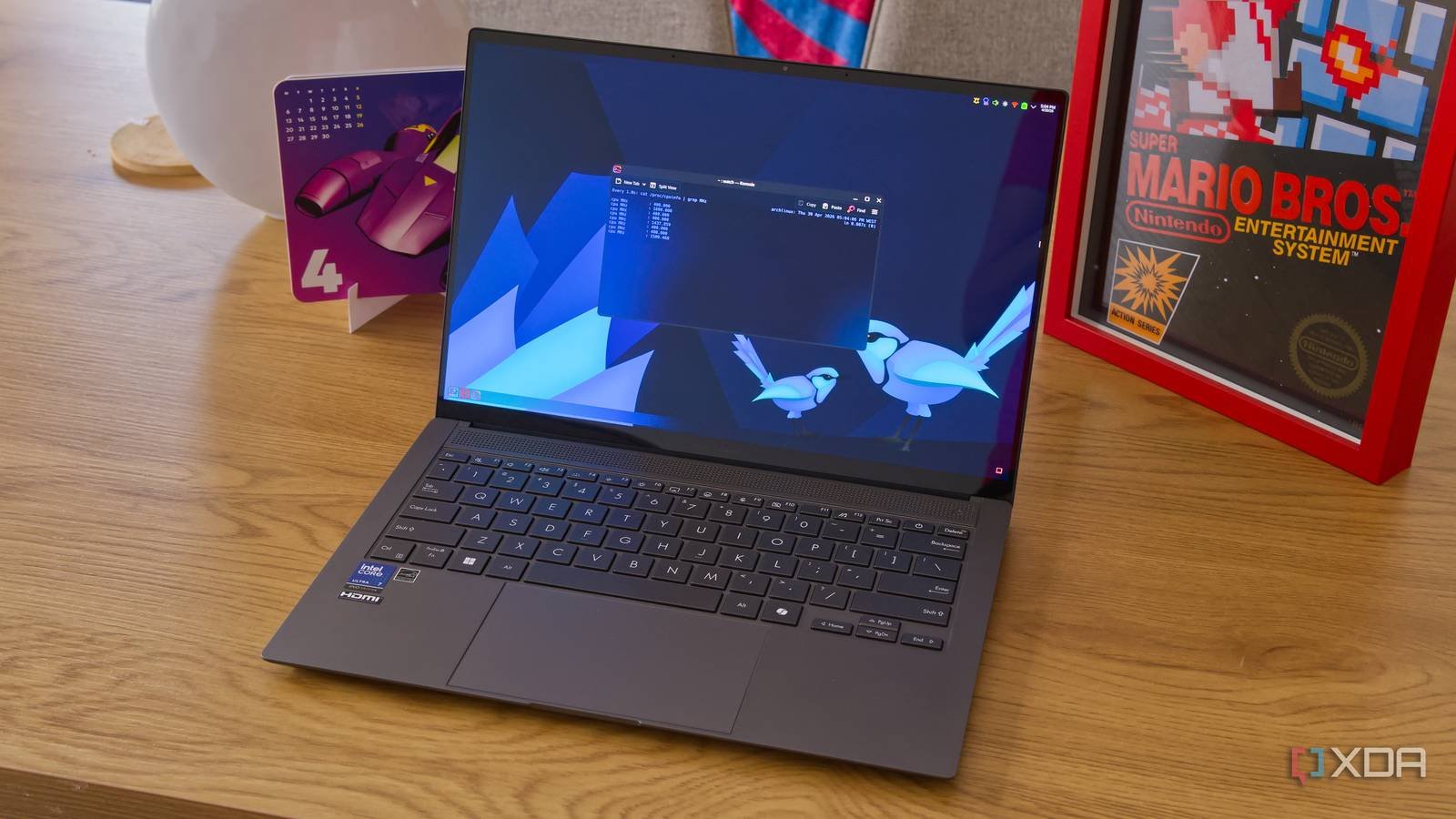
But with new enough hardware, problems can arise even if you’re ahead of the curve. I recently switched to Linux on another laptop that is also one of my favorites. has Intel Moon Lake processors, so performance and battery life are excellent. And I loved almost everything about the experience. The problem is waking up from sleep. Occasionally, if I put the laptop to sleep, when I wake it up a few hours later, it will have a few minutes where all the processor cores will be locked to 400 MHz, making the laptop almost unusable until the problem fixes itself, which can take up to a minute. I was hoping that perhaps Linux kernel version 7.0 would improve this, but so far, this doesn’t seem to be the case.
Interestingly, a similar issue was pointed out with the Lunar Lake-powered Dell XPS 14, as mentioned in this Arch Wiki Page. However, that laptop seemed to have its problem fixed with Linux version 6.18. There was no such luck my asus model.
Sometimes you may simply not be able to install it.
In extreme cases

There are some situations where you may not be able to install any operating system due to hardware compatibility. Again, this may depend on the distribution you are trying to work with because hardware support is usually tied to kernel versions. The last few years have been especially difficult because laptop processors have undergone significant evolutions in terms of their architecture.
I had to try it a while ago and install SteamOS on a mini computer, but SteamOS just didn’t install on my Intel-based machines. And even when I tried one of AMD’s Ryzen AI processors, it still didn’t work. These processors were a big leap for AMD laptops with a lot of changes, maybe that’s the reason.

Not long after, I tried a similar experiment with bazziteand while it worked with my AMD Ryzen AI machine, it still didn’t work with an Intel Arrow Lake processor. And I faced a similar problem a few months ago when I was testing the Tails OS, which came with a fairly old version of the Linux kernel. I was having compatibility issues with some even older machines where it just wouldn’t boot.

Again, this may be due to fragmentation of Linux and the distribution you are installing. If you install a distribution that was recently updated or one that receives frequent updates like Fedora or Arch Linux, you’re more likely to have something that will at least boot. But it’s not perfect.
However, emerging architectures are always going to have some problems. I wanted to downgrade my Honor laptop with Snapdragon to Linux, but there are no distributions that support this specific hardware. Even those that include Arm versions don’t work because hardware support is more complex than that.
we can’t fix it
It all depends on the companies

This situation is one of the biggest problems for Linux adoption, and the real problem is that it may never change. One thing people love about Linux is that it supports a lot of older hardware that Windows may have abandoned, or performance may be better on said hardware. But the reason that kind of support is possible is because that hardware is in the hands of many people who are willing to contribute to the project and, other than time, it doesn’t cost them much.
However, with new hardware, there won’t be many people willing to spend more than $1,000 on a device just to install Linux on it and then test and develop things to help make it work. It takes time for those devices to get into the hands of people who can improve Linux. As a result, anyone trying to change one of these devices is likely to have more difficulties.
The only ones that could change are the companies that build these devices and components. If they contributed more directly to driver development in Linux before product releases like they do for Windows, things could improve significantly, but that’s unlikely to happen because the financial incentive to improve Linux doesn’t really exist for most of these companies. Even those that do support Linux tend to take a little longer to provide the proper drivers.

Of course, there are some positive signs in this regard. Some companies primarily sell Linux hardware, including System76 and Framework. Perhaps the most notable example is Valve, which sells the Steam Deck and, at one point, the Steam Machine. However, Valve also works with a somewhat limited range of hardware. These are just two devices with few configuration options, and they are both based on AMD processors, so you may not see much work done for Intel-based devices. And even System76 and Framework are relatively small companies that typically don’t release as soon as new processors are available, so their impact isn’t as big as it could be.

Companies like Intel and AMD, as well as the industry-leading PC makers, are the ones that need to support Linux with proper drivers that can improve the experience on new hardware as it comes out. But that doesn’t seem likely to happen anytime soon.
Linux is still better on slightly older hardware
As much as I like to recommend Linux, it should always be accompanied by a healthy dose of caution when it comes to newer hardware. Linux is still a great option for more mature hardware that has had time to receive proper driver updates. And in those cases, it can definitely be better than Windows in many aspects. But when it comes to new computers, it will be an uphill battle, and one that most users probably won’t want to face just to use their devices.



