

at a time when GPU prices are out of controlwe have to be practical. Judging a GPU solely by its performance always indicates that the best choice for the consumer is the RTX 5090, but the reality is that most of us don’t need that much firepower in a PC.
When looked at through the lens of value, there’s only one GPU that’s really worth buying right now, and it’s definitely not the one most people think of. It’s not Nvidia, it’s not AMD… it’s actually Intel.
The market for cheap GPUs has stopped making sense
In fact, it’s been a while, but the situation is only getting worse.
The GPU market may have seen worse times in recent years during the 2021 shortage, but only marginally. GPUs were extremely expensive back then and also not available. I still remember the RTX 30 series selling out in seconds, or 100-200 people lining up outside retailers waiting for a GPU restock. We had two problems at once: there were no GPUs available and the ones that were sold were often priced up to 300% above MSRP.
Now, the problem is different. You can get any GPU you want at any time, even the coveted RTX 5090, but you won’t be able to get it at the recommended list price. we have the RAM-pocalypse thank you here, of course. As the price of DRAM skyrocketed, GPUs eventually followed suit, leaving us in a dire situation. After all, you can’t have a GPU without VRAM (although you can have one with it’s not enough VRAM, but we’ll come back to that).
Virtually all GPUs sell above MSRP, even the RTX 5060 and RX 9060 XT, and that wasn’t the case just a few months ago. Sure, the RTX 5060 is only $30 to $70 above its recommended price of $299, but that’s a lot considering the overall price of the GPU. The RX 9060 XT also started at $299, but Amazon sells the 8GB VRAM version for around $470.
Then there’s Intel. In some ways it’s the only GPU that seems to have avoided the worst of the price increases. But more than that, it’s the only one of the three that’s actually a decent value.
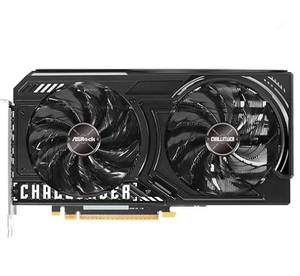
- Memory clock speed
-
2,760MHz
- Graphics RAM size
-
12GB
Intel’s Arc B580 offers large amounts of VRAM for the price and is more than enough for most 1080p gamers.
The Arc B580 fixes the VRAM issue that has been plaguing Nvidia and AMD for years
Enough VRAM with a responsive memory bus

The advantage of the B580 is, of course, the VRAM. It’s not that it uses advanced memory; It’s actually worse than the RTX 5060 in that regard, since Intel uses GDDR6 and Nvidia moved to GDDR7. But the difference is that you get 12 GB of VRAM on a 192-bit bus. Meanwhile, AMD’s RTX 5050 (a cheaper, though worse card) and RX 9060 XT use 8GB on a 128-bit interface. (Yes, I know AMD also has the 16GB version of the RX 9060 XT, but that one is much more expensive than the Arc B580.)
It’s not just that 8GB of VRAM isn’t enough to play properly in 2026. It’s also that the narrow 128-bit interface really limits the card’s capabilities. The B580’s 456 GB/s of memory bandwidth is slightly higher than the RTX 5060, and that’s despite using an older type of memory. Thanks to the memory interface for that.
Of course, VRAM is available elsewhere, but only if you’re willing to pay for it. The RTX 5060 Ti and RX 9060 XT come in 16GB versions and both GPUs are considerably faster than the B580. The problem is that the AMD card costs more than $450 and the Nvidia card costs $560. That’s a huge margin over Intel’s $310-$370 (depending on the retailer).
Intel had a rocky start, but now you can count on it
With some caveats

I think it would be difficult for any company to decide to make GPUs at this point since Nvidia controls over 90% of the consumer market. But Intel tried it and, at first, the results were not good.
Intel Arc Alchemist, the previous generation, had a lot to improve in terms of drivers. Performance could vary wildly between games, especially on older DirectX 9 and DirectX 11 titles, and new releases occasionally arrived with crashes or other issues that required a driver update. You can’t take it at face value and assume it will work well based on specifications alone.
Battlemage, the generation of which the B580 is the flagship, is in a much better place. Compatibility is no longer a deciding factor and problems are much less frequent.
The B580 isn’t the best ever, but it’s good enough
Your mileage may vary

As for performance, don’t expect power. The Intel Arc B580 is perfectly sufficient for 1080p gaming, but the Tom’s Hardware GPU Hierarchy puts it around the same raster performance as the RTX 3060 Ti. On the other hand, it is not far behind the RTX 5060, and that is largely due to the free VRAM space.
It’s hard to discuss the topic without mentioning DLSS. Nvidia DLSSas well as their ray tracing capabilities, they outperform both Intel and AMD in most scenarios. And yes, frame generation gives you a lot more performance even on a budget card like the RTX 5060. But eventually, that 8GB VRAM will catch up with you and you might want more – the only problem DLSS can’t really fix.
The Arc B580 may be all you need to wait
If you just want a GPU that lets you play your games without needing to max out every setting, the B580 can do that, and the extra VRAM will give it more longevity in AAA games. For some, it might be an option to simply wait. Maybe when the new generation of cards finally arrives, whether in 2027 or 2028, the prices will be less horrible. For now, value-wise, the Arc B580 remains hard to beat for gamers who aren’t expecting miracles.



