
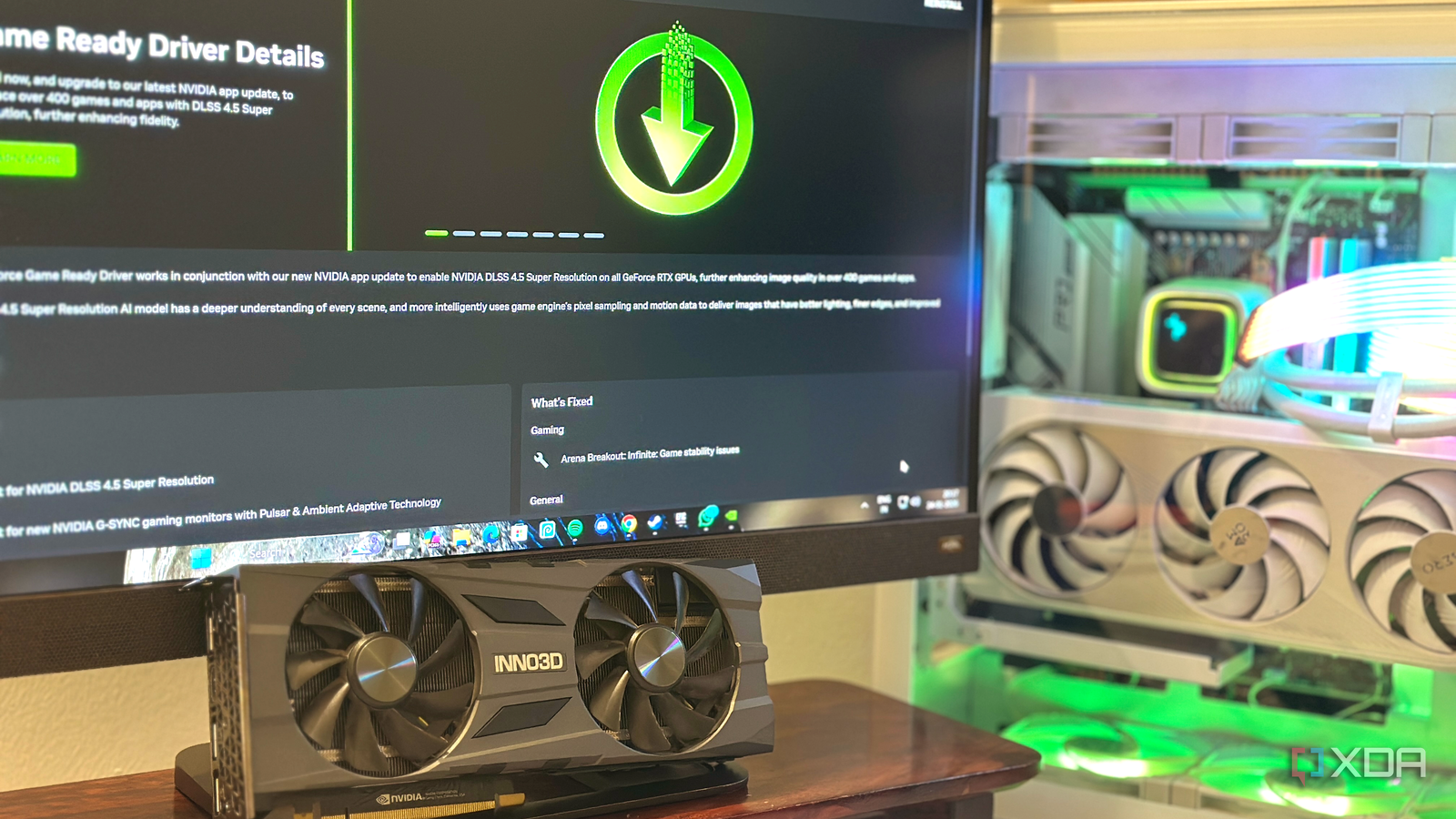
Does anyone else remember when Nvidia’s Game Ready drivers used to feel exactly like their name implies? All you had to do was install them, restart your PC, and get on with your life playing the latest AAA title on the market. Sometimes DLSS support appeared in a new game, while other times you got a few extra frames in a AAA version. The important thing, however, is that overall things worked. After all, excellent driver support (among other things) is what kept Nvidia head and shoulders above AMD for most of the 2010s.
However, lately, every new driver released in the Nvidia app has felt like a roll of the dice. After the GeForce 595.71 driver, in particular, which completely reduced overclocking performance by up to 16% for some users, it’s hard not to take Nvidia’s release notes not with a grain of salt, but with a full-sized salt shaker.
GeForce 595.71 broke what already needed repair
It was supposed to fix an update that was already broken.

Just before the release of Resident Evil RequiemNvidia had released GeForce Game Ready driver 595.59. Almost immediately, things went wrongas thousands of users reported fan issues on their 30, 40, and 50 series RTX cards. FPS drops with a new driver update are never ideal, but are often ruled out as well. However, the 595.59 driver issues were not, as they included inconsistency with GPU utilization and power consumption limitations that came out of nowhere. The result, then, was that even slightly overclocked cards ended up thermally throttling or underpowered by tens of watts, leading to crashes and Black screens even under lighter loads..
Almost immediately, Nvidia went into damage reduction mode, “disabled” the driver, and soon released Game Ready Driver 595.71 to fix the issues. Unfortunately, things only got worse from there. The 595.71 driver ended up causing the cards to run at lower voltages, which reduced clock speeds and power consumption levels. The result was, once again, ridiculously bad and caused performance drops of up to 16% for RTX 50 series users. The limits introduced by the 595.71 driver caused fairly steep drops in maximum performance for RTX 50 series users, regardless of whether they were running an RTX 5090 or an RTX 5070 Ti. Other industry outlets also tested and corroborated the issues, leading Nvidia to once again release a hotfix in the form of driver 595.76. However, the damage was already done, and even compounded, considering that over 90% of the RTX user base had just seen two consecutive bad driver updates that forced them to suffer reduced performance, manually roll back drivers, or simply wait for Nvidia to do better.
Nvidia driver problems did not start with 595.71
RTX 50 series users have been beta testing for almost the entire generation
Driver 595.71 was not an isolated accident, nor was 595.59, which it was supposed to fix. Nvidia’s driver situation has been spiraling for most of the year, especially for RTX 50 series owners. At this point, 50 series owners have been acting as unpaid quality control testers. As of February 2025, the 572.60 driver had already caused widespread complaints related to black screens, DisplayPort signal loss, failures during installation, and systems freezing after waking up. For many users, especially those running multi-monitor setups or high refresh rate panels, the simple act of updating a driver has become nothing less than an exercise in risk management.
By April 2025, things had been quite complicated with drivers 576.02 and 576.15, both of which had their own list of problems. Users had reported DLSS instability, random stuttering, dropped frame rates, and regular game crashes on Reddit, Nvidia’s own forums, and YouTube. Nvidia was rolling out hotfixes so quickly at the time that it had become difficult to tell which branch was supposed to be the stable one.
Nvidia’s recent drivers feel like they’re hardcoded to exist
Release notes no longer inspire confidence
At this point, I really hesitate before installing a new Nvidia driver, as do thousands of users, if not more. Even when a major Game Ready release is released alongside something like Force Horizon either pragmaticThe big driver update causes, at best, nothing but apprehension. My first instinct now has been to wait at least a couple of days, open the Reddit and Nvidia forums, and check to see what broke this time before even hitting the refresh button within the Nvidia app. That’s a terrible place for the industry’s largest GPU manufacturer.
The biggest problem, of course, is that Nvidia’s release notes simply don’t mean much anymore. A driver update can Of course, it fixes the black screens of the previous version, but it could very well introduce instability with a DLSS function, voltages or frame times. It has become increasingly difficult to trust that any solution won’t come attached to a completely new problem that will only appear days later, after thousands of users have installed it and had problems.
At this point, Nvidia deserves the same level of criticism that AMD spent years receiving for driver instability. If AMD had released back-to-back drivers that reduced overclocking performance by 16% and bricked GPUs even while browsing the web, the Internet would have been downright merciless. This may or may not be because AI-assisted vibration coding plays a role in this drop in driver quality or not, it sure seems like Nvidia developers have recently started to care less about releasing drivers perfectly.
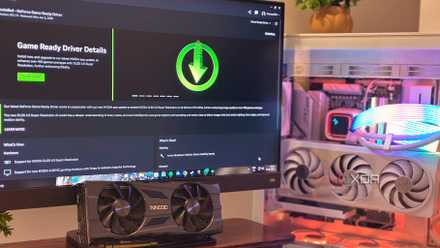
Nvidia needs to regain the trust of enthusiasts A decent update that doesn’t break anything and keeps everything stable shouldn’t be a pleasant surprise.
The most disappointing part of all this is how quickly trust disappears when enthusiasts stop feeling respected. High-end PC hardware has never been more expensive than it is today, and those spending money on the RTX 5070 Ti or RTX 5090 shouldn’t feel nervous every time a notification for a new Game Ready driver appears in the Nvidia app.
The absolute minimum expectation should be stability, and a decent update that doesn’t break anything shouldn’t be a pleasant surprise to users. I have no doubt that Nvidia can recover from this, but only if they start treating driver quality as seriously as they treat AI marketing slides and keynote presentations. Right now, the software side of GeForce seems much less premium than the hardware it’s connected to.



