

You probably have your phone with you more often than your laptop. It fits in your pocket, travels everywhere, and already performs a surprising number of daily tasks. You can reply to messages, join meetings, manage emails, take photos, record videos, and browse the web without having to use a computer. Work, however, remains a different story. Most smartphones are designed around consumption and communication rather than productivity.
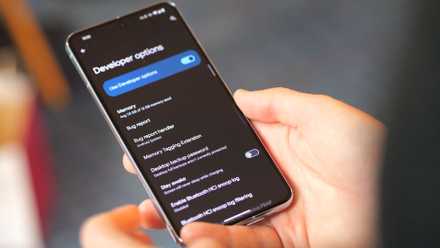
App developers and phone manufacturers still prioritize mobile experiences, which means doing serious work on a phone is limiting compared to a laptop. That doesn’t mean it’s impossible. I recently spent an hour trying to turn my Android phone into a laptop replacement to see how far the idea could go. I used a Xiaomi phone for this experiment, but the same setup can work on most modern Android devices.
Start by automating workspace apps
This way you can avoid facing the UI on your phone

For me personally, the biggest use case for a laptop is still Google Workspace. Most of my work is done within Google Docs, Sheets, Slides, and a few other Workspace apps, and while all of these apps are available on Android, using them on a phone isn’t a great experience once you start doing more than basic editing. Even on a flagship phone, updating a spreadsheet takes longer than it should because the interface was never designed for this type of work. Even if you have a foldable phone with a larger screen, or even a tablet, you’ll still be dealing with the same mobile interface and limitations.
I stopped trying to force myself to use mobile apps and instead automated most of the tasks that sent me back to my laptop. Yo I already use n8n for some workflows.so setting this up was pretty easy. I connected n8n to my Google Workspace account via the relevant APIs and added an AI layer on top that can understand natural language instructions. I send a request from my phone; The AI figures out what I want to do, extracts the relevant information, and then passes that information to n8n, which performs the action within Google Workspace.
A budget spreadsheet is probably the simplest example. If I want to record an expense manually, I have to open Google Sheets, find the correct spreadsheet, navigate to the right tab, find the next available row, and then enter all the details myself. Those steps aren’t difficult, but doing them on a phone is exactly the kind of thing that makes me wish I had my laptop with me.
Similarly, instead of reviewing long documents and spreadsheets on my phone, I now upload them to my workflow or even a chatbot like ChatGPT or Claude and simply ask for the information I need. The bot can then review the document or spreadsheet and help me find what I’m looking for without having to manually navigate through the file. I don’t have to zoom into a spreadsheet and see what’s written in a particular cell or column. I get the answers I need through an interface more optimized for a smartphone.
Getting the right apps is important
Software is the key to replacing a laptop

A phone replacement only works when the software stack covers more than basic mobile apps. I needed browser tools, file managers, Linux access, and Windows support for tasks that aren’t comfortably done on Android alone. Termux and PRoot handle Linux environments without root access, while Winlator provides Android access to many x86 Windows applications through Wine, Box86, and Box64. My Xiaomi ran the front, but the rest of the stack filled in the gaps a phone normally leaves open.
PRoot works by mimicking the behavior of chroot through ptrace, which allows Linux environments to run in user space. That solution still incurs overhead and external storage can block execution due to noexec restrictions. The file system also becomes more demanding once local, cloud, and network storage are integrated within a single workflow.
You can always use advanced file managers like AnExplorer, Solid Explorer, MiXplorer and Filex AI. They support network protocols, encrypted vaults, plugin systems, batch renaming, and AI-assisted analysis. Those features give the phone a better answer to storage chaos than the default Files app. I used my Xiaomi as the center of that setup, but any serious Android desktop workflow needs the same level of file control.
I also started using a better browser instead of relying solely on Chrome, because Chrome still doesn’t offer the right experience on a phone. I found browsers like ChatGPT Atlas, Dia, and Comet to be more useful because they are agent browsers that can do things for you, meaning you don’t have to spend a lot of time navigating the user interface.
Another app that made my life much easier was Wispr Flow, which is essentially a speech-to-text tool. I can type on my phone, but I don’t type very fast and formatting text on a phone can be tricky. Writing an email is a good example because formatting often doesn’t turn out the way you want and even something as simple as adding punctuation or restructuring a sentence can take longer than it should.
With Wispr Flow, I can simply talk instead of writing. What makes it useful is that it does more than just convert speech to text. It understands the context of what I’m writing and formats the output accordingly. If I’m composing an email, it knows I’m writing an email and structures the text as such instead of throwing a block of plain transcribed text on the screen.
You can always use desktop mode and accessories
But you shouldn’t be doing that
My setup was more focused on making software changes that make a phone more usable as a laptop when you don’t have a laptop on hand. The goal was never to replace a laptop in the literal sense or to convince me that a phone is a better computer. If I’m sitting at a desk with access to both devices, I prefer to use a laptop almost always.
What I wanted to know was how much work I could do when all I had with me was my phone. Since you almost always carry a phone in your pocket, there are many situations where you need access to a computer but don’t have access to your laptop. That’s the problem I was trying to solve.
If your goal is to physically turn a phone into a laptop, Android already has plenty of options. You can connect an external display, pair a keyboard and mouse, and use your phone in a desktop-style environment. Modern Android phones also support DisplayPort output over USB-C, making connecting them to an external monitor quite simple.
Samsung has DeXwhich provides a Desktop-like interface when connected to a larger screen.. Motorola has its own version through Ready For, and Google and several other Android makers have been gradually adding similar desktop capabilities to their devices.
You are underusing your phone
Today’s phones are packed with rarely used hardware. Most Android flagships come with more RAM, more computing power, and more storage than most of us will ever need, but if you’re paying for that hardware, it’s worth finding ways to use it.
There are many things you can do with a phone beyond the usual apps and social networks. I used that extra computing power to make the device more useful when I didn’t have a laptop with me. If you have an old phone lying around, you can take it even further and make it a media server, a dedicated Tailscale exit nodeor use it for any number of self-hosted projects.




