

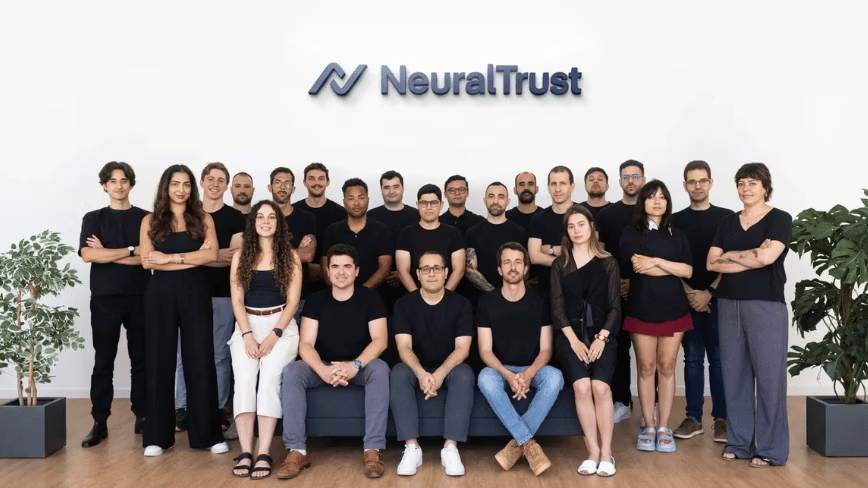
NeuralTrust, a Barcelona startup, has raised $20 million to protect the AI agents that big companies are now deploying faster than they can keep up.
The seed round, valued at €17.2 million, was led by Munich-based Alstin Capital, with VentureFriends, Seaya, Kibo Ventures, Banc Sabadell, EA Ventures Plug and Play Fund and Finaves, as well as public money from the European Innovation Council and the Spanish research agency. NeuralTrust calls it the largest cybersecurity seed round ever raised by an EU company, a claim worth noting, but not unreasonable.
The problem: agents that nobody counts
The problem NeuralTrust sells itself against is sprawl. Within a large company, AI agents multiply without anyone keeping track. One team creates a customer service agent in one model, another automates administrative work in a second, and the vendor’s software arrives with its own agents.
Each connects to internal systems, databases and external tools, and acts on its own. Most security teams can’t tell how many are running, what each one can door if someone has been tricked into leaking data.
“If you plug AI into your email system and send emails to external addresses, leaking internal information, it’s a disaster,” CEO Joan Vendrell told Tech Funding News.
NeuralTrust’s answer is a single layer of control, sold as three products: TrustGate, a gateway through which every model, tool, and agent call passes; TrustGuard, a runtime engine aimed at detecting and stopping live attacks; and TrustLens, which maps each agent and watches what they do. The company says it inspects millions of agent interactions a day and that about 1.2 percent, about one in 80, are malicious.
The field below the field: “unamerican”
The most interesting part of the story is the geography. NeuralTrust’s main rivals are American, and it is leaning heavily toward not being.
“There are now real issues regarding technological and defense sovereignty in the EU,” Vendrell said. “Some customers, especially governments, are very sensitive to where the technology they buy comes from.”
It is a timely argument. With the tightening of the EU AI Law and Washington’s recent decision to restrict foreign access to its most capable models, “made in Europe” has become a selling point in its own right, and European institutions have already begun to do so. Exchange American security providers for local providers..
A category, if it arrives before the incident.
Behind the round is a bet that protecting AI agents will become its own category, as endpoint and cloud security did before it. There’s evidence of this: Palo Alto Networks bought startup Protect AI for $500 million in 2025, a sign that the giants now treat agent security as core, not add-on.
Gartner, which NeuralTrust cites liberally, predicts that 40 percent of companies will retire their autonomous agents by 2027 due to governance gaps that are detected only after something goes wrong.
The open question, as NeuralTrust’s lead investor himself admits, is timing: whether companies buy this before a serious agent-related incident forces them to do so. NeuralTrust is betting that it will, and that when it does, many of them will want a European name on the invoice.



