
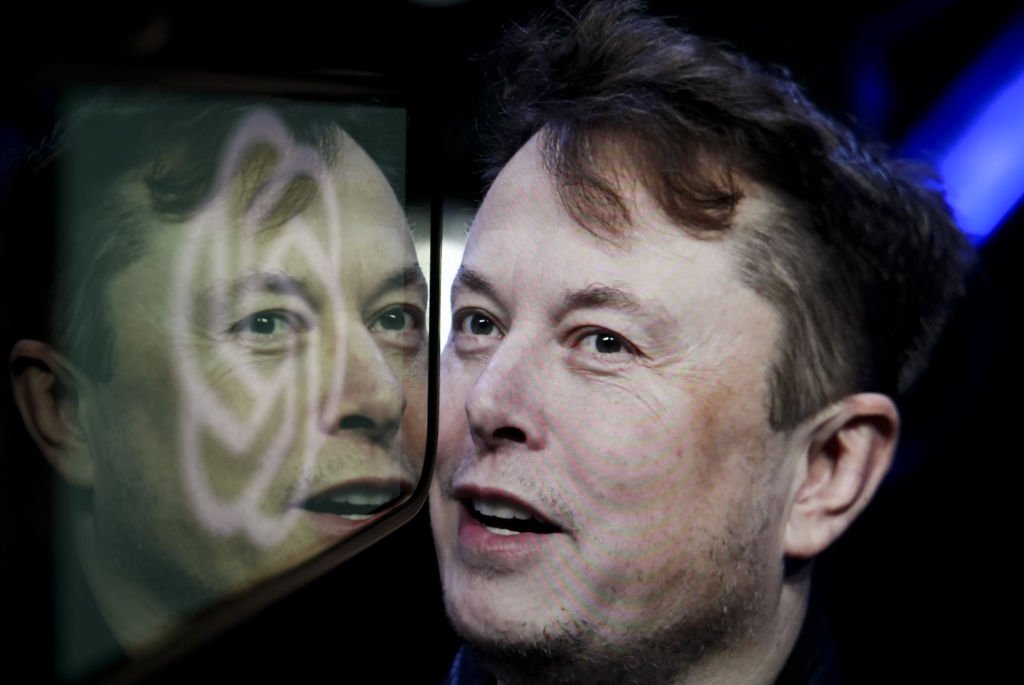
Elon Musk went to federal court in California on Wednesday to argue that Sam Altman and his co-founders “robbed a charity.” He left after admitting, under oath, that Tesla is not currently engaged in artificial general intelligence, directly contradicting a tweet he had posted just weeks earlier.
It was that kind of day for Musk.
The lawsuit he filed challenging OpenAI’s structure alleges that Sam Altman and the other co-founders tricked him into backing a nonprofit, then launched the frontier lab’s for-profit arm and let it dominate the organization.
After Musk testified for hours Wednesday in federal court in California, it appears the case may come down to the distinction jurors and Judge Yvonne González Rogers make between investors in OpenAI who do or do not have a cap on potential profits.
According to Musk, when he co-founded the lab with Sam Altman, Ilya Sutskever, Greg Brockman and others, he trusted them to build AI for humanity, but over time he became suspicious of their motives and eventually concluded that they were “looting the nonprofit.”
OpenAI lawyer William Savitt tried to complicate that story during cross-examination, trying to show that Musk had supported a variety of efforts to transition OpenAI into a for-profit company so it could raise the funds needed to compete with companies like Google, including bringing the AI lab into Tesla.
Musk testified that he had discussed turning the company into a for-profit company as early as 2016, and that in 2017, he had explored creating a for-profit arm of OpenAI where he would hold the majority of equity and control the company. When those plans fell through, he stopped making regular donations to OpenAI, although he continued to pay for his office space until 2020.
Technology event
San Francisco, CA
|
October 13-15, 2026
Musk insisted that there was a big difference between investors whose returns are limited and those whose returns are unlimited. Microsoft’s first major investments in OpenAI limited the software giant’s profits, but those restrictions have been removed over the years. Musk says those changes ultimately led him to file this lawsuit.
Savitt attempted to establish that Altman and Shivon Zillis (his longtime advisor and mother of four of his children) had consulted Musk about subsequent efforts to raise money, and he did not object. Zillis was also a member of OpenAI’s board of directors when it approved some of those transactions.
That cross-examination extended to Tesla’s artificial intelligence ambitions. In particular, Musk was asked about Tesla’s efforts to develop competitive AI technologies and found himself, not for the first time, on the wrong end of one of his own tweets. After Musk said that Tesla’s AI work focused solely on autonomous driving and not artificial general intelligence, or AGI (a term for AI systems that can perform any intellectual task that a human can perform), he was asked about a recent tweet that stated that “Tesla will be one of the companies that will make AGI.” “We are not going after AGI at this time,” Musk told the court. (Tesla shareholders may want to take note.)
Musk was also asked about a tweet in which he claimed to have invested $100 million in OpenAI, rather than the $38 million that actually changed hands. He argued that his reputation and network made up for the disparity.
Savitt mentioned emails in which Musk had supported efforts by Tesla and its brain interface company, Neuralink, to poach employees from OpenAI while he was still on that company’s board of directors. One conversation focused on Andrej Karpathy, who left OpenAI to lead autonomous driving work at Tesla. Another focused on Sutskever, whom Zillis suggested Musk recruit to Tesla.
However, the most important common thread of the day may have been that of security. Part of Musk’s argument is based on the idea that OpenAI’s transition to a traditional corporation is dangerous for society because it reduces the company’s focus on security. Savitt, in turn, made Musk admit that all AI companies, including his, suffer from this risk.
Judge González Rogers stopped that line of questioning, but in statements to lawyers after concluding the testimony he made it clear that it would be resumed, with limits. When Musk’s lawyers raised questions about ChatGPT’s role in the Tumbler Ridge shooting (a 2024 incident in Canada in which a man killed his family after extensive conversations with the chatbot), she made it clear that she didn’t want to hear about scandals caused by AI models, but that xAI and OpenAI’s security approaches were fair game.
Musk returns Thursday for another round of adversarial questioning. The director of his family office, Jared Birchall, is also expected to testify; AI security expert Stuart Russel; and OpenAI President Greg Brockman.
When you purchase through links in our articles, we may earn a small commission. This does not affect our editorial independence.



