
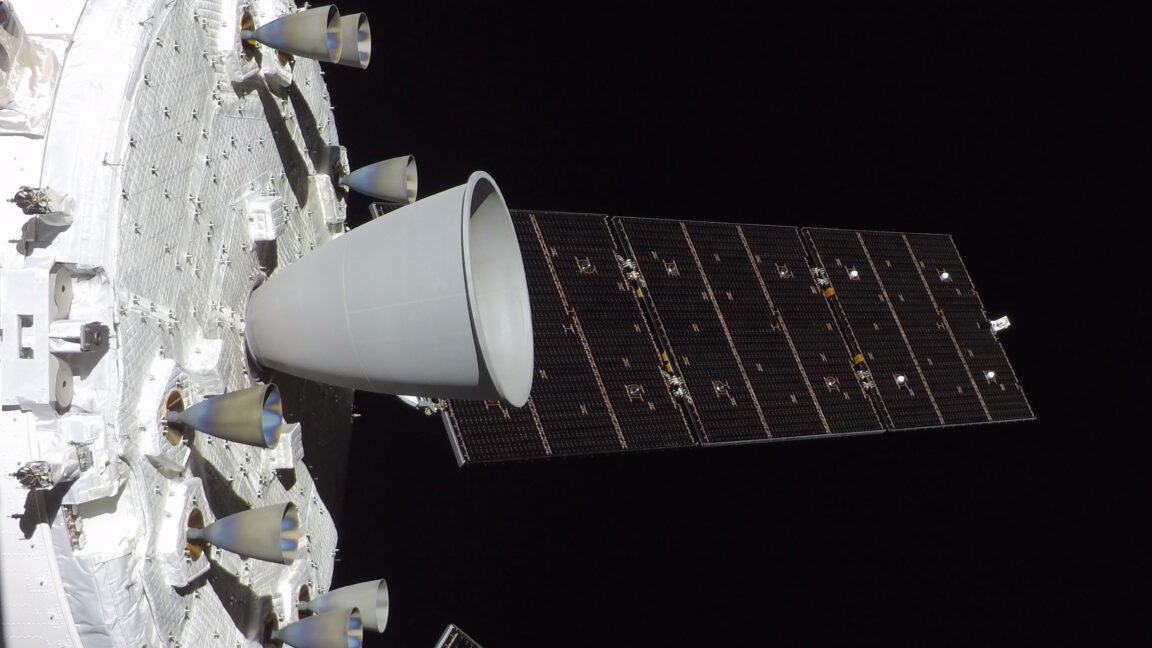
NASA’s schedule currently puts the launch of Artemis III in 2027 and Artemis IV in 2028. Kshatriya said he was confident that NASA, working with the European Space Agency and Airbus, which is building the service module, will be able to fix the valve problem in time for Artemis IV. Manufacturing of the Artemis IV service module is virtually complete.
“I’m pretty sure we’re going to need to, at a minimum, modify the design to avoid the leak rate we have, or even fundamentally change the way the valve works,” he said.
Valves are a common problem on rockets and spacecraft. Nearly every U.S. human spaceflight program has faced malfunctioning or leaking valves. Boeing’s Starliner crew capsule suffered helium leaks in its propulsion system, among other problems, during a test flight to the International Space Station in 2024. The Space Launch System rocket’s helium valves had to be replaced in the run-up to the launches of Artemis I and Artemis II. SpaceX also has scrubbed launches due to valve problems. The list goes on.
“There are many options on how to solve this problem,” Kshatriya said of the problem on the Orion spacecraft. “If anything, I would characterize it as a production redesign risk for the Artemis IV mission, which I think we can handle, and that’s why we pay so much attention to it during this mission to make sure (we understand) what we’re seeing.”
The big lesson NASA learned about Artemis I had to do with the capsule’s heat shield. The ablative thermal barrier burned unevenly as the spacecraft re-entered the atmosphere, but Orion still managed a safe landing on the target. NASA officials said they are confident the heat shield will hold up on Artemis II after adjusting the path Orion will take through the upper atmosphere. A new heat shield design will debut on Artemis III.
NASA engineers spent two years investigating the heat shield issue after Artemis I. Kshatriya doesn’t expect the valve redesign to take that long.
“It is not a flight safety function, crew safety, or mandatory work as the heat shield investigation sent us,” he said. “It’s going to take work to get it right, but it’s not of that magnitude.”



