
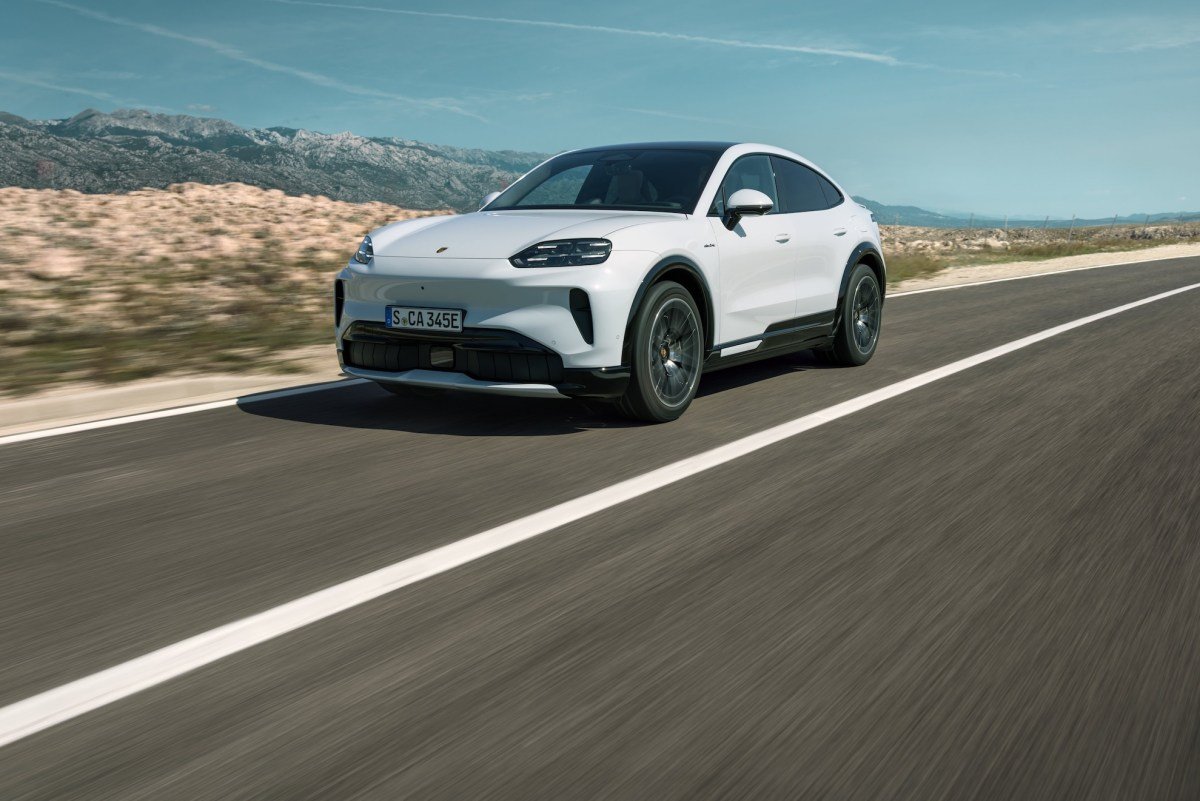
Porsche will begin selling an all-electric Cayenne coupe in late summer, the latest sign from the German automaker that it still sees demand for electric vehicles in the market.
The Cayenne EV coupe, which has four doors, unlike a traditional coupe, will join other all-electric variants of the SUV when it hits the market later this year, including the base Cayenne Electric, Cayenne S Electric and Cayenne Turbo Electric. After all, Porsche loves its variants.
And it could be the most successful. When Porsche introduced a coupe version of its gasoline-powered Cayenne in 2019, it took just a year for the sportier version of the crossover SUV to capture 20% of sales within the Cayenne lineup. Five years later, the coupe variant represents 40% of Cayenne sales, according to Porsche. In some markets, the coupe accounts for up to 90%.
In other words, the numbers suggest that the all-electric Cayenne coupe is a worthy bet even with its six-figure price tag.
The Cayenne Coupe Electric (as it is officially called) will not replace its hybrid or gasoline siblings, unlike the Porsche Macan Compact SUV, which will only be sold as an electric vehicle after this year.
The company says the Cayenne coupe EV will be sold alongside other fuel variants well beyond 2030, according to a Porsche spokesperson. That could produce some valuable data for Porsche about which flavor of Cayenne coupe consumers really want to buy and whether this electric variant turns out to be the most popular. (The extra front trunk space alone might sway some buyers, not to mention gas prices.)
However, none of those questions can be answered until the Cayenne Electric, Cayenne S Electric, Cayenne Turbo Electric and Cayenne Coupe Electric go on sale globally later this year, about nine months after the EV version was first unveiled.
Technology event
San Francisco, CA
|
October 13-15, 2026

When the Cayenne coupe EV goes on sale, it will be offered in three variants: the base version, an S coupe and a turbo coupe. (If you think that’s a lot, check out how many versions of its flagship Porsche Taycan EV there are.)
The Cayenne Coupe Electric starts at $113,800, not including the $2,350 destination fee. Prices increase from there with the Cayenne S Coupe Electric at $131,200 and the Cayenne Turbo Coupe Electric at $168,000. Of course, consumers can spend even more by adding options like the Lightweight Sport Package, which includes a carbon roof, high-performance tires, and motorsports-inspired interior features.
For that kind of money, consumers will get plenty of horsepower and torque inside a crossover body with a sloping roofline reminiscent of the iconic 911. All variants of the EV coupe come with an 800-volt powertrain, air suspension, and a shared roof design that features a new windshield and an adaptive rear spoiler. The Cayenne EV coupe is also equipped with the North American Charging Standard Port, or NACS, made popular by Tesla, as well as an additional AC charging port.
From here, some specifications change depending on the version the consumer purchases. The base EV coupe makes up to 435 horsepower and 615 pound-feet of torque, with a top speed of 143 miles per hour and a 0-60 time of 4.5 seconds.
For those who aren’t satisfied, there are two more powerful options that push those performance specs much higher. At the top end, the turbo version makes up to 1,139 horsepower and 1,106 pound-feet of torque, putting it right up there with the Tesla Model S Plaid, Lucid Air Sapphire, and Porsche Taycan Turbo GT. The turbo version has a top speed of 162 mph and can travel from 0 to 60 mph in just 2.4 seconds.
Porsche has not released EPA estimates for the range these electric coupe vehicles will offer on a single charge. But the first real-world tests match other electric variants of the Cayenne, which is about 360 miles. Of course, if EV coupe buyers opt for those larger tires, which create more rolling resistance and require the battery to work harder, range could be reduced by around 10%.
When you purchase through links in our articles, we may earn a small commission. This does not affect our editorial independence.



