

AI physical push and resistance to robots
The third flagship megaproject revolves around the South Korean government assigning a “national strategic industry” designation to physical AI – AI systems that enable robots and autonomous vehicles to interact more autonomously with the real world. The government aims to develop a Korean “general purpose foundation model” based on a world model support robots within three years, according to The Chosun newspaper.
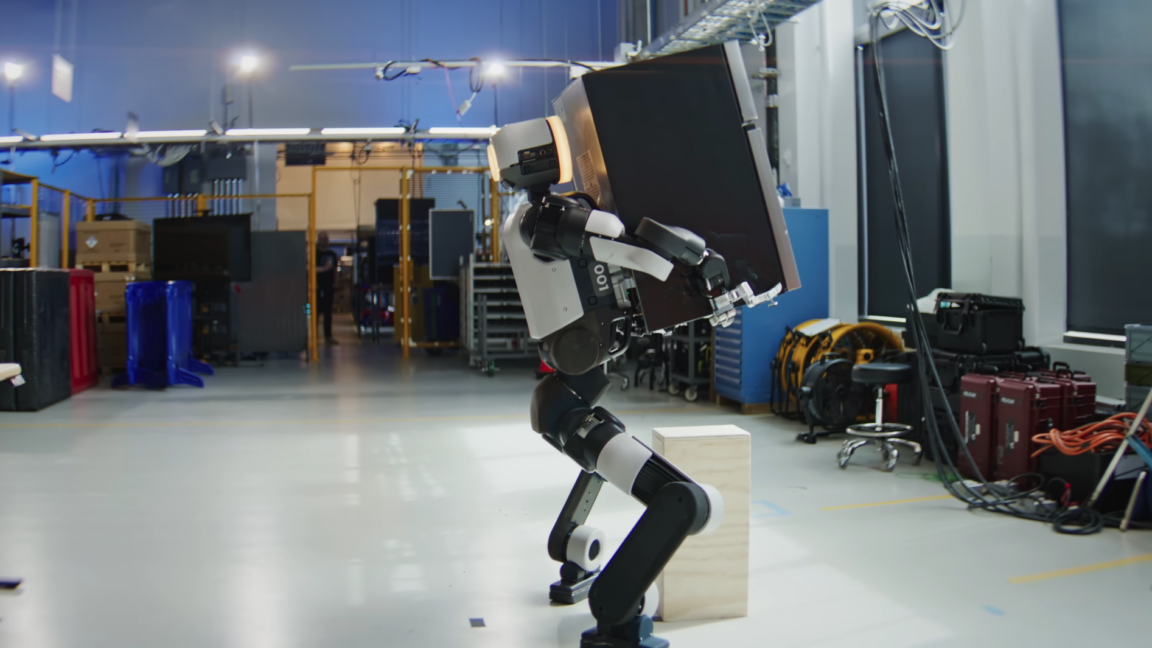
Hyundai Motor Company has also committed $5.8 billion to build a robot manufacturing facility and artificial intelligence data center in the Saemangeum region of southwestern North Jeolla province, The Chosun Daily reported. The South Korean automaker has already been helping Boston Dynamics—the American robotics company it acquired in 2021—uses the South Korean supply chain to expand manufacturing to produce 30,000 Atlas humanoid robots every year until 2028.
Similarly, the South Korean government announced that it would aim to commercialize humanoid robots in 10 major industries by 2028, in addition to training 10,000 human workers as “AI robotics specialists” over the next five years, Reuters reported.
However, South Korean workers are not so optimistic about the prospect of competing with more robots. On June 25, Hyundai Motor’s union overwhelmingly approved a possible strike while negotiating with the South Korean automaker over profit sharing and labor protections to offset the company’s planned deployment of Atlas humanoid robots, according to Korean times.
A state labor mediation committee also granted the union the legal right to strike after suspending the arbitration process, with Hyundai Motor appealing to the union return to the negotiating table.
Other social tensions have already arisen over South Korean chipmakers’ rising profits thanks to the rise of AI. South Korean government officials have encouraged technology companies to share some of your unprecedented profits with its workers and smaller supplier companies. In May, South Korea’s presidential policy chief of staff even casually proposed a “national dividend” for citizens based on excess tax revenue from South Korean companies’ AI-generated profits, although the government later described this as a personal opinion and not an official proposal.



