

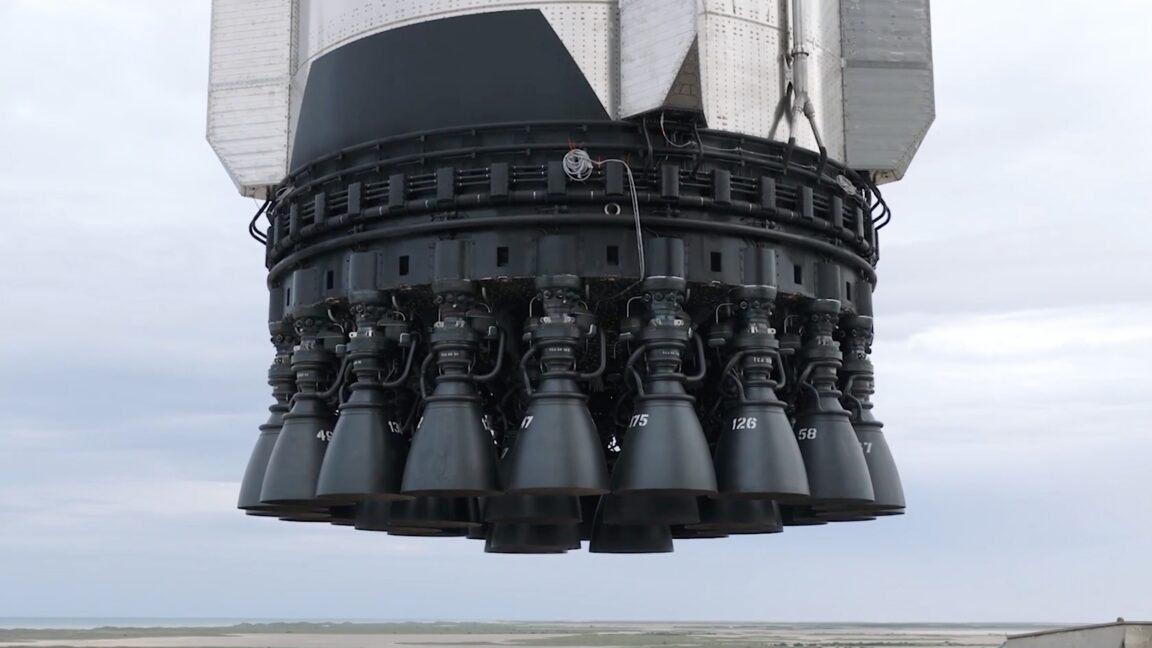
One of the reasons SpaceX is not attempting an orbital flight this week is that Starship failed to complete one of its test objectives on the last launch, when the spacecraft was supposed to fire one of its six Raptor engines for a brief burn in space. The spacecraft skipped ignition after a Raptor engine shut down prematurely during the launch sequence.
The remainder of the ship’s flight went as planned, culminating in a punctual splashdown in the Indian Ocean. It was the first flight of SpaceX’s Starship V3, which debuted new, more powerful Raptor engines. But officials need to be confident in the Raptor engine’s ability to reignite in the airless vacuum of space before embarking on orbital flight. In the worst-case scenario, a failed Raptor engine restart would leave Starship in orbit, leaving the massive stainless steel vehicle with an unguided re-entry that could become a public safety risk.
The flight plan for this week’s mission includes a goal to restart the Raptor that was missed in May. In an update posted to its website over the weekend, SpaceX did not address the cause of the premature shutdown of the Raptor engine on Flight 12.
“The vehicle was able to demonstrate its engine-off capability and achieve its planned suborbital trajectory,” the company wrote on its website. “Several operational and hardware modifications have been made to address the interconnected causes and additional reliability improvements are planned in future versions of the Raptor engine.”
The other objective that was left incomplete on Starship’s last flight involved the landing of the rocket’s Super Heavy booster, or first stage, which lost control moments after separating from the ship, or upper stage, a few minutes after takeoff. SpaceX intended to fly the booster to a water landing in the Gulf of Mexico from its launch base in south Texas.
“On stage separation on Flight 12, slight differences in the launch of the craft’s engine caused the thruster’s directional roll to deviate by approximately 90 degrees,” SpaceX wrote. “The startup sequence has been modified to be more resilient to weather variability and spin more reliably in the desired direction, which is done to increase overall performance.



