
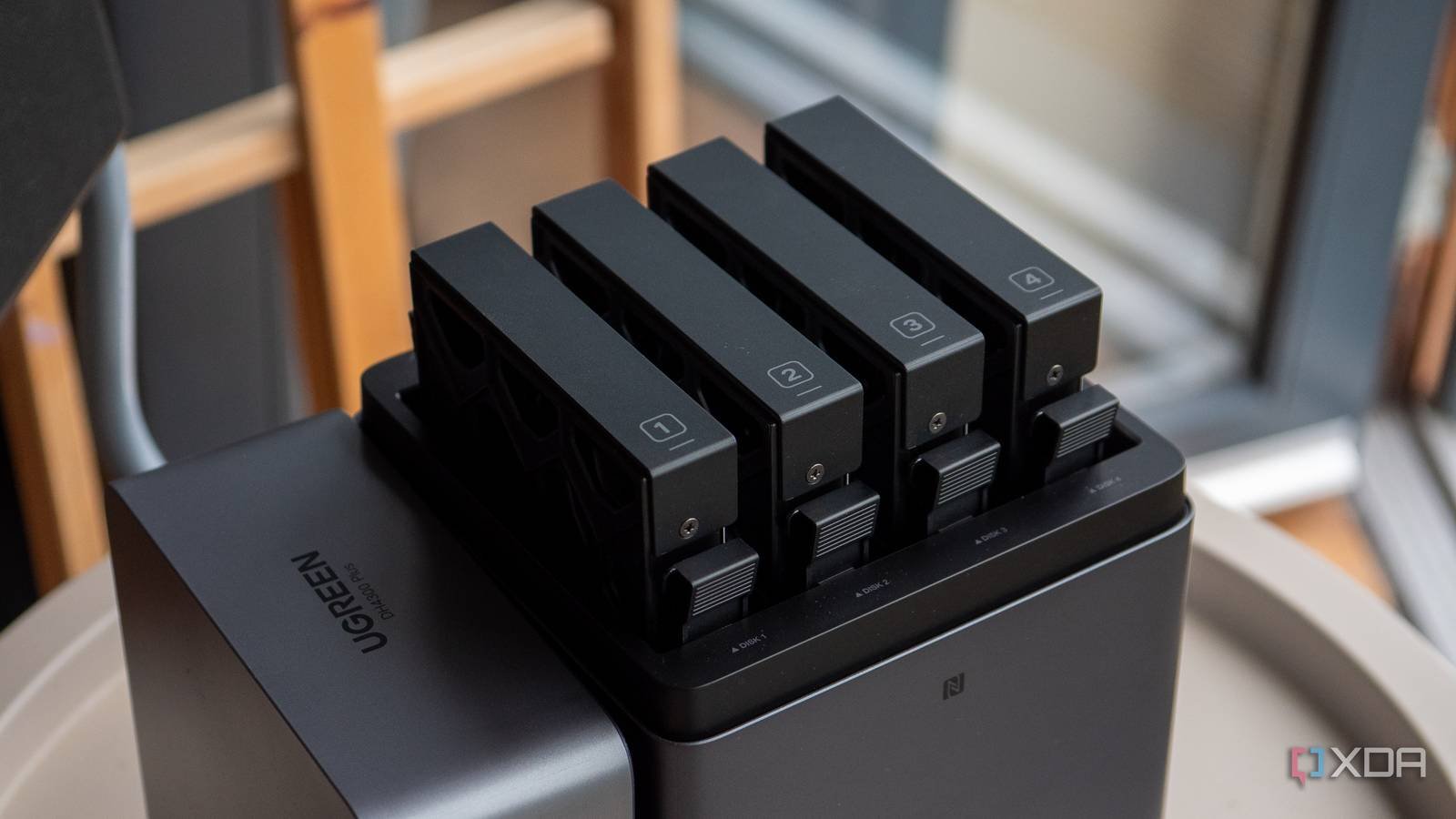
It’s easy to add another drive to your NAS (not exactly the easiest given the rising cost of SSDs), but it’s not the upgrade you think it is. Many of us continue to harden hardware without thinking at all about the backup strategy. Setting up RAID is as far as most people go when it comes to backups, but to be clear, RAID is not a backup. Sure, it provides some level of protection in the event of a drive failure, but it won’t help in situations like a power surge or natural disaster. The best NAS upgrade you can do is a proper backup strategy which really protects your data.

You don’t need a backup plan until you do it
It will not be necessary, until the day it is.
A NAS without a solid backup plan gives you a false sense of security. You see, a device like a NAS improves storage, convenience, and maybe even redundancy if you use RAID, but that doesn’t automatically mean your data is safe. RAID only protects you from drive failure. It does nothing against accidental deletion, file corruption, malware or ransomware. If something goes wrong, that error or attack is instantly replicated across the entire array.
On the other hand, a proper backup plan assumes that things will go wrong and prepares for it. Typically, that means following something like the 3-2-1 rule, which is three copies of your data, on two different types of storage, with one copy stored off-site. Without that, your NAS is just a single point of failure with extra steps.
Not everyone has the resources to implement this, but you definitely should for important data. The best way to explain it is this: if the data is something you can easily reacquire, the 3-2-1 method is not necessary. However, for media that you will never be able to recover, the 3-2-1 method is essential. Think about photos of your grandparents that you don’t have original copies of, voicemails from deceased loved ones that you keep, or that video of your child’s first steps.
There is also the human factor. Most of the data loss is due to simple errors like deleting the wrong folder or overwriting files. If your NAS is your only “backup,” you have no way to recover from that. Versioned backups or snapshots solve this, not larger drives. Then there is ransomware, which is becoming more common even in home environments. If your NAS is connected and writable, it can be encrypted along with your main system. A proper backup setup keeps at least one copy isolated or immutable, so it can’t be touched.
Configure the appropriate backup strategy
The 3-2-1 approach matters

Once you understand why the 3-2-1 approach is important, the next step is to put it into practice without making things too complicated. On a basic level, your NAS is still your primary storage, but it shouldn’t be the only place your data resides. You need a second local copy and a third copy that resides elsewhere.
For local backups, the easiest option is an external hard drive connected directly to your NAS. Most NAS systems allow you to schedule automatic backups to external storage, so they can run silently in the background. If you want a more robust setup, a second NAS on your home network also works, but for most people, that’s overkill.
Offsite copy is where cloud storage comes in, and this is the part that people tend to skip. You don’t need to upload your entire NAS to the cloud, especially if it’s terabytes of media. Focus on your irreplaceable data. Services like Google Drive, Dropbox, or Backblaze are popular because they integrate well with most NAS systems and can run continuous or scheduled backups. If you want something more NAS-centric, many brands also support direct cloud syncing with providers like Amazon S3.
Once the storage layers are in place, automation is what makes everything work. Backups should run on a schedule without you having to think about them. I automated my Complete backup strategy with Zerobyte and a cron job. Zerobyte does not reinvent how backups work. Instead, wraps Restic in a way that makes sense about how you manage your team today.
Set your NAS to handle daily or weekly backup tasks depending on how often your data changes. At the same time, enable snapshots and version control to not only backup files but also preserve previous versions. This is what saves you when you overwrite something or need to go back to a previous state.
Finally, make sure that at least one of your backups is not constantly writable. This could mean using immutable backups, versioned cloud storage, or even a drive that isn’t always connected. If something compromises your main system, it shouldn’t be able to touch all copies of your data. Once you set this up correctly, your NAS will stop being a risk and start behaving like a reliable part of a larger system.




