
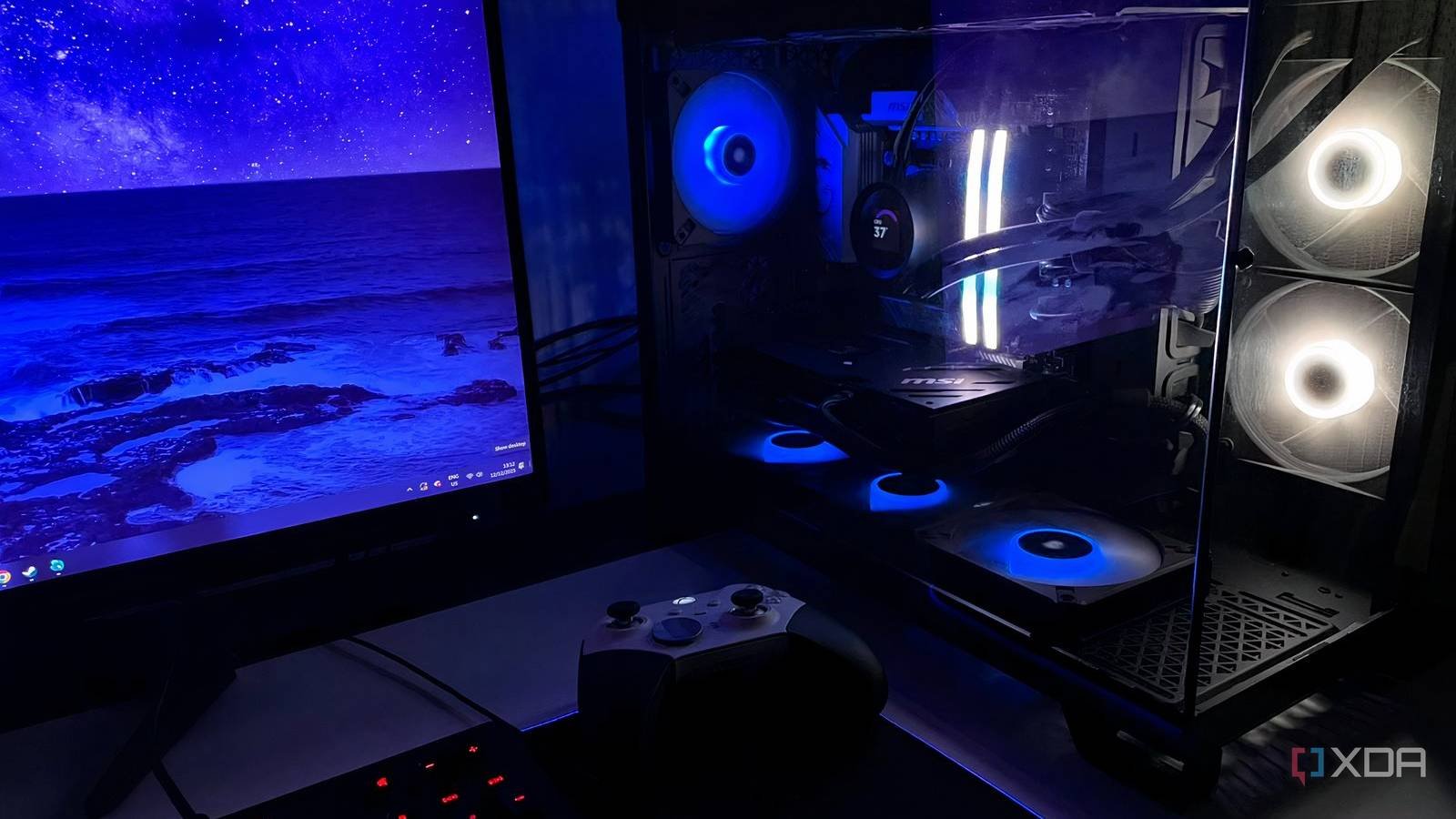
If you look closely, you’ll start to notice a strange parallel between the way we age and the way our PCs age. Both require regular maintenance to function at their best, both benefit from constant maintenance rather than sudden intervention, and both have a tendency to accumulate clutter that becomes harder to ignore over time. If you neglect either for long enough, performance degradation becomes difficult to reverse.
An aging system shows many signs. Perhaps in the form of slow boot timesslower applications than usual and a general feeling that the hardware is working harder than it should. But not all of these symptoms necessarily point to faulty components or an expired update. Here are five tasks that cost nothing and have kept my computer running well beyond its age.
Benchmarking your PC performance keeps you informed
Know how your PC compares to similar systems

One of the best ways to know if your system is working as it should is to routinely compare it to itself. Without a baseline, it is difficult to detect gradual performance degradation.
For GPU BenchmarkingI use 3DMark’s Speed Way and Steel Nomad tests because I find them reliable and granular. Because it offers a standardized score that is directly compared to a database of similar hardware configurations globally, it’s a great way to measure any changes in your PC’s performance. Running a CPU profile test alongside the GPU test also helps complete the picture. Together, these benchmarks raise issues such as thermal throttling and suboptimal performance. From this data, it is easy to diagnose problems such as a misconfigured fan profile, a malfunctioning cooling system, or a dry thermal interface material.
Storage firmware updates can make your PC faster
For most users, this is something that should have been done a long time ago.

Many of your PC experiences depend on how well your storage device is performing, and the huge impact of a firmware update on that was something I severely underestimated until I updated the firmware on my Crucial NVMe. Not just my average game load times drop 25% on averagemy CPU idle temperature also dropped 5°C without any other changes to the system.
The temperature drop was completely unexpected and had me scratching my head for a while. I later discovered that since NVMe drives have a direct influence on the processor’s I/O operations, an updated firmware improves how the drive manages power states and handles data requests. This leads to a reduction in background polling that the CPU must perform, which in turn results in less overhead. For a simple task that took me less than five minutes, the results were absolutely revolutionary and it is indeed unfortunate that most users are not aware of the benefits of this simple maintenance task.
AIO radiator and CPU cooler collect dust
Over time, it can build up your thermals.

CPU heatsinks and AIO radiators accumulate dust due to the nature of the work they do, and even a month of regular use can produce enough buildup to impact cooling efficiency. This buildup determines your thermal ceiling, regardless of how capable or efficient your chip is, and the problem is worse in the summer, when the ambient temperature is already against you.
A handheld vacuum cleaner or air blower is all that is needed to solve this problem and makes it very easy to clean the radiators frequently. If you periodically run it over the fins of the radiator or heat sink, the airflow restriction disappears immediately.
Always hold the cooling fans in place before blowing air through them, if you keep them screwed on. Allowing them to spin freely due to forced air can potentially damage the bearings.
Correctly setting up your BIOS may feel like an update
Fan curve and undervoltage optimization are underrated $0 performance tricks
Most users will only venture into their BIOS during initial setup and then proceed to ignore the menu entirely for the rest of the system’s life. This often means they leave two of the most impactful configuration options completely intact and, surprisingly, you can trust the fan curve optimization and the voltage frequency curve is wrong almost a hundred percent of the time with the default settings. The default fan curves are too conservative and the V/F curves are tuned quite aggressively.
Taking a few minutes to set up a custom curve that’s in tune with your workload and your CPU’s thermal profile is one of the best ways to hit the sweet spot between performance and efficiency. Getting the fan curve right means your system receives adequate cooling during use, while reducing the voltage of a chip that is prone to thermal throttling will reduce the voltage supplied at a given frequency, allowing you to enjoy the same performance at a lower temperature.
Not all performance tweaks need your credit card

The irresistible instinct to open a tab on Amazon for a hardware upgrade, especially when your system starts to show its age, is quite understandable. It’s probably an itch that’s almost a sure thing for desktop PC owners. However, it is rarely worth taking the first step. An optimized BIOS, clean cooling hardware, updated storage firmware, and a reliable baseline address the most common sources of degraded performance, and do so without needing to spend a penny more.



