

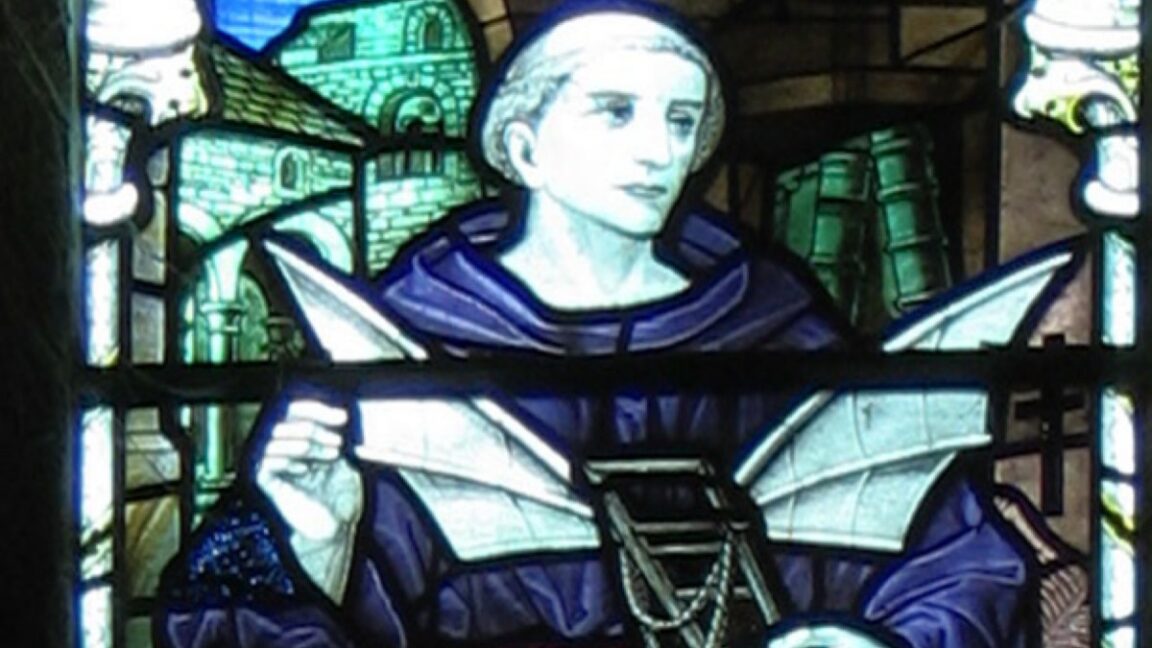
At the beginning of the 11th century, a young Benedictine monk called Eilmer He jumped from the 150-foot tower of his abbey in the small English town of Malmesbury, using a pair of crude wings he had made from willow wood and cloth. Eilmer managed to glide a good 600 feet, passing over the city wall before making a crash landing in a small valley near the River Avon. The fall broke both of his legs, leaving him crippled. Malmesbury Abbey still has a stained glass window in honor of Brother Eilmer.
This legendary medieval aviation experiment comes to us from a 12th century historian. William of Malmesbury in an account written around 1125, although William neglected to provide future historians with an exact date of the feat. But William mentions another key episode in Eilmer’s life when the monk was “of advanced years”: Eilmer witnessed Halley’s Comet in 1066 and commented: “It is a long time since I saw you.” some historians have interpreted This means that Eilmer saw Halley’s Comet on a previous flyby in 989, when he would have been a child.
Assuming Eilmer was at least five years old in 989, he would have been born no later than 984. This would make Eilmer 80 years old in 1066, and his attempt to flee, which occurred when he was “in his early youth,” probably occurred between 1000 and 1010. However, it is an estimate that relies on many assumptions, according to James Aitcheson of the University of Leicester, who argues in a paper published in the journal Notes and Queries that Eilmer could have seen a completely different comet in his youth: comet 1018. If so, he would have been born much later and the date of his flight would have occurred between the years 1020 and 1040.



